Synthetic voice has crossed the threshold most listeners can no longer detect on a first pass. The latest generation of text-to-speech models handles breathy whispers, deliberate pauses, regional accents, and emotional inflection well enough that podcasts, audiobooks, ad reads, training modules, and customer-service agents are now built on AI narration as the default rather than the fallback.
The progress comes with a real problem for buyers: the leading tools all sound impressive in their demo reels. Differences only emerge once a long-form script, a tight budget, a multilingual rollout, or a real-time use case enters the picture. This comparison looks at the platforms that consistently turn up on shortlists across creator forums, developer communities, and enterprise procurement notes, then makes the trade-offs visible: what each tool does well, where each one stumbles, and which workflow each is worth the subscription cost for.
What to listen for before locking in a tool
Voice quality grabs attention first, but quality alone does not predict whether a platform will hold up across a 40-minute audiobook, a multilingual ad campaign, or a live voice agent. A handful of secondary factors usually decide whether a tool fits a real workflow.
• Naturalness across length. A voice that sounds gorgeous in a 10-second demo can develop a hum or flatten emotionally over 5 minutes of narration. Long-form output is where less-mature models break down.
• Latency. For real-time agents, response delay above roughly 200ms breaks the illusion of conversation. Pre-recorded narration projects can tolerate slower generation.
• Language and accent coverage. A platform may claim 100 languages but offer only one voice per language outside the top five. Real coverage matters for localization.
• Voice cloning quality and ethics. Instant clones from short audio are useful for prototyping. Professional clones trained on longer recordings produce the brand-grade output enterprises actually publish.
• Commercial rights. Several platforms restrict commercial use to paid tiers, and a few impose attribution requirements creators do not notice until publication day.
• Editing depth. Word-level emphasis, pause control, and pronunciation overrides separate professional voice production from glorified text-readers.
• Pricing model. Subscription tiers gated by minutes versus characters versus credits behave very differently at scale, and overage rates can swing real cost by an order of magnitude.
A useful test: write a 90-second script with two emotional beats, a tricky technical term, and a brand name, then run the same script through every shortlisted platform. Differences become obvious that no marketing reel reveals.
How the picks came together
The platforms below were evaluated on six criteria: voice realism on long-form content, language and voice library depth, latency for streaming use cases, voice cloning capability, pricing transparency, and editing controls. Each tool is positioned for the workflow it genuinely serves best rather than for every possible use case. Several otherwise capable platforms (NaturalReader, Resemble AI, WellSaid Labs, Amazon Polly, Fish Audio, Cartesia) sit just outside this main lineup and are referenced where directly relevant.
ElevenLabs
The realism benchmark for content production
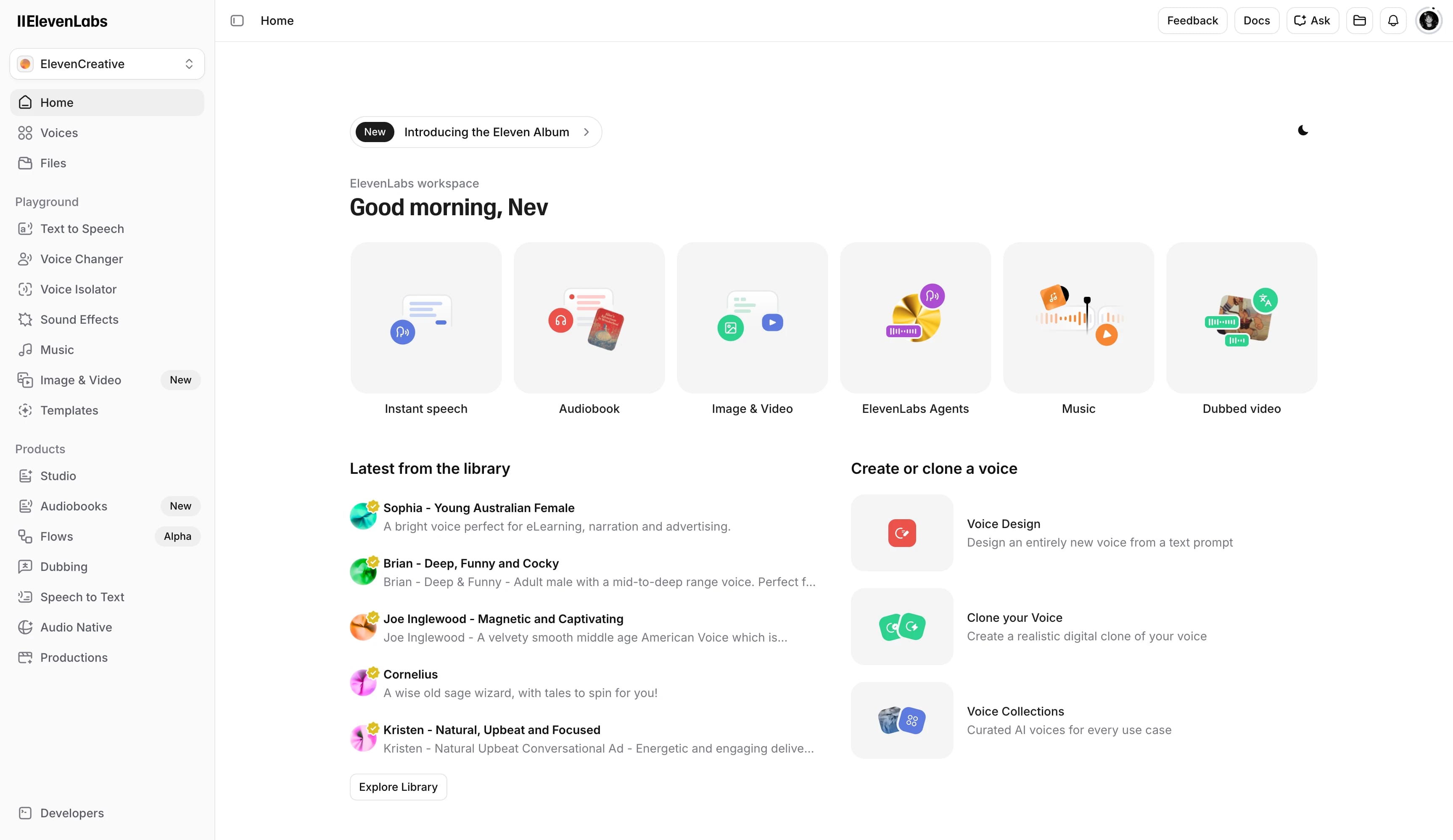
ElevenLabs has held the top spot on most independent voice naturalness benchmarks since 2023, and the gap remains visible. Its v3 model supports 70+ languages with voice cloning from short audio clips and a marketplace of community-created voices, per ElevenLabs’ product documentation.
What stands out
• Inline audio tags for whispers, sighs, laughter, and emotional emphasis, controlled directly inside the script.
• Professional Voice Cloning from longer training samples, producing voices stable enough for serial audiobook narration.
• Studio interface with timeline editing, project-level voice consistency, and dubbing for video translation.
• API access available from the free tier, unusual at this quality level.
Pricing snapshot
According to ElevenLabs’ published pricing in 2026, the Free plan includes around 10,000 credits per month without commercial rights. Starter at $5/month adds commercial licensing and instant voice cloning. Creator at $22/month unlocks Professional Voice Cloning, the feature most serious production teams want. Pro at $99/month, Scale at $330/month, and Business at custom enterprise pricing handle larger workloads and team workspaces. API plans run on separate tiers at higher rates.
Trade-offs
| Strengths | Limitations |
|---|---|
| Best-in-class emotional realism | Credit-based pricing turns unpredictable at scale |
| Strong multilingual voice cloning | Higher-tier cloning costs are noticeable |
| Inline audio tags rare elsewhere | Free tier lacks commercial rights |
| API access from the free tier | Some accent variants weaker than headline languages |
Best fit
Creators producing long-form spoken content (audiobooks, narrative podcasts, character-driven games) where voice quality is the deliverable, and any team where a single low-quality narration would damage the project.
Murf AI
Studio-grade tooling for corporate and learning teams
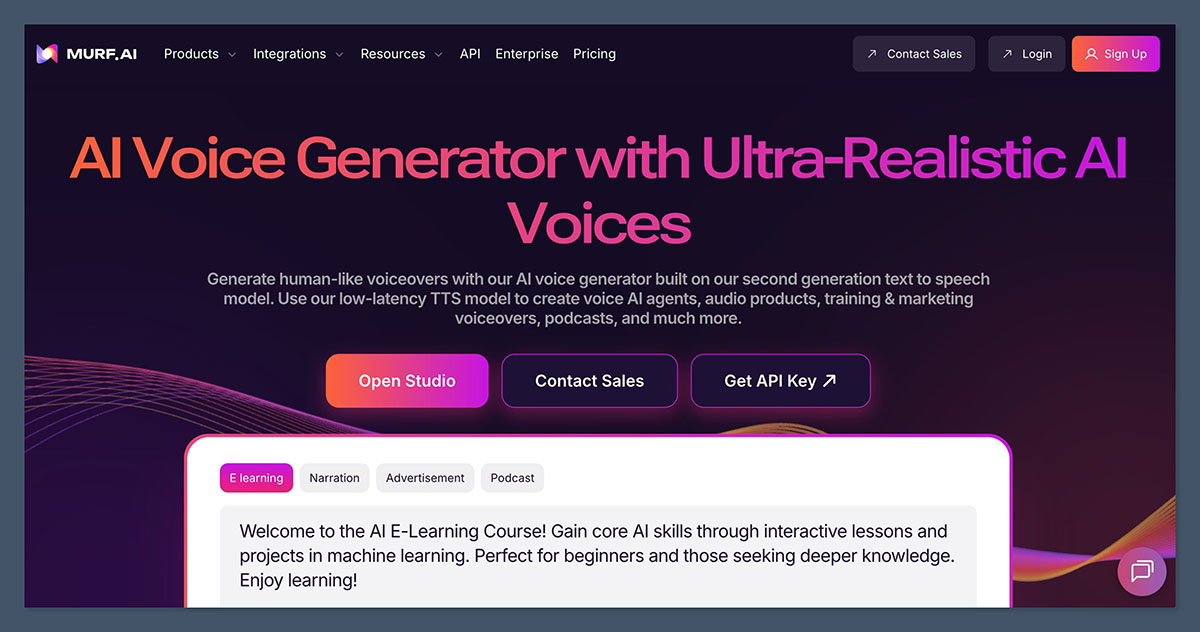
Murf positions itself differently from ElevenLabs. Where ElevenLabs optimizes for voice realism, Murf builds around the workflow surrounding the voice: PowerPoint and Canva integrations, timeline-based editing, video dubbing, team collaboration, and an API designed for low-latency conversational use.
What stands out
• The Falcon TTS model, launched in late 2025 per Murf’s product documentation, reports 55ms model latency and roughly 130ms time-to-first-audio, making it competitive for real-time voice agents.
• Per Murf’s product pages, the library spans 200+ voices across 35+ languages, with broad style filtering (e-learning, advertising, corporate narration, storytelling).
• PowerPoint and Google Slides plugins push voiceover directly into presentation workflows, a feature corporate teams use heavily.
• Voice cloning is gated behind Business and Enterprise tiers. Murf holds ISO 42001 certification, which matters for buyers in regulated industries.
Pricing snapshot
Murf restructured pricing in 2025. The Free plan offers 10 minutes of generation but no downloads or commercial use. Paid Creator tiers start around $19/month on annual billing, Business tiers from roughly $66/month, and Enterprise on custom contracts. The Falcon API is priced separately at approximately $0.01 per minute, with a small monthly free credit.
Trade-offs
| Strengths | Limitations |
|---|---|
| Strong integration with corporate tools | Voice realism lags ElevenLabs on emotional delivery |
| Compliance certifications including ISO 42001 | Voice cloning gated to higher tiers |
| Low-latency Falcon API for real-time use | Annual minute pools forfeit if unused |
| Clean timeline editor | Free plan lacks export, useful only as a preview |
Best fit
E-learning developers, instructional design teams, marketing departments producing localized campaigns at scale, and any organization where compliance and predictable pricing outweigh having the absolute best-sounding voice.
Play.ht
Multilingual breadth at a creator price
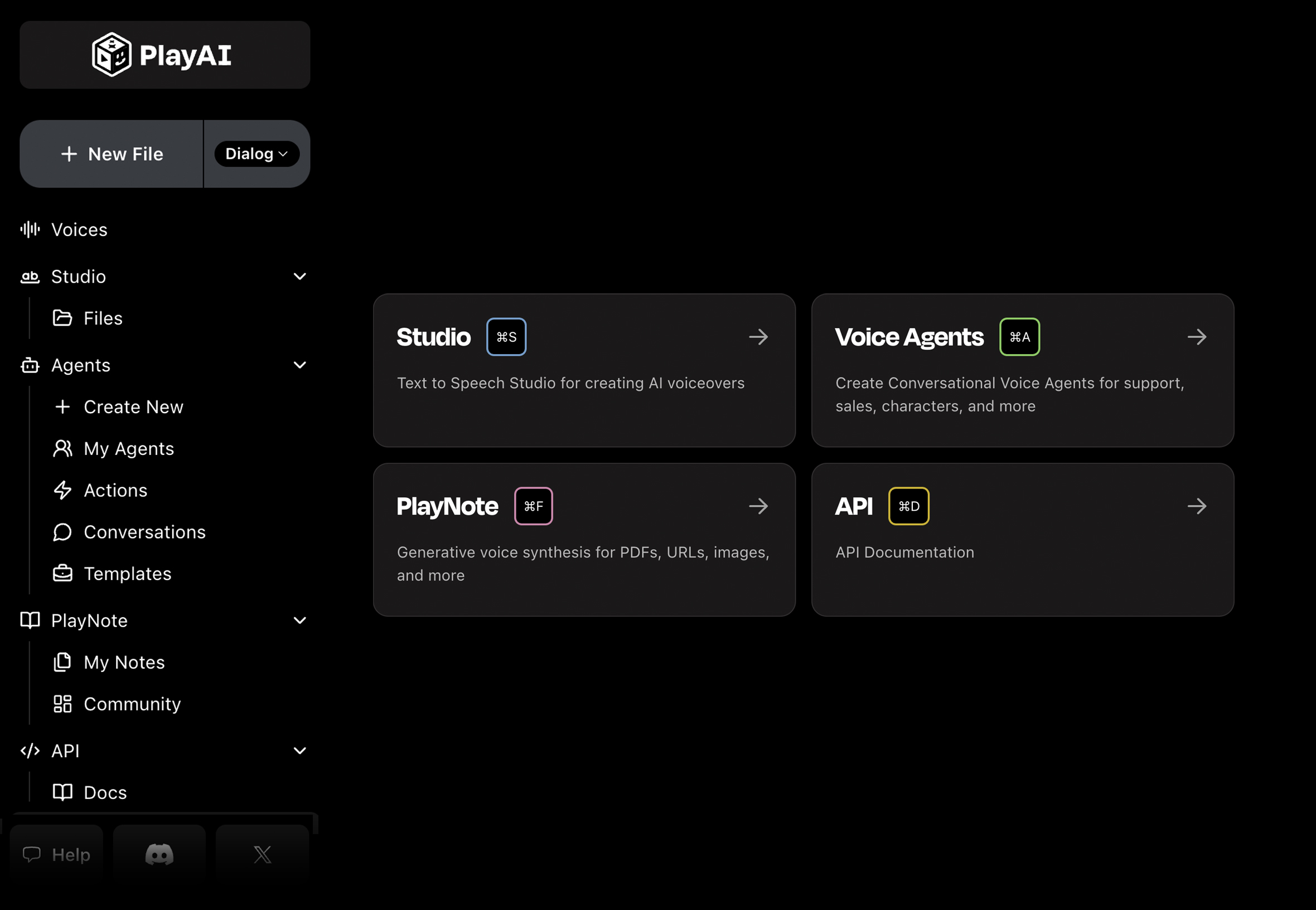
Play.ht, branded as PlayAI on some product surfaces, leans into language coverage and creator-friendly pricing. Its product pages list 800+ voices across 140+ languages, which is among the broadest reach available at consumer pricing.
What stands out
• Multi-speaker dialogue mode for conversational podcasts and role-based e-learning modules.
• Instant voice cloning from short samples, useful for prototyping branded voices before committing to a longer training session.
• Audio editing controls for pitch, speed, emphasis, and pauses without leaving the browser.
• Commercial rights extend even to the free tier, per Play.ht’s terms (verification recommended for monetized output).
Pricing snapshot
According to Play.ht’s published pricing, the free tier converts up to 5,000 characters per month. The Premium plan sits around $31/month and unlocks the full voice library and one instant voice clone. Enterprise plans add API access, higher generation limits, and additional clones at custom pricing.
Trade-offs
| Strengths | Limitations |
|---|---|
| Exceptional language coverage | Customer support quality has been an ongoing concern |
| Multi-speaker dialogue feature | Voice quality outside major languages drops noticeably |
| Affordable for the breadth offered | Reliability incidents documented through 2025 |
| Commercial use from the free tier | Voice cloning sometimes needs longer samples than advertised |
Best fit
Creators producing multilingual content, podcasters who want conversational dialogue without coordinating multiple voice actors, and projects where breadth of language coverage matters more than the absolute peak of voice realism.
Speechify Studio
Listening-first, with a creation arm
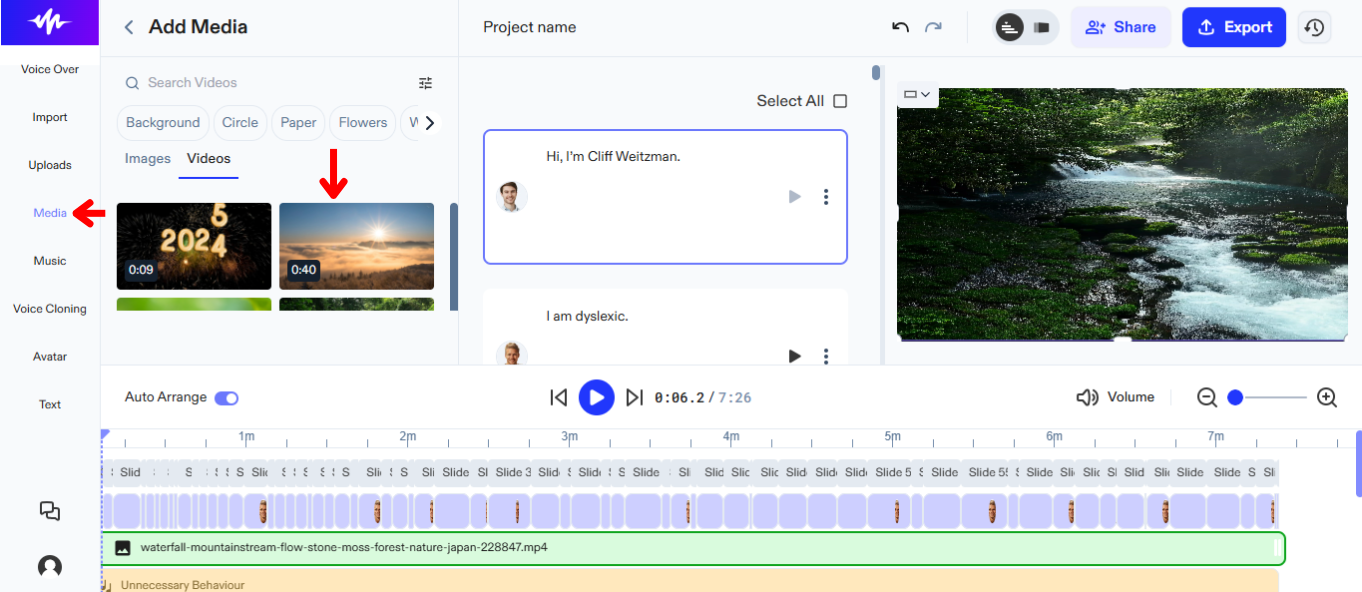
Speechify originated as a consumer reading app: a way to listen to articles, PDFs, emails, and ebooks during commutes or while multitasking. Studio is its newer creator-facing product, which sells separately from the reader subscription.
What stands out
• Reader Premium at $139/year (per Speechify’s pricing page) is among the strongest values for accessibility and content consumption, with OCR scanning, 200+ voices, and up to 4.5x playback speed.
• Studio adds voice cloning and audio export for content creators, but operates as a separate subscription rather than a Reader add-on.
• Strong device coverage across iOS, Android, macOS, Chrome, and Edge, making the Reader product genuinely useful across daily workflows.
• The Audiobooks product is a third, separate subscription closer in shape to Audible.
Pricing snapshot
Per Speechify, Reader Premium runs $11.58/month on annual billing or $29/month on monthly. Studio plans range from Free to roughly $19/month (Starter) and $49/month (Creator). The three product lines (Reader, Studio, Audiobooks) are billed independently, which has caused some buyer confusion.
Trade-offs
| Strengths | Limitations |
|---|---|
| Best-in-class consumer reader experience | Reader and Studio are separate subscriptions |
| Generous OCR and document import | Voice realism lags dedicated creator platforms |
| Strong device and platform coverage | Trial cancellation and post-trial billing have caused friction |
| Studio voice cloning available | Studio output not yet at ElevenLabs or Murf quality level |
Best fit
Anyone whose primary need is consuming written content as audio (students, knowledge workers, people with dyslexia or visual impairment), with Studio as a secondary option for light voiceover creation.
LOVO Genny
One workspace for script, voice, and video
LOVO positions Genny as an end-to-end content studio rather than a pure TTS engine. The interface integrates AI scriptwriting, voice generation, an online video editor, and AI image generation into a single workspace.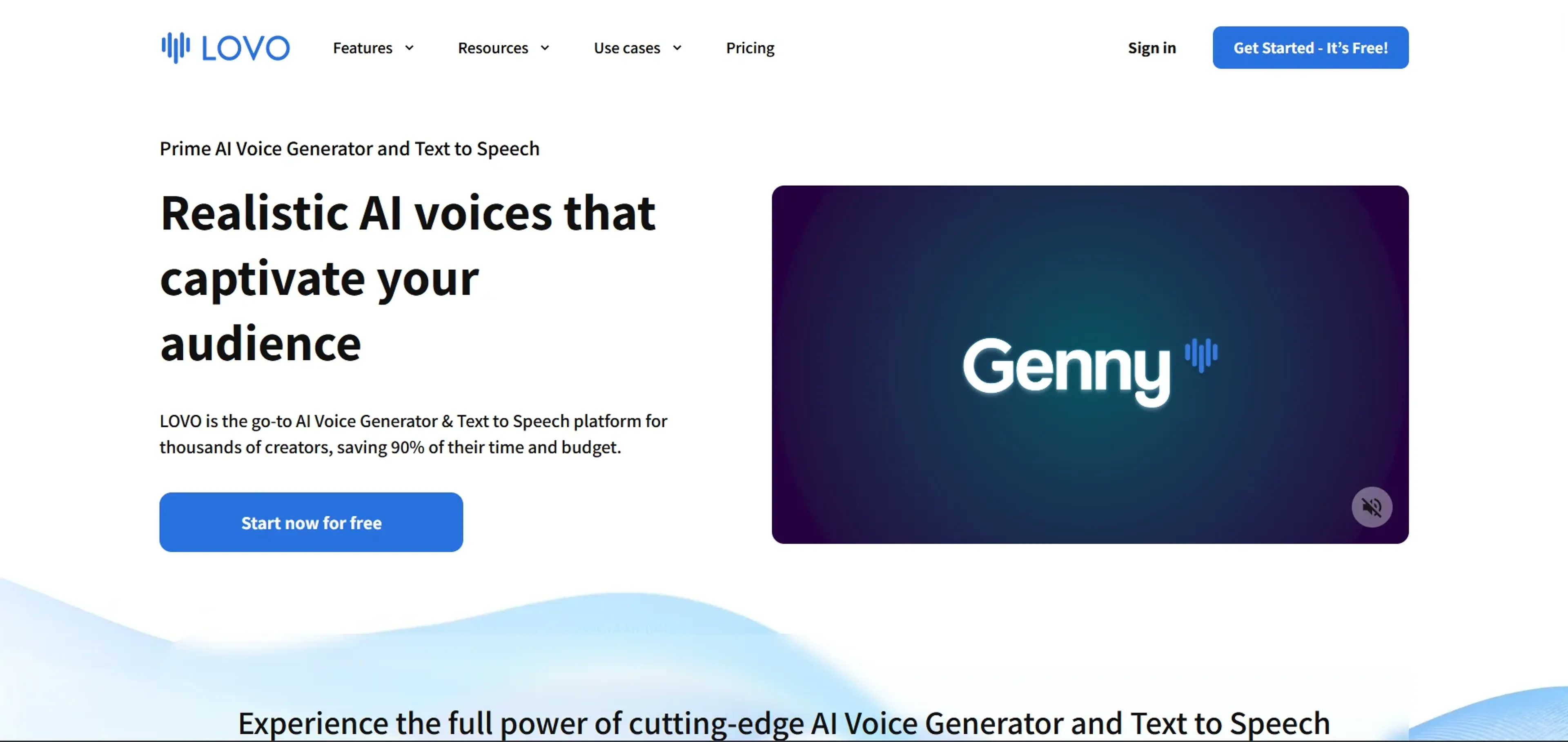
What stands out
• Per LOVO’s product pages, 500+ voices across 100+ languages, with style filtering by tone and use case.
• Genny consolidates scriptwriting, voiceover, video editing, and image generation, reducing tool-switching for solo creators.
• Voice cloning available from short samples on Pro and higher tiers.
• Auto-subtitle generation and timeline-based video editing make it a credible alternative to a CapCut-plus-TTS-tool stack.
Pricing snapshot
LOVO’s pricing has fluctuated through 2025 and into 2026. As of recent listings, paid plans start around $24/month on the Basic tier, scaling up for higher generation limits, more voice clones, and commercial export. A free trial is available, though final video download generally requires a paid plan.
Trade-offs
| Strengths | Limitations |
|---|---|
| All-in-one studio reduces tool sprawl | Voice realism solid but not the very top tier |
| Strong language and voice library | Video editor lighter than dedicated tools |
| Built-in AI script and image generation | Pricing structure shifts frequently |
| Useful for solo creators | Free trial restricts final download |
Best fit
Solo YouTubers, TikTok creators, and small content teams who want one subscription to handle script, voice, image, and basic video editing rather than stitching multiple tools together.
Google Cloud Text-to-Speech
Usage-based infrastructure
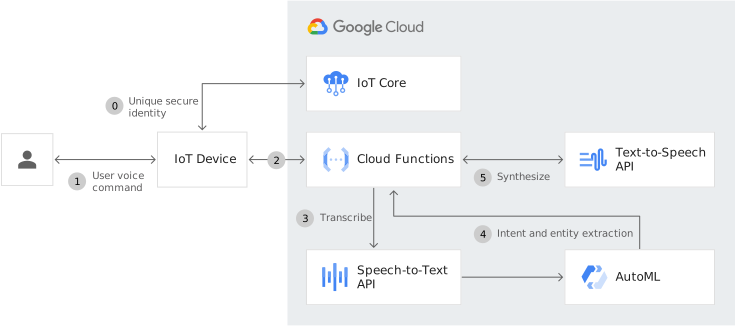
Google Cloud TTS sits in a different category from the consumer platforms. It is a developer API designed for applications that need voice generation embedded into products, with pricing tied directly to character volume rather than subscription tiers.
What stands out
• Per Google Cloud’s documentation, the platform covers 380+ voices across 75+ languages and variants, including the Chirp 3 HD model with 30 distinct voice styles.
• Instant Custom Voice creates a voice clone from approximately 10 seconds of audio.
• Gemini 2.5 Flash and Pro TTS models support multi-speaker synthesis and natural-language style control.
• Free monthly tier renews ongoing (4M characters for Standard and WaveNet, 1M for Chirp 3 HD), making prototyping inexpensive.
Pricing snapshot
Per Google Cloud’s pricing page in 2026: Standard and WaveNet voices at $4 per 1M characters, Neural2 at $16 per 1M, Chirp 3 HD at $30 per 1M, Studio voices at $160 per 1M, and Instant Custom Voice at $60 per 1M. Gemini-TTS uses a token-based model with input and audio output tokens billed separately.
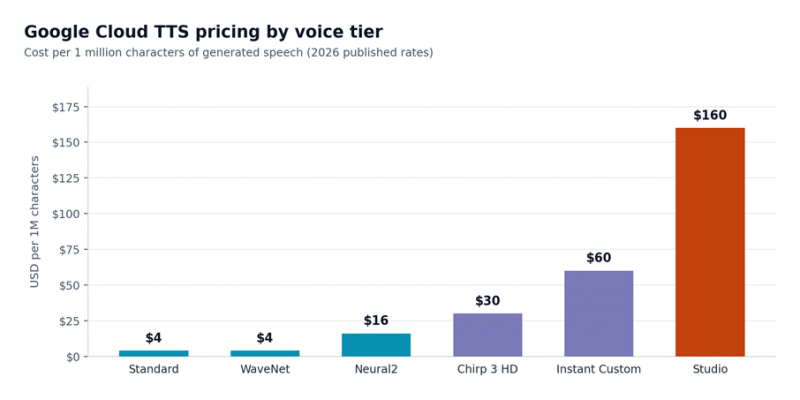
Standard and WaveNet handle most production workloads. Studio-grade voices cost 40x more, which constrains where they fit.
Trade-offs
| Strengths | Limitations |
|---|---|
| Predictable usage-based pricing | Requires GCP project setup and developer skills |
| Free tier renews monthly with no expiration | No browser-based editing interface |
| Multiple voice tiers for cost optimization | Studio voices significantly pricier than alternatives |
| Native integration with Vertex AI and Dialogflow | SSML support varies by model |
Best fit
Development teams building voice features into products, applications needing predictable per-character pricing at scale, and organizations already invested in Google Cloud infrastructure.
Side-by-side reference
The headline differences are easier to scan in a single view.
| Tool | Strongest at | Voice library | Entry price | Commercial use |
|---|---|---|---|---|
| ElevenLabs | Realism and long-form narration | 70+ languages | Starter $5/mo | Paid tiers only |
| Murf AI | Corporate workflows and low-latency API | 200+ voices, 35+ languages | Creator from $19/mo | All paid tiers |
| Play.ht | Multilingual breadth | 800+ voices, 140+ languages | Premium ~$31/mo | Free tier (verify) |
| Speechify Studio | Listening and light creation | 50+ Studio voices | Starter $19/mo | Paid tiers |
| LOVO Genny | All-in-one creator studio | 500+ voices, 100+ languages | Basic ~$24/mo | Paid tiers |
| Google Cloud TTS | Developer API at scale | 380+ voices, 75+ languages | Usage-based | Standard cloud terms |
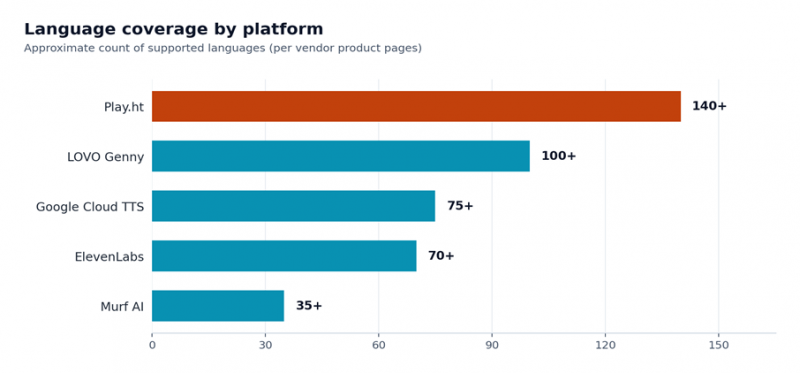
Play.ht leads on raw language count, though voice quality on tail languages varies across all platforms.
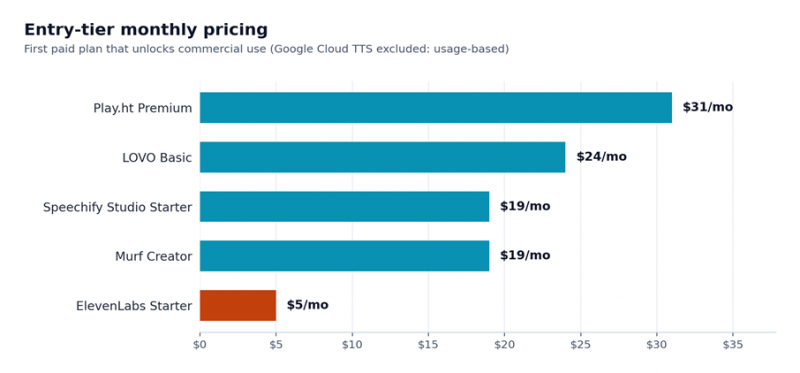
ElevenLabs Starter at $5/month undercuts the rest of the consumer tools by a wide margin.
Pricing and feature limits shift frequently across all of these platforms. Verifying the current published rate on each platform before committing is always worthwhile.
Matching tools to the workflow
The right pick depends almost entirely on what is being produced and who it is being produced for.
• Audiobook narration, narrative podcasting, character voices. ElevenLabs remains the strongest default. Long-form emotional consistency is where its lead is most visible.
• Corporate training, e-learning modules, multilingual sales videos. Murf AI fits best. The PowerPoint and Google Slides plugins, plus compliance certifications, matter more than peak voice realism.
• Multilingual content rollout and dialogue-driven podcasts. Play.ht earns its place on language coverage and the multi-speaker dialogue feature, with the caveat that quality dips on smaller languages.
• Reading articles and documents aloud, accessibility-first use. Speechify Reader is the consumer leader, and its device coverage is unmatched for daily personal use.
• Single-creator video production with script, voice, and image generation. LOVO Genny consolidates the workflow into one subscription, which has real value for solo creators.
• Voice-enabled product features and scaled API usage. Google Cloud TTS, or one of the developer-first APIs such as Cartesia for ultra-low latency or Fish Audio for cloning quality, usually beats consumer platforms at the API level.
Where synthetic voices still fall short
The progress is real, but a few limitations remain consistent across every platform.
- Emotional range still has soft ceilings. Anger, grief, comedic timing, and irony are harder for AI voices to land than calm narration. Voice actors continue to hold the edge on intimate or character-heavy work where emotional texture is the point.
- Pronunciation of unusual proper nouns and technical terms is uneven. Even premium voices mispronounce uncommon names, regional places, and domain jargon, requiring manual pronunciation overrides or phonetic spelling.
- Long-form consistency, while dramatically better, can still drift on multi-hour outputs. Voice clones in particular sometimes lose stability over extended generation, requiring chunked workflows.
- Language coverage is misleading on numbers alone. A platform claiming 140 languages may have only one voice per language outside the major five or ten, with quality varying considerably across those tail languages.
- Voice cloning ethics and licensing remain a watch area. Major platforms require consent for cloned voices, but enforcement is uneven, and creators using cloned voices commercially should keep their licensing documentation current.
Bottom-line picks
For sheer voice quality on long-form narrative work, ElevenLabs is the safest default and the hardest to beat. For corporate and e-learning teams that value workflow integration and compliance, Murf AI is the more practical investment. Multilingual creators and dialogue-driven podcasters get the broadest reach from Play.ht. Speechify remains the best reader app for personal use, with Studio as a competent secondary option. LOVO Genny is the smartest pick for solo creators who want one studio for script, voice, image, and video. And for engineering teams embedding voice into products, Google Cloud TTS (alongside developer-first competitors like Cartesia and Fish Audio) offers the pricing transparency and scale a subscription tool cannot match.
The market is moving fast enough that testing each shortlisted platform with an actual production script remains the only reliable way to make the final call. Demo reels lie politely. Real workflows do not.
Post Comment
Share your thoughts about this article.
Be the first to post a comment!