Table of Content
- Digital Entertainment Is Becoming More Interactive
- Personalization Is Now a Core Experience
- Real-Time Engagement Is Becoming More Valuable
- AI Is Changing the Role of Digital Platforms
- Virtual Experiences Are Becoming More Mainstream
- Creator-Led Platforms Will Also Benefit
- Trust Will Decide Long-Term Success
- The Future of Entertainment Will Be Adaptive
Digital entertainment is no longer built only around watching, scrolling, or consuming content. The industry is moving toward experiences that respond to users in real time, adapt to individual preferences, and make online interaction feel more personal. Artificial intelligence is becoming one of the main reasons behind this shift.
For years, entertainment platforms focused on access. The goal was to offer more videos, more streams, more creators, more categories, and more ways to browse. That model still matters, but it is no longer enough on its own. Users now expect digital platforms to understand their behavior, reduce friction, and create experiences that feel relevant from the first few interactions.
This is where AI-powered digital entertainment platforms are gaining attention. They are not simply adding automation to existing systems. They are changing the way users discover content, interact with digital spaces, and spend time online.
Digital Entertainment Is Becoming More Interactive
The older internet was mostly passive. A user searched for content, clicked on something, consumed it, and moved on. Even when platforms introduced recommendation systems, the core experience still depended on browsing and selection.
Today, that pattern is changing. AI allows platforms to create more responsive journeys. A user’s interests, previous actions, session behavior, and preferred style of interaction can all influence what appears next. This makes the experience feel less like a static library and more like a digital environment that adapts.
Interactive entertainment is especially important because attention is harder to keep than ever. Users move quickly between apps, websites, videos, games, and social platforms. If a platform feels slow, generic, or difficult to navigate, people leave. If it feels personalized and easy to engage with, they are more likely to return.
Personalization Is Now a Core Experience
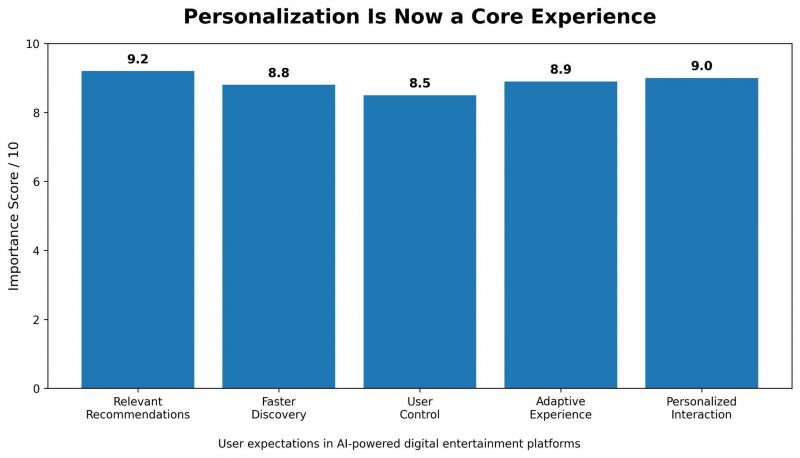
Personalization used to be treated as an extra feature. Now it is becoming one of the most important parts of digital product design.
A modern entertainment platform cannot rely only on large content volume. It also needs to help users find the right experience faster. AI can support that by improving recommendations, adjusting interface flows, identifying user preferences, and creating more relevant interaction paths.
This is visible across streaming platforms, gaming tools, social apps, virtual spaces, and AI-based entertainment products. The common pattern is simple: users want less searching and more relevance.
A platform that understands this can create stronger engagement without overwhelming the user. The experience becomes smoother because the platform feels less random and more aligned with what the user is actually looking for.
Real-Time Engagement Is Becoming More Valuable
One of the biggest strengths of AI in entertainment is real-time response. Instead of waiting for users to manually explore everything, platforms can guide discovery, personalize suggestions, and make interaction feel more immediate.
This matters because digital audiences are becoming used to instant feedback. They expect quick responses from chat tools, fast recommendations from video apps, and personalized feeds from social platforms. The same expectation is now moving into entertainment platforms of all kinds.
Real-time engagement does not always mean live interaction. It can also mean adaptive recommendations, dynamic interfaces, smart search, personalized prompts, and user journeys that change based on behavior. The best platforms will be the ones that use these features quietly and naturally, without making the user feel controlled by the system.
AI Is Changing the Role of Digital Platforms
Earlier, a platform’s job was mostly to host content. Now, platforms are becoming experience managers.
That shift is important. A platform is no longer judged only by how much content it has. It is judged by how intelligently it organizes that content, how quickly it understands the user, and how naturally it supports interaction.
AI gives platforms the ability to improve discovery, reduce friction, and create more flexible experiences. For users, this can mean better recommendations, faster navigation, and more personalized digital environments. For creators and platform owners, it can mean higher engagement, better retention, and stronger user satisfaction.
The strongest digital platforms will not use AI only as a trend. They will use it to solve real experience problems.
Virtual Experiences Are Becoming More Mainstream
Virtual interaction is becoming a normal part of online entertainment. People are already used to digital avatars, AI chat interfaces, creator-led communities, live digital events, virtual influencers, and interactive media formats. The shift is not only about technology; it is about giving users more control over the kind of experience they want.
This is why many digital entertainment platforms are moving away from simple browsing and toward more personalized interaction. Instead of showing every user the same static experience, newer platforms are trying to make online engagement feel more responsive, flexible, and user-led.
In this changing space, platforms such as CamSoda.ai show how AI can be used to support more interactive digital entertainment experiences, where personalization, user preference, and real-time engagement become part of the overall platform design.
The important point is not that every platform will use AI in the same way. Some will use it for discovery, some for interaction, some for creator support, and some for personalization. But the direction is clear: digital entertainment is becoming less passive and more adaptive.
Creator-Led Platforms Will Also Benefit
AI-powered entertainment is not only useful for users. It can also support creators, publishers, and digital businesses.
Creators often need to manage content, audience engagement, discovery, messaging, analytics, and publishing workflows. AI can help reduce repetitive work and allow creators to focus more on the creative side of the experience.
For platforms, this opens up new product possibilities. AI can help match audiences with relevant creators, improve content visibility, support moderation, translate content, generate insights, and personalize user journeys.
This makes creator-led platforms more scalable. Instead of relying only on manual discovery or algorithmic feeds, platforms can build smarter systems that connect users with more relevant experiences.
Trust Will Decide Long-Term Success
AI can make entertainment platforms more engaging, but trust will decide whether users continue using them.
Users need to feel that personalization is helpful, not invasive. They need clear controls, transparent systems, and safe digital environments. If AI recommendations feel too aggressive or unclear, users may lose confidence. If the platform feels respectful and easy to understand, AI can improve the overall experience.
This is especially important as platforms collect more behavioral signals to personalize experiences. The more intelligent the platform becomes, the more important transparency becomes.
A strong AI-powered entertainment platform should give users better control, not less. It should make discovery easier, interaction smoother, and the overall experience more meaningful.
The Future of Entertainment Will Be Adaptive
The next phase of digital entertainment will not be defined only by more content. It will be defined by smarter experiences.
Users will expect platforms to understand context, adapt quickly, and offer more personalized journeys. Creators will expect better tools to manage engagement. Businesses will expect AI to improve retention, discovery, and product experience.
This does not mean every platform needs to become complex. In fact, the best AI experiences may feel simple on the surface. The intelligence should work in the background while the user enjoys a smoother and more relevant journey.
AI-powered entertainment platforms are becoming important because they reflect how people now behave online. They want speed, relevance, interaction, and control. Platforms that can deliver these qualities without becoming intrusive will have a clear advantage.
The rise of AI in digital entertainment is not just about automation. It is about building online spaces that feel more responsive, more personal, and more aligned with how users actually want to engage.
Post Comment
Share your thoughts about this article.
Be the first to post a comment!