AI coding tools now generate, complete, refactor, and debug code inside the developer's editor. Sonar's 2026 State of Code Developer Survey of more than 1,100 developers found that AI accounts for 42% of committed code, and developers expect that share to reach 65% by 2027. Development teams produce changes faster than before, but delivery speed does not follow automatically.
DeviQA's 2026 QA Report surveyed 4,000 QA professionals who had tested AI-assisted software. Sixty-five percent said new features reach testing sooner. Sixty-four percent said more features arrive at once, 55% said their QA queue has grown, and 52% reported more test-fix-retest cycles. The bottleneck has moved from code production to code validation. This article covers what that shift means for QA teams and how they can adapt.
How AI-Generated Code Is Changing Software Development
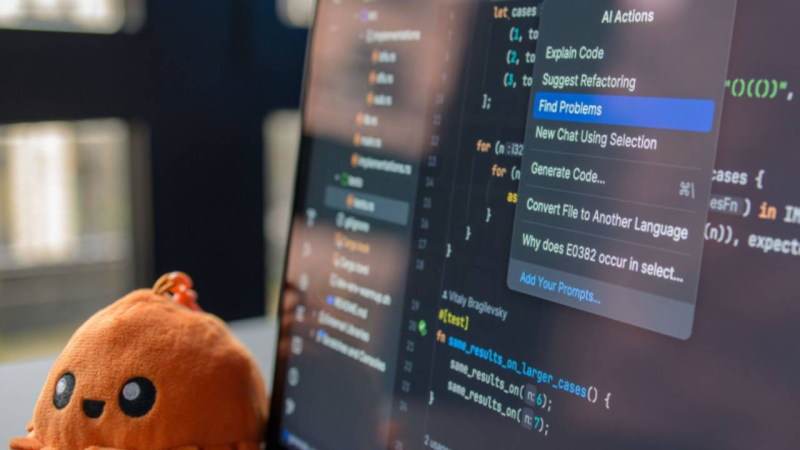
Developers now use AI across the whole coding workflow. Code generation produces functions and modules from a prompt. Code completion suggests the next lines as a developer types. Refactoring tools restructure existing code, and bug-fixing assistants propose patches. Test generation tools draft unit tests next to the feature.
Each capability shortens the path to a working change, so features move from ticket to pull request faster. LinearB's 2026 Software Engineering Benchmarks Report analyzed more than 8.1 million pull requests from over 4,800 organizations. It found that AI pull requests wait 4.6 times longer before review. Review capacity has not grown at the pace of output. The same pattern reaches QA, where more changes arrive per release and each change needs verification.
The New QA Challenges Created by AI-Generated Code
The challenge is the speed, volume, and complexity of validation. DeviQA's data shows where the effort goes.
More changes at once. Sixty-four percent of respondents said more features arrive for testing at the same time.
Larger regression scope. Fifty-two percent perform additional regression testing, and 58% examine related functionality more carefully.
Business logic errors. Forty-seven percent have at least sometimes seen AI-assisted functionality complete its primary scenario and cause problems elsewhere in the product.
Edge cases. Fifty-six percent spend extra time clarifying expected behavior.
Security risks. Sonar reports that 96% of developers do not fully trust AI-generated code, and only 48% always verify it before committing. Security review depends on that verification step.
API and integration issues. Forty-four percent said component dependencies were not adequately considered, and 42% said changes affected more components than expected or had undocumented system impact.
DeviQA notes that its findings reflect reported experience and do not compare AI-assisted changes with human-written ones. The report does not name AI as the sole cause.
5 Ways QA Teams Should Adapt in 2026
1. Move Toward Risk-Based Testing
Teams rank workflows by business impact. Payments, authentication, sensitive data, and APIs receive the deepest coverage. A checkout change in a retail app needs more scrutiny than a copy change on a help page. High-risk changes get exploratory and end-to-end testing, and low-risk changes rely on automated checks.
2. Strengthen Regression Testing
Automated regression suites run on every build. Change-impact analysis identifies which components a change touches and selects the relevant tests. DeviQA found that 52% of respondents spend more time analyzing how a change affects other parts of the product. Continuous regression testing keeps that effort sustainable.
3. Combine AI With Human QA
AI assists with test generation, test data, test maintenance, and defect analysis. QA professionals supply context, judgment, and risk assessment. The World Quality Report 2025-26 from Capgemini, Sogeti, and OpenText found that nearly 90% of organizations pursue generative AI in quality engineering, and only 15% have reached enterprise-scale deployment. Most teams are still building the practices around the tools.
4. Test Business Logic Alongside Code
Technically valid code can produce wrong business outcomes. A discount function applies a 20% promotion after tax, and invoices come out wrong. A permissions update lets a support role view billing records. A subscription change prorates a downgrade twice. A rounding routine in a loan calculator drifts by cents across thousands of accounts. Each of these compiles and passes a happy-path test. Clear acceptance criteria catch them. Respondents in DeviQA's study ranked clear acceptance criteria first among helpful practices, at 77%.
5. Adopt Continuous Quality Validation
Continuous testing runs inside the delivery pipeline. AI-assisted Security testing and performance testing run alongside it. Production monitoring sends defect data back to QA, and that data updates the risk rankings. DeviQA also proposes an AI-ready definition of done built on seven questions, including what changed, what else could be affected, and who reviewed the result.
AI Testing vs. Testing AI-Generated Code
The two terms describe different work. Testing AI-generated code validates software that AI coding tools created or assisted. The product may contain no AI features. A payroll application built with a coding assistant is an example.
AI testing validates an AI-powered product or model. A fraud-detection model and a customer-support chatbot are examples. The quality areas include accuracy, bias, hallucinations, explainability, data quality, model drift, and adversarial testing.
Many products need both. An AI-powered product built with AI coding tools requires validation of the code and of the model. Kualitatem, a quality engineering services firm, is one example of a provider offering AI testing services for AI and machine learning systems and agentic AI.
The Future of QA Is More Strategic and Stays Human
AI handles a growing share of repetitive testing work. QA professionals spend the freed time on risk analysis, exploratory testing, business logic, security, complex workflows, and quality strategy. DeviQA found that 56% of respondents have increased exploratory testing, and 56% have increased end-to-end testing. The judgment behind those activities comes from people.
Sonar's CEO, Tariq Shaukat, describes value in software engineering as shifting from the speed of writing code to the confidence in deploying it. As AI makes code faster and cheaper to produce, the ability to validate that code correctly becomes more valuable.
Conclusion
AI-generated code has changed the speed, volume, and complexity of software development. Research from DeviQA, Sonar, and LinearB shows the pressure moving to review and testing. Teams that adopt risk-based testing, stronger regression, human-guided AI, business logic validation, and continuous quality checks can validate software at the pace it is produced.
Post Comment
Share your thoughts about this article.
Be the first to post a comment!