Content Pillar: Definition
A content pillar is a broad core topic that a brand consistently creates content around. Instead of posting about anything and everything, you pick 3 to 5 main themes that match your niche and your audience. Then every blog post, video, reel, and newsletter you create grows out of one of those themes.
Key takeaways 1) A content pillar is a main topic; all other content branches from it. |
Think of it like a house. The pillars hold everything up. Take them away and the content strategy collapses into random posts with no direction.
The word "pillar" is used in two connected ways, and this is where most people get confused:
• On social media: a pillar is a recurring theme in your calendar. A fitness coach's pillars might be workouts, nutrition, and client results.
• In SEO: a pillar is a long pillar page that covers one broad topic from start to finish, supported by shorter cluster posts that each cover one small piece and link back to it.
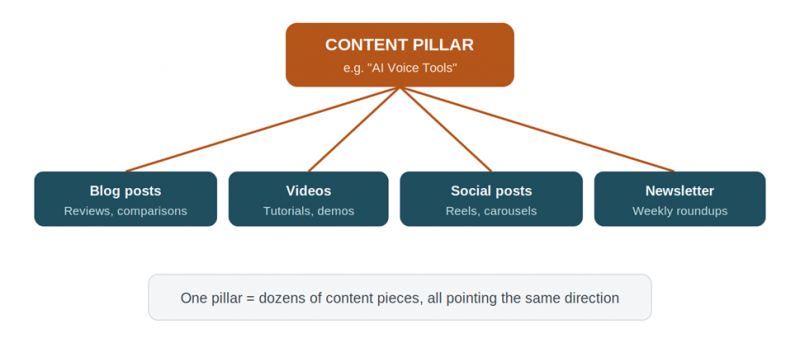
Fig 1. One pillar topic feeds every format you publish.
One-line version A content pillar is the main topic. Everything else you publish is a branch of it. If a post can't be traced back to one of your pillars, it probably shouldn't exist. |
Why Content Pillars Matter

Pillars aren't just an organizing trick. They solve four real problems at once:
1. Google starts trusting you Search engines reward sites that cover a topic deeply, not just once. A pillar page plus 8 to 15 linked cluster posts tells Google your site is an authority on that subject, and rankings rise across the whole group. |
2. No more "what do I post today?" Pillars turn planning into a system. Each pillar breaks into dozens of smaller ideas, so your calendar fills itself months ahead instead of one panicked morning at a time. |
3. People know why to follow you When your audience can predict what you talk about, following you becomes an easy decision. Pillars keep your feed recognizable instead of scattered. |
4. Create once, publish everywhere One pillar topic becomes a blog post, a video, a carousel, a newsletter, and ten short clips. The work compounds instead of disappearing after one post. |
Types of Content Pillars
Most brands balance their pillars across four intent types so the feed isn't 100% selling and isn't 100% jokes either:
| Type | Job it does | Example formats |
|---|---|---|
| Educational | Teaches something useful, builds trust and search traffic | How-to guides, tutorials, explainers, FAQs |
| Inspirational | Shows what's possible, builds emotional connection | Case studies, success stories, transformations |
| Entertaining / Community | Earns attention and shares, humanizes the brand | Memes, trends, behind-the-scenes, polls |
| Promotional | Turns attention into revenue | Product demos, comparisons, offers, testimonials |
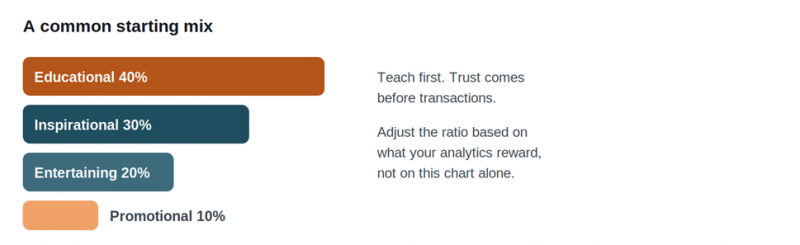
Fig 2. A 40/30/20/10 mix is a starting point, not a law.
Pillar Page vs Topic Cluster
Here's the SEO side of pillars, explained without jargon. The model has three parts:
• Pillar page: one long page (often 3,000+ words) that targets a broad keyword like "email marketing." It touches every subtopic briefly and links out to the clusters.
• Cluster pages: focused posts that target specific searches like "email subject line examples" or "best time to send emails." Each one links back to the pillar.
• Internal links: the glue. The pillar links down to clusters, clusters link up to the pillar. Authority flows both ways.
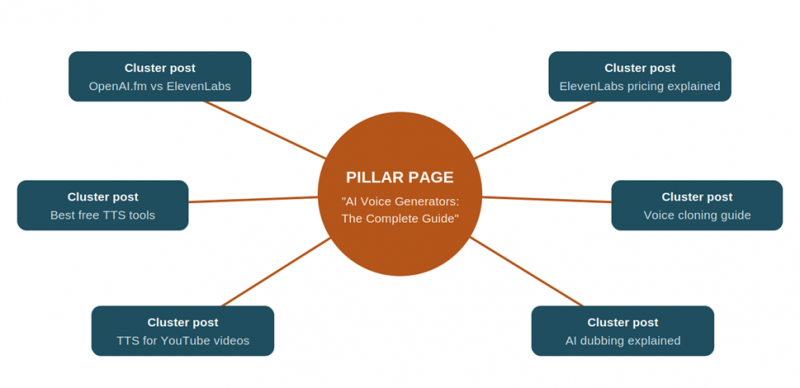
Fig 3. The topic cluster model: one hub, many spokes, links in both directions.
| Aspect | Pillar page | Cluster post |
|---|---|---|
| Keyword type | Broad, high volume ("content marketing") | Specific, long-tail ("content marketing for SaaS startups") |
| Length | Long and comprehensive | As long as the subtopic needs, usually shorter |
| Goal | Rank for the big term, organize the topic | Rank for specific questions, feed authority to the pillar |
| Linking | Links to every cluster | Links back to the pillar, plus sibling clusters where relevant |
Content Pillar Examples
Example 1: A tech review blog
Pillars: AI tool reviews, SEO and traffic, content creation workflows. Under the AI tool reviews pillar alone: head-to-head comparisons (like OpenAI.fm vs ElevenLabs), single-tool deep dives, pricing breakdowns, "best tools for X" roundups, and monthly update posts. Every one of those cluster posts links back to a pillar page such as "The Complete Guide to AI Voice Generators." That's exactly the structure in Fig 3 above.
Example 2: A fitness coach
Pillars: home workouts, nutrition basics, client transformations, coaching offers. The first two teach, the third inspires and proves results, the fourth sells. One workout topic becomes a blog post, a YouTube follow-along, three reels, and a newsletter section.
Example 3: A B2B SaaS company
Pillars: the problem space (say, "project management chaos"), the method (how to fix it), product education, customer stories. The pillar page "What Is Agile Project Management" anchors a dozen cluster posts on sprints, standups, retros, and tools.
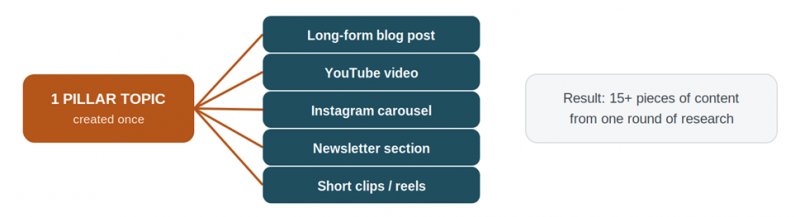
Fig 4. Repurposing: research once, publish everywhere.
How to Create Content Pillars: 6 Steps
STEP 1
Get clear on who you serve and what you sell
Good pillars sit at the overlap of three circles: what your audience searches for, what you're genuinely credible on, and what leads to your product or service. Write one sentence for each before picking anything. If a topic only ticks one circle, it's not a pillar.
STEP 2
Brain-dump every topic, then group them
List 30 to 50 topic ideas from customer questions, sales calls, competitor blogs, and keyword tools. Don't filter yet. Then sort them into natural groups. The 3 to 5 biggest groups are your pillar candidates.
STEP 3
Test each candidate against real data
For each one, check three things: does the main term have real search volume? Can you list at least 10 to 15 smaller subtopics under it? Does your audience actually engage when you post about it? A topic that fails all three is a hobby, not a pillar.
STEP 4
Write the pillar page first
Create the big guide that targets the broad keyword. Structure it with clear sections that each map to a future cluster post, so your internal links will have a logical home when the clusters go live.
STEP 5
Publish clusters on a schedule and link everything
Roll out cluster posts consistently, one or two per week per pillar. Link each new cluster back to the pillar page with descriptive anchor text, and update the pillar page to link down to the new cluster. Skip this and you just have scattered pages.
STEP 6
Repurpose, measure, and prune
Turn each cluster into platform-native pieces (video, carousel, thread, newsletter). Then review quarterly: which pillar drives traffic, which drives sales, and which is dead weight. Cut or merge the weak ones. Double down on the winners.
How Content Pillars Work
A pillar is not a label you stick on posts after publishing. It is a working system with five moving parts, and each part feeds the next. Here is the full mechanism, from picking a topic to the point where the strategy starts running itself.
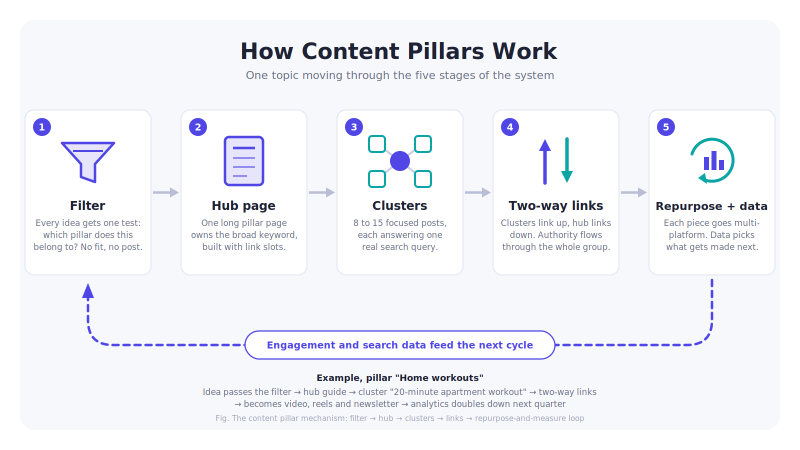
| How it works in 30 seconds One pillar topic → one hub page → 8 to 15 cluster posts → internal links connecting them → each piece repurposed across platforms → engagement and search data deciding what gets made next. Every stage produces the raw material for the stage after it. |
1. The pillar acts as a filter before anything gets made
The first job a pillar does is say no. Every content idea gets one test: which pillar does this belong to? An idea that fits gets made; an idea that fits nothing gets dropped, no matter how clever it feels. This single gate is what keeps a feed recognizable and a blog focused, and it works before a word is written.
2. The pillar page becomes the hub
On the SEO side, the pillar takes physical form as one long hub page targeting the broad keyword (the "email marketing" or "home workouts" of your niche). Its structure is deliberate: each section of the pillar page maps to a future cluster post, so the page is built with empty link slots that clusters will fill later. The hub does not try to rank for every small query. Its job is to own the big term and organize the topic.
3. Clusters split the topic into searchable pieces
Nobody searches a broad term alone. They search "email subject line examples," "best time to send emails," "email marketing for SaaS startups." Cluster posts exist to catch exactly these long-tail searches, one specific question per post. Each cluster is small enough to answer one query completely, which is what individual posts rank for.
4. Internal links move authority through the group
This is the step that makes pillars work as a system instead of a folder of related posts. Every cluster links up to the pillar page with descriptive anchor text, and the pillar page links down to every cluster. When Google crawls this structure, the two-way links tell it these pages belong together and that the hub is the most important one. Ranking power earned by any single cluster flows through the links to the rest of the group. That is why a new cluster post on a mature pillar can rank in days while the same post on a fresh site takes months: it inherits the group's authority the moment it is linked in.
5. Repurposing multiplies each piece, and data closes the loop
The same pillar that structures your blog structures your calendar everywhere else. One cluster post becomes a video, a carousel, a thread and a newsletter section, each linking back to the original. Then the loop closes: platform engagement shows which pillar your audience wants more of, search data shows which clusters pull traffic, and both decide what gets made next quarter. The pillars stop being a plan you follow and become a machine that tells you what to build.
A worked example: one topic through the whole system
Take the fitness coach from the examples below, pillar: home workouts.
- Filter: an idea about "my favorite protein bars" gets rerouted to the nutrition pillar; an idea about "morning routines of CEOs" gets dropped, because it fits no pillar.
- Hub: the pillar page is "The Complete Guide to Home Workouts," with sections on equipment-free training, small-space setups, 20-minute sessions and progress tracking.
- Clusters: "20-minute apartment workout, no equipment," "resistance band leg day," "how to track progress without a gym." Each targets one real search.
- Links: every cluster links up to the guide; the guide's matching section links down to each cluster as it goes live.
- Repurpose and measure: the resistance band post becomes a YouTube follow-along, three reels and a newsletter workout. Ninety days later, analytics show the small-space cluster outperforming everything, so next quarter's calendar doubles down there.
Common Mistakes to Avoid

• Too many pillars. Seven pillars works out the same as zero. Depth beats breadth. Start with 3.
• Pillars nobody searches for. If a topic has no search demand and no social engagement, it can't carry a strategy no matter how much you love it.
• Writing clusters with no pillar page. Fifteen scattered posts without a hub don't build topical authority. The hub is the whole point.
• Forgetting the internal links. A pillar page and clusters that never link to each other are just pages sitting near each other.
• Making every pillar promotional. If every theme sells something, nobody follows. Balance the four intent types.
• Set and forget. Your audience and product change, so your pillars should too. Review them at least twice a year.
The simplest health check Open your last 20 posts. Can each one be assigned to a pillar in under 3 seconds? If more than a few can't, your strategy has drifted and it's time to prune. |
Final Verdict: Are Content Pillars Worth It?
Yes, and mainly because of what they cost: nothing. Content pillars require no tool, no subscription, and no new skill. They only require the discipline to pick 3 to 5 themes and say no to everything outside them. For most creators and small teams, that single decision fixes the two biggest content problems at once: a random-looking feed and a calendar that never fills itself.
The real value is the filter, not the framework. Once pillars are in place, every content idea faces one question before it gets made: which pillar does this belong to? A comparison post like OpenAI.fm vs ElevenLabs, for example, isn't a random idea; it's a cluster post doing three jobs under an "AI tool reviews" pillar: feeding a pillar page, targeting a real search query, and reaching the exact audience the site serves.
Expect the payoff to be slow, then sudden. The first month feels like extra work, because writing the pillar page before the fun cluster posts feels like eating vegetables first. By the second or third month, the pattern flips: cluster posts start lifting each other in search, the calendar plans itself, and the daily "what should we post?" question disappears.
One caution on the standard advice: the 40/30/20/10 content mix and the "3,000+ word pillar page" figures in this guide are starting points, not laws. Audiences differ. A review-focused site may need far more educational content than any template suggests. Borrow the structure, then let your own analytics rewrite the ratios.
Start with pillars today if You publish regularly but your traffic is flat, your feed feels random, or you spend more time deciding what to post than actually posting. Pick 3 themes this week, write the pillar page first, and build clusters around it. |
Hold off for now if You genuinely don't know your niche or audience yet. Pillars organize a direction; they can't invent one. Spend a month posting freely, watch what people respond to, and let that data choose your first 3 pillars for you. |
Post Comment
Share your thoughts about this article.
Be the first to post a comment!