The short answer first Pick Pica AI if you want a clean, simple app for face swaps, sharpening photos, and restoring old or damaged pictures, with a predictable monthly plan. Pick Remaker AI if you want a wider toolbox (face swap, batch editing, video, headshots, generators), prefer paying only for what you use, or you are a developer who needs an API. Many people will not go wrong with either for casual use. The split happens around volume, video, and whether you ever need to plug the tool into your own software. |
Why these two get compared at all
On a feature list, Remaker AI and Pica AI overlap a lot. Both swap faces in photos and short videos. Both sharpen and upscale images. Both generate professional looking headshots from selfies, and both run in a browser with companion mobile apps. If you only glance at the homepages, they can feel interchangeable.
The useful differences show up once you push past the basics. Remaker AI is built as a broad, do-everything editing suite with a credit system and a developer API behind it. Pica AI is built as a focused consumer app that does a smaller set of jobs with a clean, beginner friendly flow. One is a workshop full of tools. The other is a few well organized tools you can use without thinking.
So the real question is not which tool is better in the abstract. It is which one fits the specific job you keep coming back to. The sections below are organized around those jobs.
Match the tool to the task
If you just want fun, fast face swaps
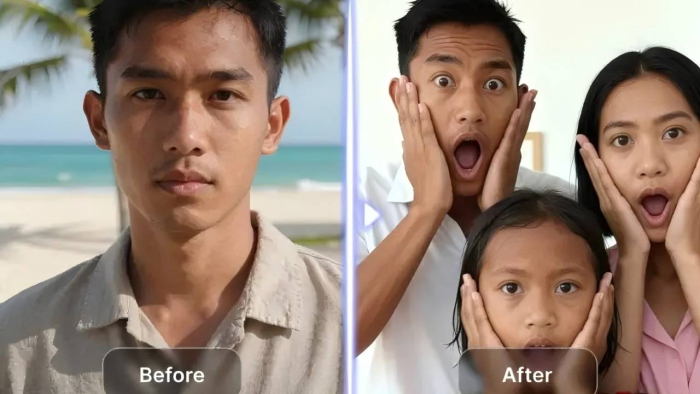
Both handle this well, and for a quick swap you will be happy with either. Pica AI leans into simplicity: upload a face, pick a target photo or short clip, and you get a result with very little fuss. It also keeps a template library, so you can drop your face into ready made scenes without hunting for source images.

Remaker AI gives you more swap modes, including single, batch, and longer video swaps. If you want to swap several faces across many images at once, or work with clips that run longer than a few seconds, Remaker has more room to move. For one off social posts, the extra options are not necessary. For repeat use, they start to matter, especially if you are reading this as part of a Remaker AI review.
Practical tip: Face swap quality drops on both tools when the source and target faces sit at very different angles or lighting. A front facing, well lit source photo gives you the cleanest result on either platform.
If you need to rescue or sharpen real photos
This is where Pica AI has a clearer story. It includes a dedicated old photo restoration feature aimed at scratches, faded color, and lost detail, alongside an enhancer that upscales images up to around four times their size toward near 4K. If your main goal is reviving family photos or cleaning up blurry shots, that focus is a real advantage.

One thing to know: As of late 2025, Pica AI's photo enhancer was folded into a sister product called Artguru, so some enhancement now runs on that engine while face swap, headshots, and avatars stay under the Pica AI name. The results are still good, but it is worth being aware of where the work is happening.
Remaker AI also upscales and enhances, and it covers more editing jobs overall (object removal, background cleanup, magic eraser, and more). That said, at least one independent hands on review found its upscaler underwhelming compared to its other tools. If photo repair is your single most important use, test it on your own images before committing.
If you want professional headshots
Both offer an AI headshot generator that turns selfies into cleaner, profile ready portraits for LinkedIn, resumes, and team pages. Quality on this kind of feature varies a lot by the photos you feed it and by your face, more than by the brand. The honest move is to run a few of your own selfies through each free tier and compare the actual output, rather than trusting either marketing page.
If you are processing lots of images
This is a clearer win for Remaker AI. Its batch tools are built for volume. Background removal, for example, can run on a sizable set of images in one pass, which is exactly what online sellers and marketers need when they are cleaning up product photos. Pica AI is comfortable for personal, one at a time editing, but it is not designed as a high throughput production tool.
Scenario: An ecommerce seller with fifty new product shots a week will save real time with Remaker's batch background removal. A casual user touching up a handful of vacation photos will barely notice the difference.
If you are building this into software
Here the two tools genuinely part ways, and this is the most important section for developers.
Remaker AI offers a developer API, including face swap, so you can call it from your own app, automate it, or wire it into a no code platform. That makes it a candidate when you need programmatic image editing inside a product or pipeline, not just a website you click through.
Pica AI does not publish a public developer API. Its tools are meant for direct use on the web and in its mobile apps. If a teammate suggests “the Pica face swap API,” double check the name, because several unrelated products use similar branding. As of this writing, there is no official Pica AI API to build against.
Developer takeaway: If your project needs API access, Remaker AI is the only one of the two that fits, and you should still confirm current endpoints, rate limits, and pricing in its documentation. If you only need a tool a human will operate by hand, this distinction does not affect you.
Remaker AI and Pica AI side by side
A quick reference for the points covered above. Where a detail is known to shift, the table says so rather than pretending it is fixed.
| What you are checking | Remaker AI | Pica AI |
|---|---|---|
| Main focus | Broad AI photo and video toolbox: swap, edit, enhance, generate | Streamlined photo enhance, restore, swap, and headshots |
| Platforms | Web, Windows, Mac, iOS, Android | Web, iOS, Android |
| Face swap | Single, batch, and longer video swaps | Single and multi face up to three, plus a template library |
| Photo restoration | Covered through enhance and cleanup tools | Dedicated old photo restoration for scratches, color, detail |
| Headshots | AI headshot generator | AI headshot generator for profiles and resumes |
| Batch processing | Strong: built for volume work | Limited: tuned for one at a time editing |
| Video | Yes, including face swap on longer clips | Short video face swap |
| Underlying models | Choice of models is offered for some tools | Not publicly specified; some enhancement via Artguru since late 2025 |
| Pricing model | One time credit packs, credits marketed as non expiring | Freemium with daily free credits plus subscription plans |
| Free tier | Sign up credits plus a small daily allowance | Daily refreshing free credits |
| Developer API | Yes, including a face swap API | Not offered publicly |
| Privacy note | Payments handled by Stripe | States face swap uploads are deleted within about 24 hours |
| Watch outs | Occasional downtime, thin support, uneven upscaler | Enhancer engine moved to Artguru, multi face capped at three, pricing varies |
Pricing
The two tools charge in different shapes, which matters more than any single price.
Remaker AI: pay for what you use
Remaker AI runs on credits. New users get a batch of free credits at sign up plus a small daily allowance, which is enough to test most features. Beyond that, you buy credit packs:
• Free Plan: Sign-up credits + small daily allowance
• Basic Pack: ~$9.99 for 100 credits (one-time)
• Standard Pack: ~$19.99 for 250 credits (one-time)
• Pro Pack: ~$49.99 for 700 credits (one-time)
Credits are marketed as one-time purchases that do not expire. One detail to watch: some listings display these packs with monthly-style labels even though they are sold as one-off purchases, so read the checkout terms carefully before you assume anything recurring.
The appeal of this model is simple. If you edit in bursts, you top up, use the credits, and stop paying until you need more. There is no monthly fee sitting on your card between projects.
Pica AI: a steady subscription
Pica AI uses a freemium model with free credits that refresh daily, then paid subscription plans for heavier use and higher limits:
• Free Plan: Daily refreshing credits (limited usage)
• Basic Plan: ~$4.99/month - increased daily credits, standard features
• Pro Plan: ~$9.99/month - higher limits, priority processing, access to all tools
• Annual options are available at a discount, and occasional one-time packs exist for specific features.
Exact figures vary by region and change over time, so the only reliable number is the one on the pricing page when you check out.
The appeal here is predictability. You pay a known amount, you get a known allowance, and you do not have to think about credit math each time you sit down to edit.
How to choose on price alone Edit occasionally or in project bursts: Remaker AI's one time credits usually cost less over a year. Edit regularly, every week or most days: Pica AI's flat subscription is easier to predict and budget. Either way, start on the free tier of both and watch how fast you burn through it before paying. |
Best fit by use case
If you would rather skip the reading and match your situation to a recommendation, use this.
| If your main goal is | Lean toward |
|---|---|
| One off, fun face swaps for social media | Either; Pica for the simplest flow |
| Restoring old or damaged family photos | Pica AI |
| The widest range of effects, plus video | Remaker AI |
| Bulk editing product photos for a store | Remaker AI |
| Professional headshots from selfies | Either; test both free tiers |
| Building face swap into your own app | Remaker AI (API) |
| A subscription you can predict monthly | Pica AI |
| Paying only for what you use | Remaker AI |
Refund Policies Matter
The original comparison discusses payment style but not what happens when the output is disappointing.
Remaker has a narrow refund window. A refund is available only when all of the following conditions are met:
- It is the account’s first purchase.
- No more than 50 credits have been used.
- The request is submitted within three days of payment.
- The user provides a detailed justification.
Remaker says it does not guarantee a refund for lack of use, a change of mind or subjective dissatisfaction. Approved refunds can take between five and ten business days to return to the original payment method.
Pica’s refund route depends on where the purchase occurred. Apple and Google transactions must generally be handled through the respective store. Pica says web-payment questions can be sent to its support address and that unused services may qualify for a refund under certain circumstances.
Neither platform should be purchased with the assumption that poor output will automatically lead to a refund. Test still images before committing to a large credit pack, subscription or headshot package.
Privacy Comparison
Face-swap tools process information that is more sensitive than an ordinary background remover. A portrait can reveal facial geometry, age estimates, skin tone and other attributes.
Pica AI
Pica’s privacy policy says it processes the location and shape of facial features. Depending on local law, that information may qualify as biometric data. Pica says the information is used to generate the requested output rather than to identify or authenticate a person.
The policy also makes an important distinction between uploads and outputs:
- Uploaded photos and videos are not used to train Pica’s AI technologies.
- Generated content may be used for training.
- Content stored in an account can remain until the user removes it or deletes the account.
- Some records may be retained longer for security, fraud prevention, legal obligations or financial record keeping.
- Data may be processed in the United States, mainland China and Hong Kong.
Pica states that it does not sell uploaded photos or videos, but its terms grant the company a temporary licence to use user-generated content to operate and improve the service. Training that occurred before account deletion is not reversed by later deletion.
Remaker AI
Remaker’s privacy policy is less specific about uploaded portraits. It concentrates heavily on advertising and analytics data.
The policy says Remaker and its partners may collect IP addresses, browser information, device identifiers, interaction data and cookie identifiers. It also discusses Google Analytics, advertising cookies and retargeted advertisements shown on other websites.
Remaker’s public privacy document does not provide an equally clear explanation of how long uploaded face images, generated swaps or facial information are retained. This does not prove that the files are stored indefinitely. It means the published policy offers less transparency about this part of the service.
For highly personal portraits, Pica provides more detail about facial processing and deletion. Remaker’s policy provides more detail about advertising tracking but leaves important upload-retention questions unanswered.
Where each one will annoy you
No tool is all upside. Knowing the rough edges in advance saves you from a frustrated afternoon.
Remaker AI
• Its upscaler has drawn criticism in independent testing, so do not assume every tool in the suite is equally strong.
• Users have reported occasional downtime, and customer support is described as thin. Plan for that if you depend on it for deadline work.
• Longer video face swaps can lose clarity, and swaps struggle when faces sit at very different angles.
• The broad toolbox can feel busy if all you wanted was one simple task.
Pica AI
• Multi face swap is capped at three faces per image, which is limiting for large group shots.
• The enhancer moving to the Artguru engine in late 2025 can be confusing when you are trying to understand what runs where.
• It is not built for batch or automated work, so high volume jobs feel slow.
• Pricing details vary across sources, so always confirm the current plan before subscribing.
Using face swap tools responsibly
Both tools center on face swapping, which is powerful and easy to misuse. A few practical rules keep you on the right side of both the law and basic decency.
• Only swap or edit faces of people who have agreed to it. Using someone's likeness without consent can cause real harm and can be illegal where you live.
• Do not create content that makes a real person appear to say or do something they did not. That is the line between a fun edit and a harmful deepfake.
• Follow each tool's content policy. Commercial use is generally allowed within those policies, but the policy, not your assumption, is what governs.
• When an edit could mislead, label it as AI generated. Transparency protects you and your audience.
None of this is legal advice, and rules differ by country and platform. When the stakes are high, check the specific law and the platform terms that apply to you.
How to decide in five minutes
Run through these in order. The first clear yes usually settles it.
1. Do you need to call the tool from your own software or automate it? If yes, choose Remaker AI for its API and stop here.
2. Is restoring old or damaged photos your single most important job? If yes, lean Pica AI and test its restoration on your worst photo.
3. Will you process images in bulk? If yes, lean Remaker AI for its batch tools.
4. Do you prefer a flat monthly bill over paying per use? Flat bill points to Pica AI, pay per use points to Remaker AI.
5. Still tied? Sign up for both free tiers, run the exact task you care about on each, and keep the one that gave you the better result with less effort.
The bottom line
Remaker AI and Pica AI are aimed at overlapping needs, but they reward different users. Pica AI is the better pick when you want a clean, focused app for face swaps, sharpening, and restoring photos, with a subscription you can predict. Remaker AI is the better pick when you want a wider toolbox, work in bulk or with video, prefer paying only when you use it, or need an API to build with.
If you are unsure, the fastest path to a confident decision is to try both free tiers on the one task you actually care about, then keep whichever did it better with less friction. That five minute test will tell you more than any feature list, including this one.
Post Comment
Share your thoughts about this article.
Be the first to post a comment!