The State of AI Voice Generation in 2026
Synthetic voice has moved from novelty into production-grade workflow over the past eighteen months. Top-tier quality now crosses the threshold where blind listening tests struggle to separate generated speech from trained human narration. Latency has fallen far enough that conversational AI agents handle live calls without the choppy half-second pauses of earlier systems. Voice cloning, once a research demo, works reliably from samples as short as three seconds.
Genesys Growth places the AI voice generators market on a 30.7 percent compound annual growth trajectory through 2033. Cartesia reports that its Sonic family lowered per-character pricing by roughly 75 percent versus earlier generations. The competitive field has clustered into clear lanes: ultra-realistic narration, low-latency engines for voice agents, enterprise platforms with brand voice governance, and developer-first APIs priced for scale.
Platforms covered in this guide were selected from rankings on the Artificial Analysis Speech Leaderboard, the HuggingFace TTS Arena, vendor documentation, and cross-referenced editorial reviews published between January and May 2026.
Quick Comparison Snapshot
The table below summarises positioning for the seven platforms reviewed in detail later. Voice quality reflects perceived naturalness from third-party benchmarks; cloning support refers to availability and minimum sample length; entry pricing shows the lowest publicly listed monthly tier outside free plans.
| Platform | Best for | Voice quality | Cloning | Entry price |
|---|---|---|---|---|
| ElevenLabs | Realism, audiobooks, creators | Top tier | 1 min sample | $5 / month |
| Murf AI | Business video, e-learning | High | Enterprise only | $29 / month |
| PlayHT | Volume output, podcasts | High | Standard / Pro | $31 / month |
| Cartesia Sonic 3 | Voice agents, real-time apps | High | 3 sec sample | $5 / month |
| WellSaid Labs | Enterprise brand voice | High | Enterprise only | $44 / month |
| Resemble AI | Developer APIs, cloning | High | Real-time clone | Pay as you go |
| Descript Overdub | Podcast and video editing | Mid to high | Personal voice | $24 / month |
Top AI Voice Generators Reviewed
Each platform is reviewed against the same evaluation framework: positioning and history, feature highlights, strengths and trade-offs, voice characteristics, and pricing. Editorial fit recommendations close each entry.
ElevenLabs
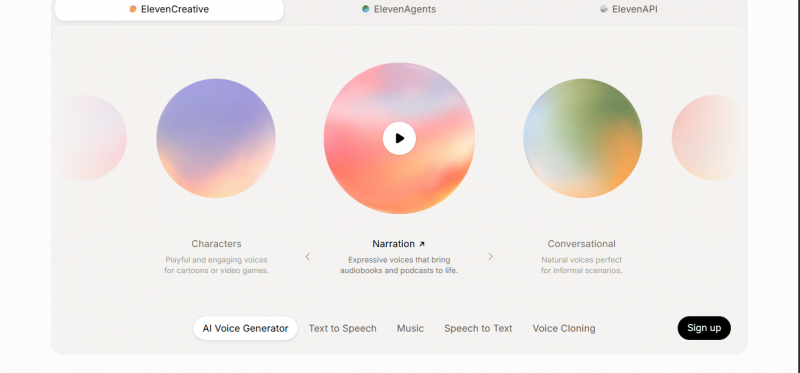
ElevenLabs sits at the top of most 2026 voice quality leaderboards. The platform built its reputation on Eleven Multilingual v2, which preserves breath sounds, natural pauses, and emotional shading. Eleven v3 now ranks second on the Artificial Analysis Speech Leaderboard with an ELO close to 1,179. Coverage includes a web interface for end users and a REST API for developers supporting text-to-speech, speech-to-speech, voice cloning, and real-time WebSocket streaming.
Key features
• Library of approximately 380 voices across 70 plus languages
• Voice cloning from one minute of clean reference audio
• Real-time streaming with sub-300 ms first-byte latency on Flash and Turbo v2.5
• Audio export at 192 kbps on Creator tier and higher
Strengths and trade-offs
• Strengths: Best-in-class naturalness, extensive multilingual library, generous free evaluation tier, robust API documentation.
• Trade-offs: Character limits feel restrictive on Starter, lower tiers compress audio output, and Scale tier reaches $330 monthly.
Pricing
Free tier with limited characters; Starter $5; Creator $22; Pro $99; Scale $330 monthly. Enterprise via sales.
Best fit: Solo creators, audiobook narrators, content studios, and developers building consumer voice features who prioritise raw realism above all else.
Murf AI
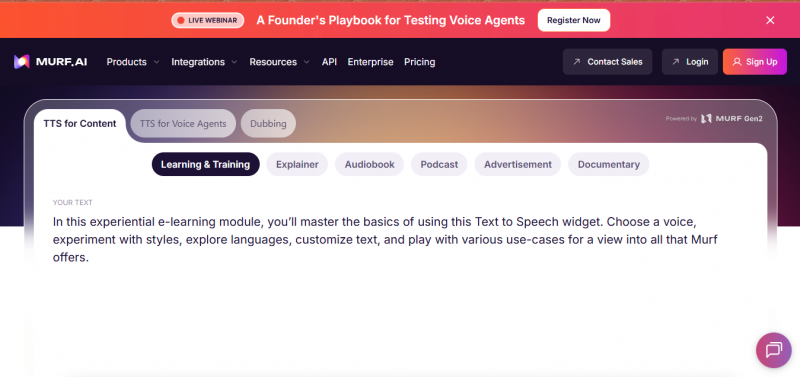
Murf AI focuses on business video and corporate narration rather than experimental realism. The Murf Gen 2 engine runs natively at 44.1 kHz and produces clean, broadcast-suitable output. The studio interface combines text scripting, voice selection, video background placement, and pacing controls in one workspace. Direct integrations with Canva, PowerPoint, and Google Slides extend the workflow into the marketing tools where corporate video work actually lives.
Key features
• Library of approximately 120 polished voices across 20 plus languages
• Pitch, speed, emphasis, and pause adjustments at word level
• Built-in video timeline editor with voice synchronisation
• Canva, PowerPoint, and Google Slides plugins
Strengths and trade-offs
• Strengths: Consistent professional delivery, strong production environment, granular voice direction controls, mature team features.
• Trade-offs: Voice cloning available only on Enterprise plans, narrower language coverage, no free tier with full feature access.
Pricing
Free tier with ten minutes monthly; Creator $29; Business $79; Enterprise custom. Annual billing reduces monthly rates by roughly 25 percent.
Best fit: Marketing teams, e-learning producers, internal communications groups, and any organisation that needs polished narration aligned to video at volume.
PlayHT
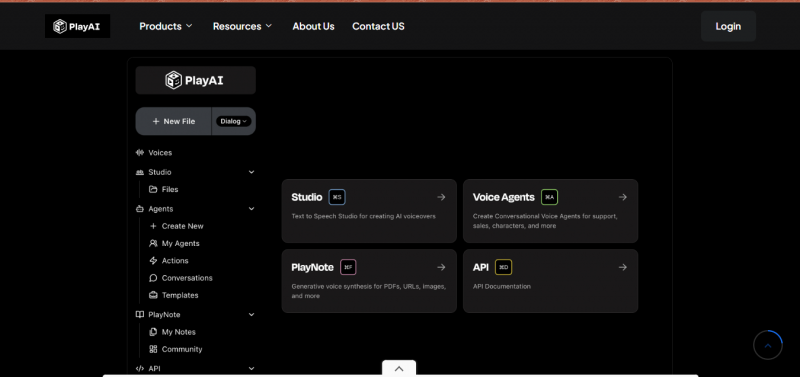
PlayHT competes on breadth: more than 600 voices across 140 plus languages and dialects, with a 48 kHz default sample rate suited to podcast and video distribution. The PlayHT 2.0 model raised quality closer to ElevenLabs, while the older 1.0 voices remain available for catalogue consistency. A real-time API targets developer workflows, and unlimited-character allowance on paid plans removes the rate anxiety that limits scale-out on competitor pricing models.
Key features
• Library exceeding 600 voices across 140 plus languages
• 48 kHz default sample rate for broadcast and video output
• Real-time API for interactive voice applications
• Voice cloning on standard and professional plans
Strengths and trade-offs
• Strengths: Largest published language coverage, unlimited characters on paid tiers, developer-friendly API pricing, strong free tier.
• Trade-offs: Quality varies between PlayHT 2.0 and older 1.0 voices, inconsistent emotional range across the wider library, fewer production tools than Murf for video work.
Pricing
Free with 12,500 characters monthly; Creator $31; Pro $99 with unlimited characters; Enterprise custom. API billed separately.
Best fit: Podcast producers, multilingual publishers, and developers who need voice generation at scale without per-character meter anxiety.
Cartesia Sonic 3
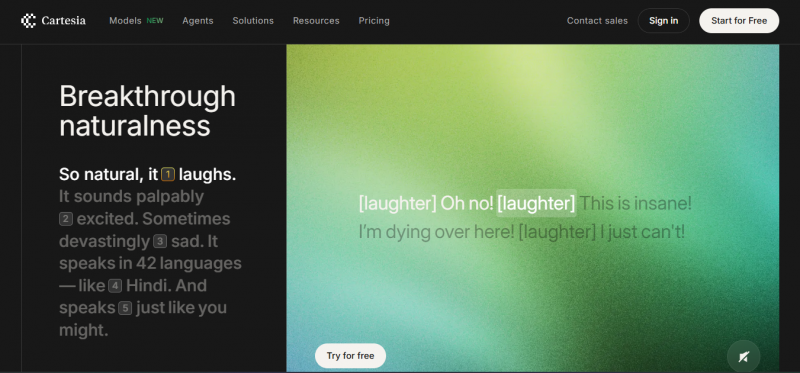
Cartesia spun out of the Stanford AI Lab and built its product on State Space Models rather than transformer architecture. The efficiency gain shows up as latency: Sonic 3 achieves roughly 90 ms model latency, with Turbo variants pushing time-to-first-audio as low as 40 ms. That advantage matters less for narrated content and matters enormously for voice agents handling real-time conversations. Sonic 3 also supports instant voice cloning from three seconds of reference audio.
Key features
• Sub-100 ms model latency on Sonic 3, with Turbo variants near 40 ms
• Instant voice cloning from three seconds of reference audio
• Support for 40 plus languages
• State Space Model architecture for linear scaling on long inputs
Strengths and trade-offs
• Strengths: Industry-leading latency, very short cloning sample requirements, transparent developer pricing, expanding pipeline with Ink streaming STT and Line agent platform.
• Trade-offs: Voice quality ranks below the top tier on the Artificial Analysis leaderboard, fewer production tools than Murf or PlayHT.
Pricing
Free for evaluation; Pro $5 with instant cloning; Startup tier with Pro Voice Cloning; Sonic 3 API at roughly $46.70 per million characters; Enterprise custom.
Best fit: Engineering teams building voice agents, live phone or call-centre AI, NPC dialogue in games, and any product where conversational latency dominates user experience.
WellSaid Labs
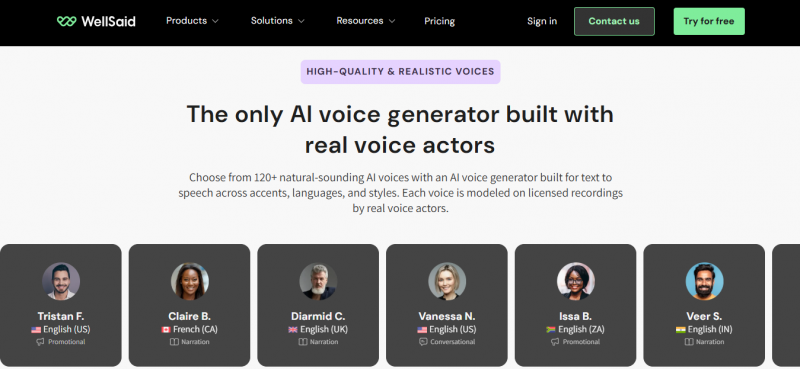
WellSaid Labs targets enterprise narration almost exclusively. Studio-quality voice avatars, SOC 2 compliance, governance features including usage tracking and access controls, and a custom brand voice programme fit organisations that need on-brand audio at scale. The Studio editor includes a respelling function that guides pronunciation, plus controls for pace, loudness, and pausing that mirror the direction notes given to professional voice actors.
Key features
• Studio-quality library of approximately 50 voice avatars
• Custom brand voice creation on enterprise contracts
• SOC 2 compliance with usage tracking and role-based access
• Pronunciation respelling and prosody controls
Strengths and trade-offs
• Strengths: Studio-clean audio fidelity, enterprise governance built in, consistent voice quality, strong fit for regulated industries.
• Trade-offs: English-focused, no consumer free tier, entry pricing higher than competitors, cloning gated to enterprise contracts.
Pricing
Maker from approximately $44 monthly; Creator and Team tiers scaling into the low hundreds per seat; Enterprise contracts range from low five figures into six figures annually per Vendr deal data.
Best fit: Corporate communications teams, regulated industries needing audit trails, large e-learning publishers, and organisations building a proprietary brand voice.
Resemble AI
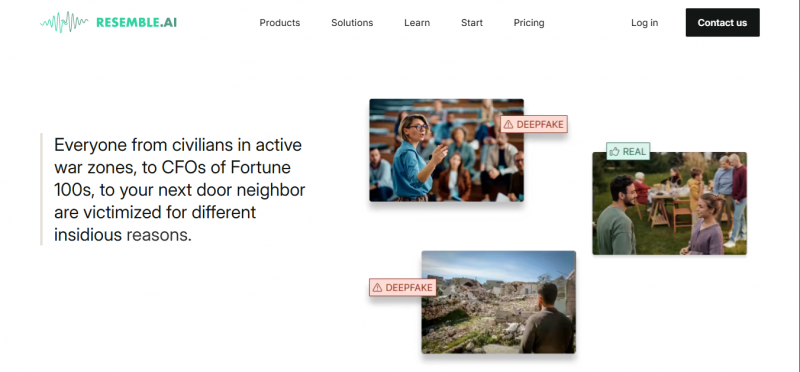
Resemble AI positions itself as a developer-first voice cloning platform with strong real-time performance. The Localize feature transfers a cloned voice across languages while preserving speaker characteristics, useful for global publishers needing consistent voice talent across markets. The platform also ships Resemble Detect, a deepfake detection and watermarking tool that addresses the trust gap created by cheap voice cloning. Real-time API performance and pay-as-you-go billing target builders rather than end consumers.
Key features
• Real-time voice cloning from short reference samples
• Localize for cross-language voice transfer across 60 plus languages
• Resemble Detect watermarking and deepfake identification
• API-first developer experience with WebSocket streaming
Strengths and trade-offs
• Strengths: Strong cloning quality, language transfer capability, integrated detection tooling, transparent pay-as-you-go pricing.
• Trade-offs: Less polished web interface than Murf or ElevenLabs, smaller catalogue of pre-built voices, requires API integration for full capability.
Pricing
Pay-as-you-go from roughly $0.006 per second; subscriptions starting around $30 monthly; Business custom usage; Enterprise on-premise available.
Best fit: Developers building voice-enabled applications, localisation studios, and security-conscious teams that need cloning combined with provenance tooling.
Descript Overdub
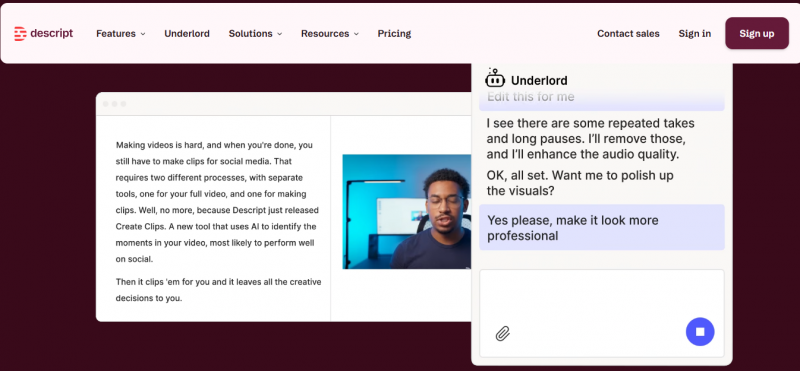
Descript Overdub is a different category: voice generation built inside a podcast and video editor rather than a standalone TTS engine. The signature workflow lets editors clone their own voice from a training session, then fix verbal mistakes in recorded audio by editing the transcript. Typing a corrected word generates Overdub audio in the speaker's cloned voice, replacing the erroneous segment without re-recording. Voice generation sits inside a larger environment covering transcription, multi-track editing, and screen recording.
Key features
• Personal voice cloning trained from a short recorded sample
• Edit recorded audio by editing the transcript text
• Integrated podcast and video editing workspace
• Automatic filler word removal and silence trimming
Strengths and trade-offs
• Strengths: Tight integration with editing workflow, personal voice cloning for self-narrated content, transcript-based editing across long recordings.
• Trade-offs: Smaller voice library than dedicated TTS platforms, Overdub quality below ElevenLabs on extended passages, generation features locked to paid tiers.
Pricing
Free tier with limited transcription minutes; Creator $24 with Overdub access; Pro $35 with extended limits; Enterprise with team and security features.
Best fit: Podcasters, video creators, and educators who want voice generation woven into the same tool used for editing rather than as a separate generation step.
Side-by-Side Feature Matrix
The matrix below maps the seven platforms against capabilities that influence platform selection. Cells reflect documented availability as of May 2026 and may shift with future product releases.
| Capability | ElevenLabs | Murf | PlayHT | Cartesia | WellSaid | Resemble | Descript |
|---|---|---|---|---|---|---|---|
| Voice cloning | Yes, 1 min | Enterprise | Yes, paid | Yes, 3 sec | Enterprise | Yes, real-time | Personal voice |
| Real-time API | Yes | No | Yes | Yes | API only | Yes | No |
| Language count | 70+ | 20+ | 140+ | 40+ | English-led | 60+ | Limited |
| Multi-speaker dialog | Yes | Limited | Yes | Yes | Limited | Yes | Within edits |
| Video timeline editor | No | Yes | No | No | No | No | Yes |
| Brand voice programme | Enterprise | Limited | Limited | Enterprise | Yes | Yes | No |
| Audio output rate | Up to 192 kbps | 44.1 kHz | 48 kHz | Streaming | Studio | Streaming | Editor-bound |
Pricing Across Platforms
Pricing comparison gets complicated because the seven platforms bill on at least four different models: monthly character allowances, unlimited characters with seat caps, per-second pay-as-you-go, and per-million-character API rates. The table below normalises entry, creator, and power tiers to monthly figures where vendors disclose them.
| Platform | Free tier | Entry paid | Mid tier | Power tier |
|---|---|---|---|---|
| ElevenLabs | Limited characters | $5 Starter | $22 Creator | $99 to $330 |
| Murf AI | 10 min monthly | $29 Creator | $79 Business | Custom enterprise |
| PlayHT | 12,500 characters | $31 Creator | $99 Pro | Custom enterprise |
| Cartesia Sonic 3 | Evaluation only | $5 Pro | Startup tier | API at ~$46.70 per 1M chars |
| WellSaid Labs | Trial only | $44 Maker | Team tiers | Five to six figure enterprise |
| Resemble AI | Pay as you go | From ~$30 | Business custom | Enterprise on-prem |
| Descript Overdub | Limited minutes | $24 Creator | $35 Pro | Enterprise custom |
Voice Cloning Versus Pre-Built Library Voices
The decision between voice cloning and a curated voice library has consequences beyond catalogue size. Cloning enables proprietary brand voices, multilingual versions of a single talent, and personalisation in interactive applications. Library voices reduce legal complexity around consent and likeness, ship with consistent quality across the catalogue, and skip the upfront training overhead custom voices require.
ElevenLabs leads on cloning quality from short samples but requires consent attestation for any voice cloned from a real person. Cartesia and Resemble bring cloning latency low enough for interactive use. WellSaid restricts cloning to enterprise customers with explicit voice talent contracts, addressing likeness rights upfront but limiting individual creator workflows. PlayHT and Murf place cloning behind paid tiers with attestation flows. Descript scopes cloning to a single personal voice trained inside the editor.
Library voices remain the safer default for marketing video, e-learning, and any context where a brand cannot defend an individual cloning decision. Cloning becomes the better fit when proprietary voice identity, personalisation, or multilingual continuity of a single talent matters more than catalogue breadth.
Workflow Recommendations by Use Case
Different production contexts reward different platforms. The mapping below pairs common workflow profiles with the platform that best fits the dominant constraints in that workflow.
| Corporate training video | Murf AI | Studio editor, video timeline, polished delivery |
| Multilingual podcast publishing | PlayHT | 140 plus languages, unlimited characters on paid tiers |
| Live customer-facing voice agent | Cartesia Sonic 3 | Sub-100 ms latency, instant cloning, agent platform |
| Enterprise brand voice rollout | WellSaid Labs | SOC 2 compliance, brand voice programme, governance |
| Developer building voice features | Resemble AI | API-first, cloning, watermarking, language transfer |
| Solo podcaster editing recorded audio | Descript Overdub | Transcript editing, personal voice cloning, integrated workflow |
| Marketing video at high volume | Murf AI or PlayHT | Production tooling and unlimited-character pricing |
Limitations Worth Planning For
Even at the current state of the art, AI voice generation carries constraints that should shape deployment plans rather than surface as surprises post-launch.
• Consent and likeness risk. Cloning a real voice without documented consent creates legal exposure in most jurisdictions. Vendor attestation flows reduce but do not eliminate the risk.
• Detectability remains imperfect. Top-tier output passes casual listening tests but specialised classifiers including Resemble Detect can still flag synthetic speech with reasonable accuracy.
• Long-form drift. Stability and pacing can degrade over passages exceeding a few minutes, particularly at non-default stability settings. Chunking long content is the recommended workaround.
• Latency variance on real-time APIs. Vendor-reported time-to-first-audio figures reflect optimal conditions. Production deployments often see added latency from network routing and upstream inference.
• Pricing volatility. Several vendors revised pricing during 2025 and early 2026 as competition pushed per-character costs down by roughly 75 percent. Contractual rate locks on enterprise tiers reduce planning risk.
Final Editorial Picks
No single platform leads on every dimension. The shortlist below names the editorial pick for each major category, drawn from cross-referenced benchmarks and feature documentation through May 2026.
| Category | Editorial pick | Closest alternative |
|---|---|---|
| Best overall voice quality | ElevenLabs | Hume Octave for emotional range |
| Best for business video production | Murf AI | WellSaid Labs for governance |
| Best for podcast and long-form audio | PlayHT | ElevenLabs at higher tier cost |
| Best for real-time voice agents | Cartesia Sonic 3 | Resemble AI streaming API |
| Best for enterprise brand voice | WellSaid Labs | Resemble AI for custom programmes |
| Best developer-first platform | Resemble AI | PlayHT and ElevenLabs APIs |
| Best editor-integrated voice tool | Descript Overdub | No close substitute in 2026 |
| Best free tier for evaluation | ElevenLabs | PlayHT for character allowance |
The category continues to move rapidly. New entrants including Hume Octave and Fish Audio have pushed established platforms to expand language coverage and reduce pricing. Quarterly re-evaluation against benchmark leaderboards remains the safest approach for teams committing to a primary vendor.
Post Comment
Share your thoughts about this article.
Be the first to post a comment!