Table of Content
- What Is an AI Personal Stylist?
- AI Fashion by the Numbers: 2026 Statistics
- Why Fashion Needs Algorithmic Styling
- Case Studies: Platforms Leading the Shift
- AI Stylist Apps Compared
- How AI Styling Works
- The Sustainability Advantage
- Human vs. Machine: A False Dichotomy
- Emerging Applications and Market Outlook
- Strategic Considerations for Brands and Startups
- Strategic Outlook on AI Stylist
What Is an AI Personal Stylist?
An AI personal stylist is a software system that uses machine learning and computer vision to analyze your body type, preferences, existing wardrobe, and context (weather, occasion, budget) and then recommends complete outfits or individual garments tailored to you. Unlike generic product recommendations, it curates looks the way a human stylist would, but at scale and in real time.
The fashion industry is undergoing a structural transformation, and artificial intelligence is at the core of this shift. Beyond automating supply chains or predicting retail demand, AI is moving closer to the consumer, acting as a personal stylist that curates, recommends, and even designs clothing.
Consumers today face overwhelming choices. According to ClosetMaid, 61% of people report difficulty deciding what to wear daily. At the same time, the industry produces more than 100 billion garments annually (Ellen MacArthur Foundation), fueling choice overload and environmental strain. AI offers a potential solution by reducing decision fatigue while aligning fashion with personalization and sustainability.
AI Fashion by the Numbers: 2026 Statistics
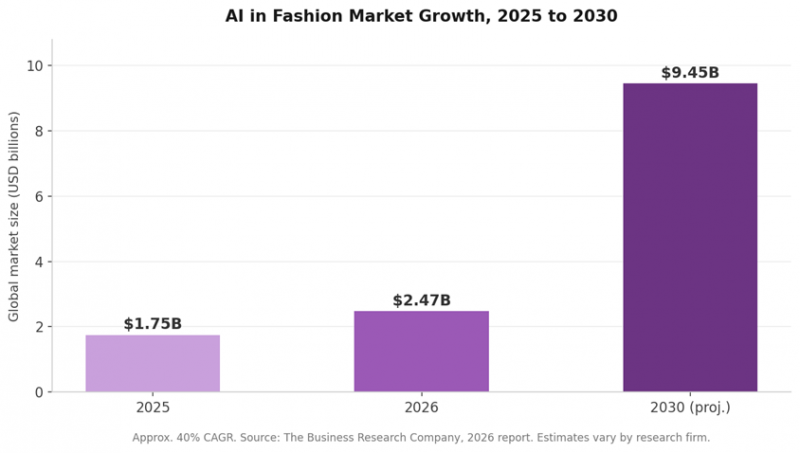
The original figures above remain valid, but the market has moved fast. Here are the latest numbers as of mid 2026:
• The global AI in fashion market is valued at roughly USD 2.47 billion in 2026, up from USD 1.75 billion in 2025, and is projected to reach about USD 9.45 billion by 2030 at a CAGR near 40% (The Business Research Company, 2026). Note that estimates vary by firm, with some placing the 2026 figure between USD 1 billion and USD 4 billion depending on scope.
• Nearly 74% of fashion companies have adopted AI for trend forecasting and inventory management (Business Research Insights, 2026).
• Generative AI alone could add USD 150 billion to USD 275 billion in value to the fashion, apparel, and luxury sectors, according to McKinsey estimates cited across industry reports.
• The generative AI in fashion segment is growing from about USD 0.18 billion in 2025 to a projected USD 0.74 billion by 2030 (Research and Markets, July 2026).
• Around 61% of fashion brands report AI implementation challenges, mainly data privacy concerns and a shortage of skilled AI talent (Business Research Insights, 2026).
Why Fashion Needs Algorithmic Styling
Traditional fashion models of merchandising and styling are inefficient in a digital-first environment. Shoppers are no longer loyal to seasonal catalogs or static trend reports. Instead, they demand personalized experiences that reflect body shape, color preferences, event needs, climate, and even mood.
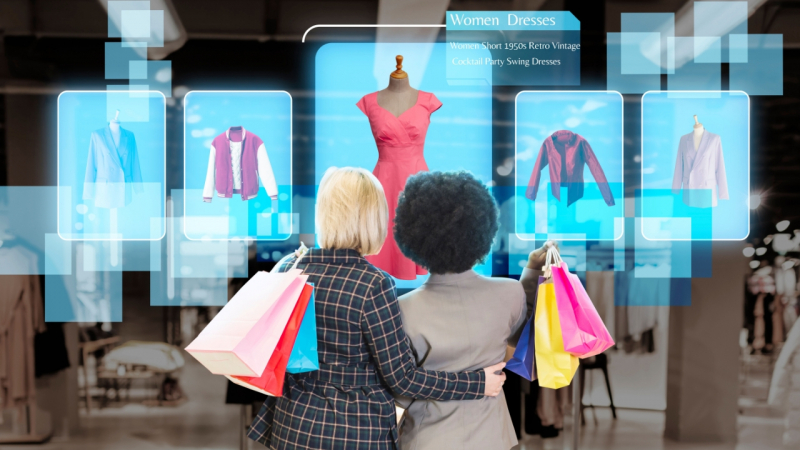
This is where AI-powered stylists differentiate themselves. They use advanced machine learning algorithms to analyze vast datasets of outfits, images, and consumer behavior. The result is personalized outfit recommendations delivered in real time. Unlike generic “You may also like” suggestions, AI stylists can curate complete outfits that feel as if they were hand-selected by a professional.
For consumers, the benefit is clear: less time spent browsing and more confidence in choices. For brands and retailers, AI reduces returns, improves customer loyalty, and informs product development with granular consumer insights.
Case Studies: Platforms Leading the Shift
Stitch Fix and The Yes
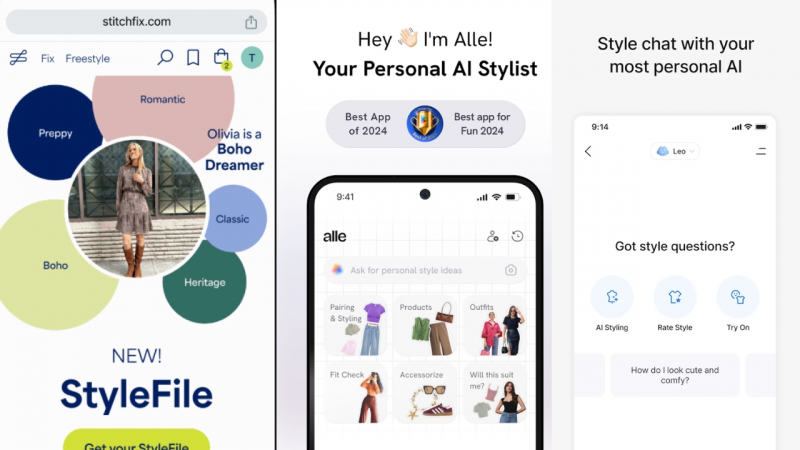
- Stitch Fix remains the most well-known AI-powered fashion platform. It blends algorithmic styling with human input, allowing machine learning models to generate suggestions that human stylists refine. This hybrid approach has scaled to 3.8 million active users while collecting valuable data on preferences and fit.
- The Yes, acquired by Pinterest in 2022, took a different approach, building an AI-powered shopping feed that continuously learns user preferences. Its recommendation engine adjusts in real time, offering curated product selections that evolve with each interaction.
Both platforms show that AI is reshaping personal styling by combining personalization with scalable digital experiences.
Mobile-First AI Stylists
Apps like Hey Allé demonstrate how styling services are becoming mobile-first. Users receive curated daily outfit suggestions directly on their phones, tailored to their lifestyle and local climate. As adoption scales, these platforms will compete not only with retail search but also with traditional stylists.
Platforms such as Fashable, YesPlz, and StyleDNA are gaining visibility in this space as well. These services go beyond curation; some offer trend forecasting and even AI-driven clothing design. Their presence illustrates how AI-powered stylists are extending their value chain influence from styling to product development.
Conversations on Reddit reflect this adoption trend, with users treating AI platforms as viable alternatives to human stylists.
AI Stylist Apps Compared
| Platform | Model | Standout feature | Pricing style | Best for |
| Stitch Fix | Hybrid: AI suggestions refined by human stylists, shipped as curated boxes | Fit data from millions of users | Styling fee credited to purchases | People who want hands-off shopping |
| StyleDNA | AI app that builds a digital wardrobe from photos | Outfit ideas from clothes you already own | Freemium with subscription | Wardrobe optimization on a budget |
| YesPlz | AI styling and visual search engine for retailers | Style quiz plus visual preference mapping | B2B licensing | Brands adding AI styling to their store |
| Hey Alle | Mobile-first daily outfit recommendations | Climate and lifestyle aware suggestions | Freemium | Daily what-to-wear decisions |
| Zalando (AI features) | Marketplace personalization at scale | Size and fit prediction reducing returns | Free within marketplace | European online shoppers |
| Fashable | Generative AI for fashion design | Creates new garment designs, not just recommendations | B2B | Brands and designers exploring AI design |
Global Retailers: Zalando, H&M, and Revolve
European e-commerce leader Zalando has invested heavily in AI personalization. Its algorithms recommend products based on browsing history, body measurements, and style preferences. By tailoring results, Zalando has improved engagement metrics while reducing returns, one of fashion e-commerce’s biggest financial drains.
- H&M uses AI for demand forecasting, but it is also experimenting with AI-driven styling. Its app integrates outfit suggestions, combining sustainability (use what you already own) with personalization.
- Revolve, a digital-native retailer, leverages AI for influencer-driven curation. By analyzing social engagement, it can predict which styles will resonate before committing to production, thus reducing risk.
How AI Styling Works
AI styling uses artificial intelligence and machine learning algorithms to deliver contextual recommendations. The process typically involves:
- Data Collection: Purchase history, browsing patterns, body scans, and even social media likes.
- Feature Recognition: Computer vision breaks garments into features (silhouette, color, fabric, cut).
- Recommendation Engine: Algorithms, often using collaborative filtering or neural networks, suggest items based on consumer similarity models.
- Feedback Loop: Consumer responses, clicks, likes, returns, refine the model in real time.
Think of AI as your impossibly attentive personal stylist. It not only recalls what you wore last month but also considers the weather forecast, your calendar of events, and your mood. Unlike human stylists who rely on intuition, AI stylists can process billions of variables simultaneously.
The Sustainability Advantage
The environmental costs of fashion are staggering: the industry accounts for 10% of global carbon emissions (UNEP). AI-powered stylists offer measurable sustainability benefits:
- Wardrobe Optimization: Algorithms recommend new ways to style existing garments, reducing unnecessary purchases.
- Inventory Efficiency: Predictive analytics prevent overproduction and help retailers align stock with actual demand.
- Virtual Try-Ons: By reducing return rates, AI decreases shipping emissions and packaging waste.
In effect, algorithmic fashion has the potential to transform fashion from a volume-based model into a value-based model, where personalization and longevity replace mass production and disposability.
Human vs. Machine: A False Dichotomy
Would consumers trust AI with decisions about personal appearance? According to WGSN, 62% of Gen Z say yes. This demographic is digital-native, comfortable with algorithmic recommendations across entertainment, shopping, and lifestyle.
Fashion remains deeply emotional. Human stylists are skilled at understanding psychological aspects like confidence, aspiration, and cultural nuance. Many in the industry believe AI should be a partner rather than a replacement.
On Quora, experts predict that AI will shift, not eliminate, the roles of stylists and models. Stylists may become “AI conductors,” interpreting and refining algorithmic outputs. Models may increasingly exist as digital avatars for AI-driven campaigns.
Emerging Applications and Market Outlook
The next wave of algorithmic fashion will extend beyond simple outfit recommendations:
- Smart Mirrors: In-store or at-home mirrors that provide AI-driven suggestions based on body scanning and context.
- Wardrobe Managers: Digital systems that track garment usage and recommend rotations or donations.
- Metaverse Styling: Avatars that test looks virtually before committing to purchases.
- AI-Generated Fashion Design: Platforms like Fashable are experimenting with AI systems that not only recommend clothing but also design new silhouettes based on predictive trend analysis.
Luxury brands are already experimenting. Gucci and Balenciaga have released AI-generated digital fashion capsules, while Nike has invested in virtual sneakers for the metaverse.
From an investor perspective, the opportunity lies in data ownership and predictive capability. Companies that control large datasets of consumer preferences will shape the next frontier of personalized retail.
Strategic Considerations for Brands and Startups
For brands, the rise of AI styling poses both challenges and opportunities:
- Differentiation: How can brands ensure their AI styling experience reflects their brand DNA rather than becoming commoditized?
- Integration: Should AI styling be developed in-house or outsourced to platforms like YesPlz and StyleDNA?
- Trust: How do companies ensure transparency and fairness in algorithmic recommendations?
- Sustainability: Can AI styling be positioned not just as a convenience but as a sustainability tool to appeal to eco-conscious consumers?
For startups, the priority is speed and user acquisition. As consumer discussions on platforms like Reddit show, early adopters are eager for experimentation. The challenge will be scaling personalization while avoiding privacy pitfalls.
Strategic Outlook on AI Stylist
Algorithmic fashion is not about replacing human creativity; it is about scaling personalization through technology. By leveraging AI stylists, brands can reduce decision fatigue for consumers, enhance loyalty, and move toward more sustainable models of consumption.
The real opportunity is not in automation but in augmentation. AI offers precision, scale, and data-driven insights, while human stylists provide empathy, nuance, and cultural context. Together, they form a powerful partnership.
In short, AI is reshaping personal styling, but the future belongs to those who combine machine intelligence with human creativity.
Post Comment
Share your thoughts about this article.
Be the first to post a comment!