Table of Content
- The Context
- What a TechRaisal Listing Includes
- What Listing Can Offer
- How the Listing Process Works
- Organic Listing vs Sponsored Visibility
- Considerations Before You List
- Where TechRaisal Fits in the Wider Landscape
- A Practical Playbook to Get the Most From a Listing
- Who It Fits, and Who Might Wait
- The Bottom Line
What TechRaisal Is
TechRaisal presents itself as a platform that helps businesses research, evaluate, and select software and AI tools. Its public material rests on three pillars: a large base of buyer reviews (the homepage cites 226,000+ reviews), research-driven articles and buyer guides, and category-based discovery. Buyers browse by category, read peer feedback, compare options, and follow links to official product resources before deciding.
The catalogue is broad. The All Categories page spans roughly eighty categories, from CRM, HR, and accounting to SEO, project management, and video editing. For AI-tool vendors specifically, the relevant point is that AI is not confined to one bucket; it runs through many categories.
AI Coverage Is Wider Than One Category
Alongside a general Artificial Intelligence category, the platform lists dedicated areas such as AI chat bots, AI character generators, and AI-powered learning, and it threads AI products through adjacent categories like video making, photo editing, recruiting, and resume building. For a vendor, this matters because it means an AI tool can usually find a category that matches its real use case rather than being forced into a generic label.
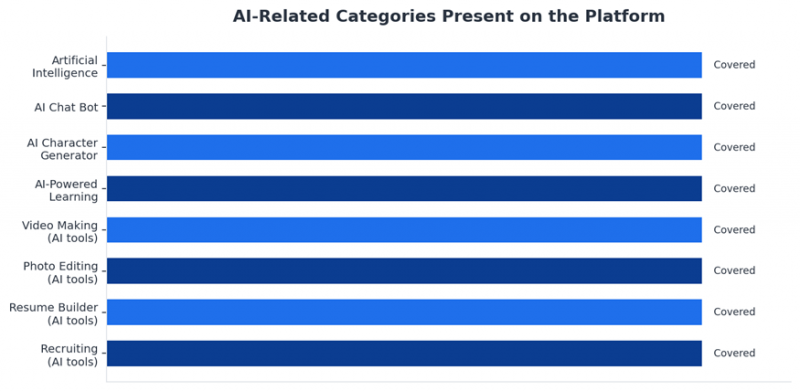
Chart 1. A sample of AI-related categories the platform lists. Coverage is illustrative of breadth, not an exhaustive map.
The Context
How Software Buyers Decide
Listing on any discovery or review platform is only worthwhile if buyers actually use such platforms during their decision. The wider market data suggests many do, especially in B2B software, where purchases are high-consideration, involve several stakeholders, and carry switching costs. The figures below come from third-party research, not from TechRaisal, and they describe the category rather than this specific platform.
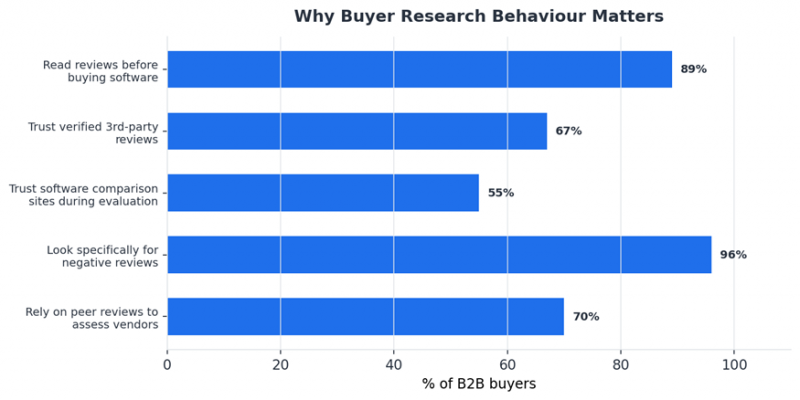
Chart 2. Selected B2B buyer-behaviour statistics from third-party industry research (2024 to 2026).
Three nuances are worth stating plainly. First, these numbers describe behaviour across the industry; they are not a promise of results on any one platform. Second, a large share of buyers deliberately seek out negative reviews to see how a vendor handles problems, so a listing is most valuable when you are ready to engage with honest, mixed feedback rather than only praise. Third, buyers typically consult several sources before choosing, which means a single listing is one input in a longer journey, not the whole journey.
Why this favours being present If buyers in your category routinely check comparison sites and reviews, then not appearing there is itself a quiet disadvantage. The argument for listing is less about a dramatic lift and more about being visible at the moment a buyer is actively comparing options. |
What a TechRaisal Listing Includes
According to the Get Listed page, creating a listing is free, and every standard listing is structured around a consistent set of elements. This consistency is part of the value: buyers compare like with like, and your product is presented in the same frame as its peers.
| Listing element | What it does for a buyer |
|---|---|
| Product overview and description | Explains what the tool is and the problem it solves, in a neutral, scannable format. |
| Category and use-case placement | Puts the product in front of buyers browsing that specific need. |
| Key features and pricing context | Lets buyers gauge fit and affordability before they click through. |
| Buyer reviews and ratings (when available) | Adds third-party credibility beyond the vendor's own claims. |
| Links to official product resources | Sends interested buyers to your site, demo, or documentation. |
Table 1. Standard listing components, paraphrased from the Get Listed page.
What Listing Can Offer
Drawing on TechRaisal's own benefits description, a listing is intended to do the following. These are the platform's stated benefits, summarised neutrally.
| Benefit | What it means in practice |
|---|---|
| Category discovery | Your product appears within relevant category pages, search, and comparisons, in front of buyers already evaluating that type of tool. |
| Buyer reviews | Authentic feedback from real users sits on your profile, giving prospects context beyond marketing copy. |
| Comparison & guide placement | Listings can feature in side-by-side comparisons, category rankings, and research articles, aiding discoverability and credibility. |
| Editorial independence | The platform states it maintains editorial independence and that vendors cannot edit or manipulate reviews. |
| Stage-agnostic exposure | It accepts startups through enterprise products, so early tools can gain visibility alongside established ones. |
Table 2. Stated listing benefits, paraphrased from TechRaisal's vendor pages.
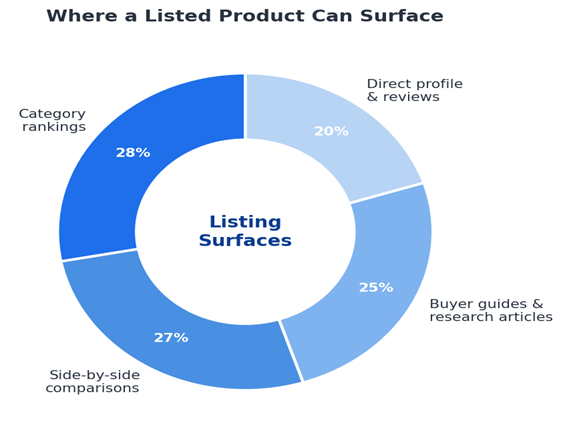
Chart 3. The main surfaces where a listed product can appear. Proportions are illustrative, not measured traffic shares.
How the Listing Process Works
The Get Listed page describes a three-stage submission, while the Why List page frames the ongoing work as a four-step cycle. Combined, the practical path looks like this.
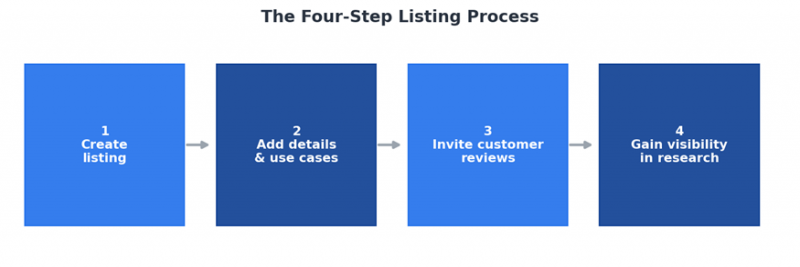
Chart 4. The listing workflow, combining submission and the ongoing review-building cycle.
• Submit your product. Complete the listing form with name, website, category, and description.
• Review and verification. The team checks submissions for accuracy, relevance, and correct categorisation. The page states a typical review time of 3 to 5 business days.
• Listing goes live. Once approved, the product becomes discoverable to buyers in its category.
• Invite customers to review. Existing users contribute the feedback that builds trust, and the listing becomes eligible for comparisons and guides over time.
If your product is already on the platform, the right action is to claim your profile rather than create a duplicate. The platform also states plainly that getting listed does not guarantee reviews or rankings, which is a useful expectation to set internally before you start.
Organic Listing vs Sponsored Visibility
One area worth understanding before listing is how TechRaisal separates free listings, buyer reviews, and paid visibility. The Get Listed page and the Sponsorship page describe sponsored placements as optional, clearly disclosed, and not a factor in reviews or editorial evaluations.
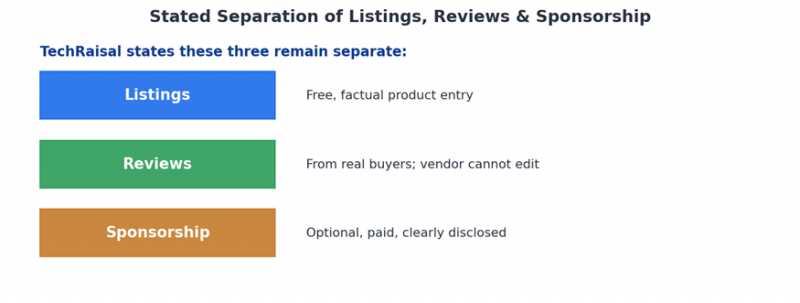
Chart 5. The platform's stated separation between the three. This is how TechRaisal describes its own policy.
For a vendor, the balanced reading is this: you can be present for free and let organic reviews do the work, or you can additionally pay for visibility. Because the platform states that sponsorship does not influence reviews or rankings, paid placement is best understood as buying exposure, not credibility. The credibility still has to come from genuine buyer feedback. As with any platform, it is worth verifying current sponsorship terms directly before spending.
A note on trust signals Transparency about paid placement is generally a positive sign, because buyers increasingly distrust platforms where paid and organic results blur together. That said, a stated policy is a stated policy. Treat it as a reasonable starting assumption and confirm the specifics for your situation via the Review Methodology and Review Policy pages. |
Considerations Before You List
A fair assessment includes what a listing does not automatically solve. None of these are unique to TechRaisal; they apply to most review and discovery platforms, and they are worth weighing honestly rather than discovering later.
| Consideration | Why it matters |
|---|---|
| Reviews require effort | A profile is only persuasive once real customers contribute. Empty listings carry little weight, so you need an active plan to invite feedback. |
| You cannot control sentiment | Editorial independence means you cannot edit or remove reviews. Negative or mixed feedback may appear, and responding constructively becomes part of the work. |
| Visibility is not guaranteed | The platform explicitly states that listing does not guarantee reviews or rankings. Featuring in comparisons or guides depends on its editorial decisions. |
| Results vary by category | A crowded category behaves differently from a niche one. Outcomes depend on your market, competitors, and how active your reviewers are. |
| One channel, not a strategy | A listing complements your own site, SEO, and outreach. Since buyers consult several sources, treat it as one input among many. |
| Verification takes time | A 3 to 5 business-day review is reasonable, but it means listing is not instant. Plan around it if you are timing a launch. |
Table 3. Honest considerations that apply to listing on any discovery platform.
Where TechRaisal Fits in the Wider Landscape
Vendors rarely list on a single platform in isolation. It helps to see where a TechRaisal listing sits relative to the channels you may already use. The comparison below is directional and describes typical roles rather than head-to-head rankings, since the right mix depends on your category and audience.
| Channel type | Primary role | How a TechRaisal listing relates |
|---|---|---|
| Your own website | Full control of message and conversion | Complements it with third-party credibility you cannot self-publish |
| Search / SEO | Capturing active demand | A category profile can be another discoverable surface for your name |
| Large review marketplaces | High traffic, high competition | TechRaisal offers a structured, research-led alternative or addition |
| Direct outreach | Proactive selling | Reviews give prospects something to verify your claims against |
Table 4. A directional view of how a listing complements other channels.
A Practical Playbook to Get the Most From a Listing
If you decide to list, the difference between a dormant profile and a useful one usually comes down to a few disciplined habits. None of these are platform-specific tricks; they are sound practice for any review-based channel.
• Write the profile for a skim-reader. Lead with the specific problem you solve and who you solve it for, not adjectives. Buyers scanning a category decide in seconds.
• Pick the most precise category. Given the breadth of AI-related categories, choose the one that matches your real use case so you reach buyers with genuine intent rather than browsers.
• Build a small, steady stream of reviews. Invite recent, satisfied customers soon after a clear success moment. A handful of specific, credible reviews outperforms a pile of vague ones.
• Welcome the critical reviews. Since many buyers read negative feedback first, a measured, constructive response to a complaint can build more trust than uniform praise.
• Keep details current. Outdated pricing or features erode trust. If you claim your profile, keep it accurate.
• Measure it as one channel. Track referral traffic and mentions, but judge the listing as part of a wider mix rather than expecting it to carry demand on its own.
Who It Fits, and Who Might Wait
| Likely a good fit | Might hold off |
|---|---|
| AI tool and SaaS vendors in categories TechRaisal already covers | Products in a niche the platform does not yet list or attract buyers for |
| Teams with happy customers willing to leave reviews | Very early products with no users to generate authentic feedback yet |
| Vendors comfortable with transparent, unedited feedback | Teams not ready to monitor and respond to public reviews |
| Companies treating it as one channel within a wider plan | Anyone expecting a listing alone to drive demand |
| Vendors who can wait a few days for verification | Launches that need instant, same-day visibility |
Table 5. A practical fit check for vendors.
The Bottom Line
For software and AI-tool vendors, listing on TechRaisal is a reasonable, low-friction way to be present where some buyers research their options, backed by peer reviews and editorial content. The strongest reasons to do it are precise category discovery across a wide and genuinely AI-aware catalogue, third-party credibility through unedited reviews, and exposure in comparisons and guides. The platform's transparency about free listings, verification timing, and the separation of sponsorship from reviews is a further point in its favour.
The honest counterweights are equally clear. Reviews take effort to gather, sentiment is outside your control, visibility is never guaranteed by the listing alone, and results vary by category. None of these are reasons to avoid listing; they are reasons to go in with realistic expectations and a small plan to make the profile work.
The sensible approach is to treat a listing as one credibility-building channel among several. If your product fits a covered category and you have customers willing to vouch for it, the steps to get listed or claim an existing profile are quick and free, and the downside of trying is small. If you are very early-stage or in an unsupported niche, it may be worth waiting until you have reviews and a clearer fit. Either way, decide it as you would any channel: on evidence, not on hope.
Post Comment
Share your thoughts about this article.
Be the first to post a comment!