Table of Content
- The AI Tool Discovery Problem
- What FirmCritics Is and Why It Exists
- How FirmCritics Helps Businesses Find the Right AI Tools
- Thirty-Plus Categories Across the AI Stack
- Who Benefits Most from FirmCritics
- What Makes FirmCritics Different from Typical Review Sites
- Weekly Refreshes, Not Stale Lists
- Putting It to Work
More than five thousand AI tools are now competing for a place in the modern business stack, and a fresh wave of launches arrives every Monday. Writing assistants, image generators, video tools, code copilots, research agents, customer-support bots, analytics layers, automation platforms the choices keep multiplying, and the marketing pages all start to sound identical. For founders, marketing leads, product teams, and operations heads trying to make a decision before lunch, the noise has become a tax on productivity.
FirmCritics was built to solve exactly that problem. It is an independent AI tool review site that helps businesses cut through the hype and find software that actually does the job, organized by category and ranked by hands-on testing rather than vendor relationships or affiliate revenue. This guide breaks down how the platform works, what makes its methodology different, and how teams can use it to shortlist the right AI tools in a fraction of the usual time.
The AI Tool Discovery Problem
Most buyers do not have a tool problem. They have a discovery problem. Search results are dominated by sponsored listings. Listicles rank tools by who paid for placement, not by who tested them. G2 and Capterra are useful, but they mix enterprise-only platforms with hobbyist apps, and the rating bar is so generous that almost every product clears four stars. YouTube reviews lean toward sponsored content. Reddit threads offer signal, but reading fifty comments to surface one honest opinion is not a workflow.
The cost of getting this wrong is not just a wasted subscription. It is wasted onboarding time, broken integrations, half-built workflows, and a team that loses trust in software recommendations after the third miss. Businesses need a filter that runs before they reach the free trial one that has already tested the tool, read the complaints, compared the alternatives, and is willing to say plainly whether something is worth paying for.
What FirmCritics Is and Why It Exists
FirmCritics describes itself as a curated directory of AI tools, organized by what they do and ranked by how well they do it. The numbers tell the story: 180 tools reviewed across 30 categories, scored against 25 review criteria, with twelve new tools tested every week. Every tool on the site has been hand-tested by the editorial team no listings exist for products the team has not signed up for and used.
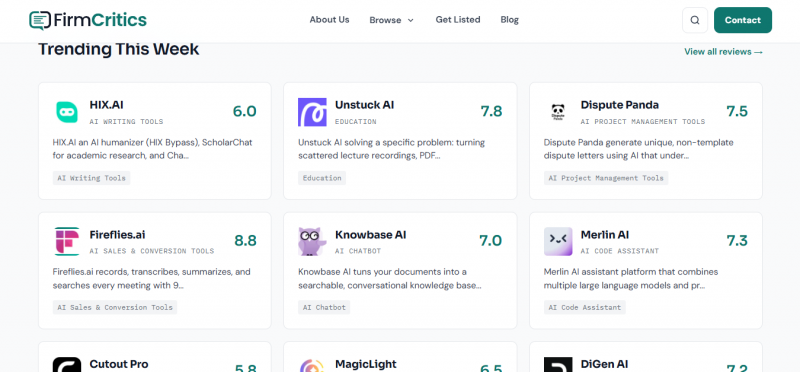
The deliberate choice not to chase volume is what sets FirmCritics apart from the typical aggregator. New AI products launch faster than any one team can responsibly evaluate, and chasing volume is how review sites end up rubber-stamping whatever crosses their desk. FirmCritics prefers reviewing fewer tools properly over reviewing more tools badly. The result is a directory where a top-ranked product earned its position, and where an unknown tool can outrank a household name if it does the job better.
Why this matters for businesses An independent, hand-tested review is the closest thing a buyer gets to a free internal evaluation. It removes the work of running ten free trials and reading a hundred reviews, replacing it with a single ranked verdict per category. |
How FirmCritics Helps Businesses Find the Right AI Tools
The platform is structured around the way buyers actually shop: by job, not by brand. Someone looking for a video tool does not start with a vendor in mind. They start with a use case short-form social content, product demos, faceless YouTube channels, internal training. FirmCritics maps that intent to a ranked category, and from there a single click surfaces the tools worth a closer look.
A category-first directory built around buyer intent
Browsing on FirmCritics begins with categories: Image Generator, Video Generator, Content Generator, Music Generator, AI Writing Tools, Education, Project Management, Sales and Conversion Tools, AI Chatbots, Code Assistants, Personal Assistants, and more than twenty other slices of the AI stack. Each category page ranks the tested tools against one another so buyers can see, at a glance, which product leads in that specific job and which alternatives are worth considering.
The 25-criteria review framework
Every tool is scored on twenty-five criteria that matter to real buyers, not surface features. Output quality, speed, pricing transparency, onboarding friction, integrations, API limits, support responsiveness, content moderation behavior, privacy clarity, edge-case handling, and what happens when things go wrong all sit inside the framework. Each criterion receives a one-to-ten score backed by specific evidence drawn from the editorial team's testing, not vibes or marketing copy.
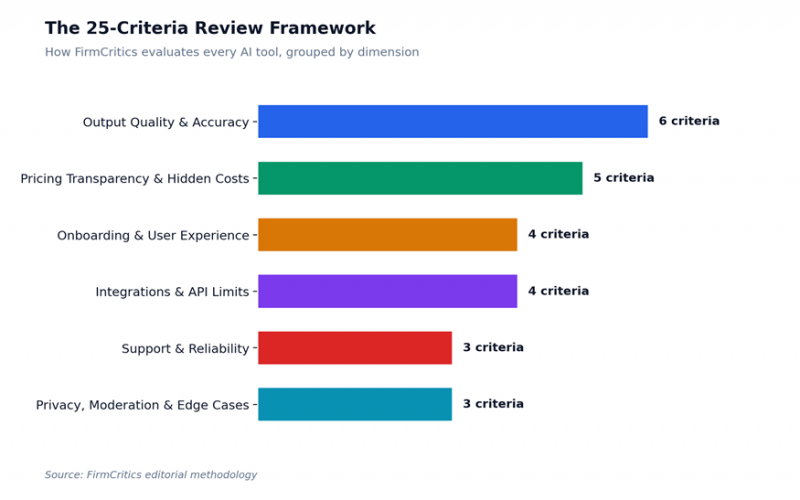
Figure 1. The 25 criteria grouped by what they measure.
Real user sentiment, aggregated from where it actually lives
Hands-on testing is one half of the picture; the other half is community signal. For every reviewed tool, the editorial team pulls sentiment from Trustpilot, Reddit threads, the platform's own Discord, independent review sites, YouTube creator reviews, and app-store comments. If the in-house testing finds the tool useful but the wider community is reporting account deletions, billing surprises, or quality regressions, those findings get surfaced in the review. Businesses see how the product works for a single tester and how it works at scale, in the same page.
Head-to-head comparisons inside every category
No tool is reviewed in isolation. Every review on FirmCritics compares the product against its top five direct competitors on pricing, features, and limitations. The format is built around the dimensions that matter for that specific category, which means a video generator gets compared on watermark policy, export limits, and credit costs, while a coding assistant gets compared on language coverage, IDE integrations, and context window. The output is a side-by-side, not a standalone score.
Thirty-Plus Categories Across the AI Stack
FirmCritics organizes its coverage around the workflows businesses actually run. The table below shows a representative sample of the categories currently maintained on the site, with the kinds of jobs each one covers.
| Category | Typical business jobs covered |
|---|---|
| AI Writing Tools | Long-form content, SEO articles, sales copy, content humanizers, academic research. |
| AI Image Generator | Marketing assets, product mockups, social creatives, background removal, photo enhancement. |
| AI Video Generator | Short-form social video, explainer videos, faceless YouTube channels, text-to-video workflows. |
| AI Sales and Conversion | Meeting transcription, lead scoring, outbound personalization, pipeline acceleration. |
| AI Project Management | Task automation, document generation, workflow orchestration, internal operations. |
| AI Code Assistant | In-IDE code completion, multi-model coding agents, refactoring, code review assistance. |
| AI Chatbot | Customer support, internal knowledge bases, document-grounded conversational interfaces. |
| Music and Audio AI | Background scores, voice-over generation, podcast production, audio cleanup. |
Who Benefits Most from FirmCritics
The platform is built for buyers who treat software as an operational decision rather than an experiment. That includes a few distinct profiles:
• Founders and small-business owners running lean teams who cannot afford a wrong call on a recurring subscription.
• Marketing and content leads evaluating writing, image, and video tools for an entire department's workflow.
• Product and engineering managers comparing code assistants, chatbots, and integration platforms against existing stacks.
• Operations and finance teams auditing AI spend, especially across pricing tiers with hidden credit costs.
• Agencies and consultants who recommend tooling to clients and need a defensible source for those recommendations.
What Makes FirmCritics Different from Typical Review Sites
The differences are easier to see in a side-by-side comparison than in prose. The table below lays out how FirmCritics positions itself against the standard playbook of most AI directories.
| Dimension | Typical AI directory | FirmCritics |
|---|---|---|
| Listing criteria | Submitted by vendors, auto-imported, or scraped at scale. | Hand-tested by editors before any listing goes live. |
| Ranking method | Star averages, paid placement, or popularity scores. | 25-criteria framework with evidence-backed scores. |
| User sentiment | On-site reviews only, often gamed by vendor seeding. | Aggregated from Trustpilot, Reddit, Discord, YouTube, app stores. |
| Comparisons | Standalone product pages with no peer context. | Every review includes head-to-head against top five alternatives. |
| Update cadence | Reviews go stale for months or years. | Twelve new tools tested weekly; top picks re-tested regularly. |
| Editorial voice | AI-generated summaries, marketing-toned write-ups. | Written by human editors after testing, both pros and cons named. |
Weekly Refreshes, Not Stale Lists
AI moves fast enough that a six-month-old review is often a review of a different product. Pricing changes, models get swapped under the hood, features get gated behind new tiers, and free-trial generosity evaporates without notice. FirmCritics re-tests its top picks regularly so the rankings reflect what a tool actually does today, not what it did when the original review was published. When a product changes significantly, the review is updated and the change date is noted.
The platform also publishes a Friday brief covering the twelve tools tested that week which ones earned a spot in the directory, which ones did not, and the one or two genuinely worth paying for. For buyers who want to stay ahead of the curve without reading every launch announcement, the brief is a low-cost way to keep a stack current.
Putting It to Work
The fastest way to use FirmCritics is to start with a job, not a tool. Pick the workflow that needs an AI assist, open the matching category, and read the top three ranked options along with the pros, cons, and verdict on each. The category-level head-to-head will surface the trade-offs between the leaders, and the aggregated community signal will flag anything the editorial test missed.
Visit the directory at firmcritics.com to browse categories, read individual reviews, or subscribe to the weekly brief. For businesses tired of trial-and-error AI shopping, an independent, hand-tested directory is the cheapest evaluation budget money can buy.
Key takeaway FirmCritics turns AI tool discovery into a structured decision: pick a category, read the ranked verdict, see the head-to-head, check the community signal, and buy with confidence. That is the workflow modern teams need, and the one most directories still fail to deliver. |
Post Comment
Share your thoughts about this article.
Be the first to post a comment!