Table of Content
- Refunds, recurring charges and card exposure
- Why the platform failed, and what it predicts
- Six checks to run before paying any replacement
- Four alternatives, described in detail
- The four alternatives side by side
- Reconstructing a character without an export
- Preventing the same loss on the next platform
- Verdict
ThotChat AI stopped working on 31 December 2025 with no warning and no data export. This guide covers what you can still recover, why the platform failed, which four alternatives are worth considering, and how to avoid losing everything a second time.
Current status The service stopped functioning in the final hours of 31 December 2025. There was no deprecation notice, no announcement, no farewell post and no data export. Published reporting attributes the collapse primarily to payment processing failure rather than to the technology. The domain has since been reachable again. That does not mean the service returned. Any site currently using the name should be treated as unrelated and unsafe. |
Refunds, recurring charges and card exposure
This section comes first because it is the only part of the migration that is time sensitive. Dispute windows close, and card details held by a defunct merchant are a live exposure rather than a historical one. Everything else in this guide can wait a week.
| 1 | Find the charge on your statement, not in the app Billing ran through a third party processor rather than under the platform name, and the descriptor combined the biller and the brand. That matters twice over: the charge may not be where you expect it, and the descriptor was not discreet, which is part of why this category generates so many disputes. |
| 2 | Check whether a refund already arrived Refunds were initiated through the biller in early January 2026, with most users reporting receipt by mid January and some settling later depending on bank processing. Reconcile your statement before opening a dispute you may not need. |
| 3 | Confirm the recurring authority is cancelled A merchant going offline does not automatically cancel a recurring authorisation held by a biller. Log into the processor’s own subscription portal if you can, and if you cannot, contact your bank to cancel the continuous payment authority directly rather than assuming the shutdown ended it. |
| 4 | Consider replacing the card number The details were held by a merchant that failed abruptly under payment pressure. Reissuing is free with most banks, closes the exposure permanently, and removes any possibility of a stale authorisation reappearing months later. |
| 5 | Open a dispute only if no refund arrived Contact the biller first and your bank second, because a chargeback raised where a refund was already issued creates a reversal you then have to unwind. Keep the transaction date and amount to hand. |
Do not use any site currently carrying the name The original domain has been reachable again since the shutdown, which does not indicate a relaunch. Abandoned names in this category are routinely picked up by unrelated operators, and entering payment details or credentials into a lookalike is the most likely way to turn a lost subscription into a real loss. |
What the shutdown deleted and what survived
The honest answer is that nearly everything held server side is gone. There was no export mechanism before the shutdown and none afterwards, so conversation history, custom characters, generated images stored in the platform gallery and accumulated relationship memory are not recoverable. Nothing was migrated to any other service, and no other service inherited accounts.
What you may still hold locally is worth inventorying before you start rebuilding, because most people have more than they assume.
| Item | Recoverable | Where a copy may still exist |
|---|---|---|
| Conversation history | No | Nowhere, unless you personally copied text out |
| Character definitions | Partly | Your own memory, plus any screenshots you took |
| Generated images | Partly | Device downloads folder and phone camera roll |
| Relationship memory | No | Nowhere, this was server side state |
| Subscription record | Yes | Bank statement and the biller account portal |
| Account email and password | Yes | Your password manager, worth rotating if reused |
The one salvage action worth doing today Search your device storage and cloud photo backup for images saved during the period you used the platform. Many people downloaded generated images without treating it as a deliberate archive. Those files are the only durable artefact most former users still hold, and they are the fastest route to reconstructing a character’s appearance on a new service. |
Why the platform failed, and what it predicts
This section exists because the cause of death is the most useful criterion for choosing a replacement. Skip it and you will evaluate the alternatives on features and repeat the experience.
The decay was visible for months. From around mid 2025 users reported slowdowns, mid session timeouts and unexplained login failures. Features disappeared without notes. The community server went quiet. Aggregate ratings fell to roughly 3.2 out of 5, with a large share of one star reviews concentrating on a single complaint, which was that character memory had degraded to the point where context had to be pasted back in manually. Payment handling turned erratic in the final weeks.
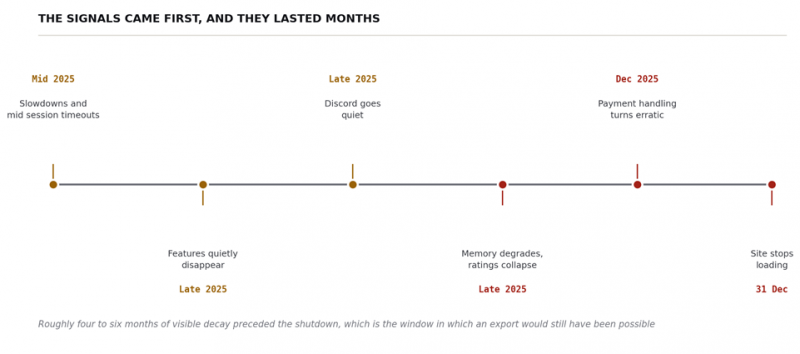
Roughly four to six months of visible decay preceded the shutdown, which was the window in which an export would still have been possible
None of that is a technology story. It is what a company looks like when its ability to take money is failing.
Adult platforms rarely die of bad software
Mainstream processors do not serve this category at all. Adult coded merchants cannot use the familiar consumer payment providers and must work through specialist high risk acquirers, which is why billing appeared under a third party biller rather than the brand name.
Those merchants then sit inside card network monitoring programmes most businesses never encounter, and the structural problem is arithmetic.
Industry sources put typical chargeback rates for adult merchants at roughly three to five percent. Card network monitoring begins around one percent. Mastercard’s excessive chargeback designation applies at a ratio of one and a half percent alongside a volume trigger, and its high excessive tier sits at three percent, carrying monthly fines that scale into six figures, heightened scrutiny of the merchant identifier, and genuine risk of both acquirer termination and an industry wide processing ban.
Visa tightened in parallel. Its monitoring programme consolidated in 2025, with the acquirer level ratio halving from the start of 2026 and the merchant excessive threshold dropping again from April 2026. Mastercard’s brand risk programme added a mandatory content scan before a newly onboarded merchant may take its first transaction, covering the entire site including areas behind a login.
The reason so many disputes arise is structural rather than a failure of product quality. A meaningful share are privacy driven, where a customer disputes a legitimate charge because they do not want it recognisable on a statement. Industry guidance holds that a discreet billing descriptor reduces those disputes substantially. The descriptor here named both the biller and the brand.
The sentence worth carrying into the next section Operator guidance in this sector states plainly that more AI companion businesses fail from payment problems than from product problems, and advises operators never to run on a single acquirer, because offboarding is common and arrives with little notice. That is the failure mode you are trying to avoid repeating, and it is invisible in any feature comparison. |
Six checks to run before paying any replacement

The six checks take about ten minutes and matter more than any capability comparison
Every platform in this category advertises the same things: uncensored conversation, custom characters, memory, images, voice. Those claims are near identical across services and tell you nothing about which one is still running next December. These do.
• Is the billing descriptor discreet, and disclosed before you pay? A platform that tells you exactly how the charge will appear has thought about the dispute rate that kills companies here. One that hides it has not.
• Is there more than one payment route? Card plus an alternative rail suggests the operator understands single acquirer risk. A single card option is the exact fragility that ended the last platform.
• Does an export function exist, and can you test it today? The highest value question in the list. Export before you invest months, because a promise of export is not an export.
• Is there a published company identity? A named entity with a real address, terms, a cancellation policy and a documented takedown route is harder to walk away from than an anonymous brand.
• Is the support channel alive? Check the community server or support address for recent, substantive responses. The last platform’s community going quiet preceded its shutdown by months.
• Start monthly, never annual. Annual subscribers carried the largest exposure when this collapsed. In a category with this failure rate, the discount is not worth the counterparty risk.
How to read the recommendation articles you will find Search this topic and most results are published by sites earning commission on the alternative they rank first, often with a promotional button mid page. That does not make the named platforms bad, and several appear consistently across independent write ups. It does mean the ordering is commercial rather than evaluative, so treat any list as candidates to run these six checks against rather than as a ranking. |
Four alternatives, described in detail
These are the names that recur across reporting on the shutdown, including the three the closing platform itself pointed toward while confirming no affiliation and no data transfer. Each profile ends with how the platform performs against the six checks above.
OPTION 01 Candy Network, Valletta, Malta | ||
What it is 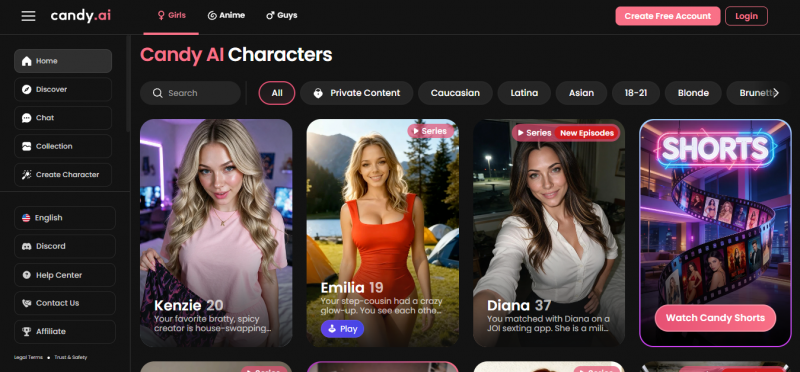 The most visually oriented platform in this group and the one named most often in coverage of the shutdown. Founded in 2023, it works as a companion platform where you pick from a curated library or build your own character, then chat, exchange generated images and use voice. Where it is strongest Visual consistency is the genuine differentiator. Reviewers repeatedly note that the same companion looks like the same person across large numbers of generated images, which is harder than it sounds and where most competitors fall down. A Live Action mode introduced in December 2025 and upgraded in February 2026 produces short animated clips rather than stills. It also has native mobile applications, which most rivals here do not. The cost structure to understand before subscribing The headline subscription is the lowest in this group, but images, voice and video draw on a separate token balance. Independent reviewers consistently report that active users spend substantially more than the subscription once media is included, with estimates commonly landing between twenty and thirty dollars a month in total. Judge it on the total rather than the sticker price. Where it is weaker Memory is reported as more session oriented than the strongest options here, which matters given that memory degradation was the specific failure preceding the ThotChat collapse. Voice quality is also rated behind several competitors. | ||
COST Subscription reported from around 6 dollars monthly on annual billing, plus tokens for media | PLATFORMS Web plus native iOS and Android applications | NAMED COMPANY Yes, an identifiable operator with a published registered location |
AGAINST THE SURVIVAL CHECKS Passes on company identity and payment maturity. The token model makes spend unpredictable, so set a monthly ceiling before you start, and test memory over a fortnight rather than an evening. | ||
OPTION 02 Operator publishes ownership details | ||
What it is 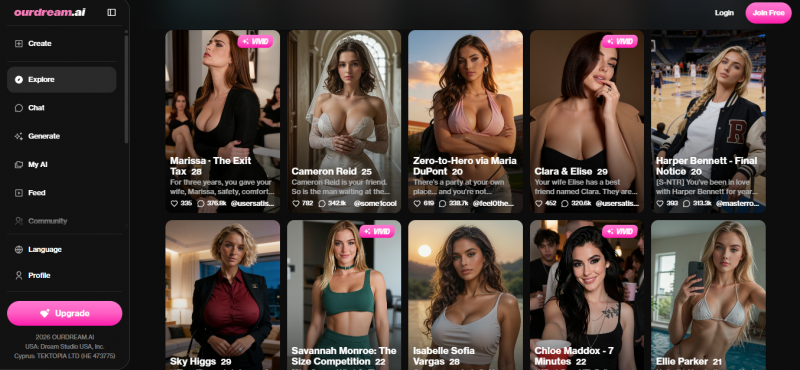 The all in one option, and the one whose feature set most directly addresses what went wrong with ThotChat. It bundles chat, image generation, video and voice into a single subscription rather than metering each separately. Where it is strongest Memory is the headline. Reviewers describe a multi tier system retaining character backstory and user preferences across sessions weeks apart, tested past a hundred messages, against competitors that reset context far sooner. Since manual context re pasting was the complaint that dominated ThotChat’s final months, this is the most directly relevant improvement available. It also offers group chat with several characters at once, three response modes trading speed against nuance, and a content intensity control that is a slider rather than a single switch. Video generation exists but is described as beta, with a meaningful failure rate, and failed attempts still consume credits. The cost structure Roughly twenty dollars a month on rolling billing, or about half that billed annually. Every paid subscriber receives a monthly credit allowance covering image generation at a documented per image cost, which makes total spend considerably more predictable than a pure token model. A free plan exists and reviewers describe it as sufficient to evaluate the platform properly. Where it is weaker Web based with mobile browser access rather than a native application, and reviewers describe the mobile experience as clearly behind Candy’s app. Image quality is rated below Candy. | ||
COST About 20 dollars monthly rolling, or roughly 10 dollars monthly equivalent billed annually | PLATFORMS Web and mobile browser, no native application reported | NAMED COMPANY Yes, ownership details are published |
AGAINST THE SURVIVAL CHECKS The strongest fit for the specific failure you experienced, because memory is its main claim. The advice on avoiding annual billing still applies, since that is exactly the exposure that hurt ThotChat subscribers. | ||
OPTION 03 Vilala Limited, Nicosia, Cyprus HeraHaven | ||
What it is 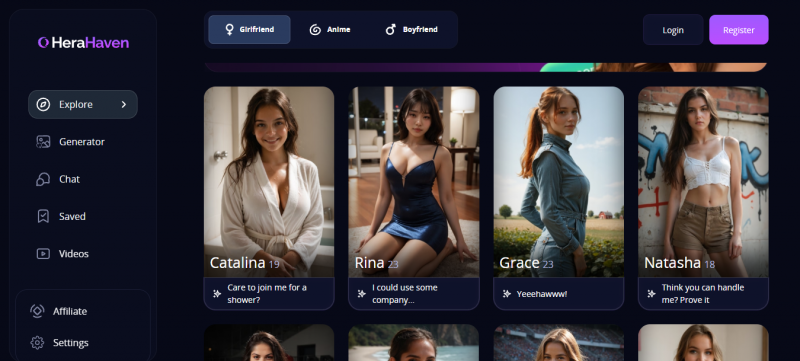 Launched in July 2024 and the newest platform in this group, positioned around image quality and privacy. It reports reaching a million users within its first year and carries a strong rating on a mainstream review platform, which is unusual in this category. Where it is strongest Two things stand out, and the second matters more than the marketing suggests. Image consistency is rated highly by independent testers, with a well regarded anime mode alongside realistic styles, and character creation is fast. The more relevant strength for anyone migrating from a collapsed platform is billing. The statement descriptor is reported to show a neutral support domain rather than anything identifying the service. That is the practice most directly linked to lower dispute rates in this category, which makes it a signal that the operator understands the risk that ended the last platform. Conversations are encrypted, cancellation is described as immediate with access continuing to the end of the paid period, and account deletion permanently erases everything. The cost structure Published figures vary considerably between sources, from around ten dollars to around twenty dollars monthly for the paid tier, with heavily discounted annual offers advertised. A free tier exists but reviewers describe it as very limited, with one testing account reaching a paywall almost immediately. Media generation draws on a separate token balance on top of the subscription. Where it is weaker No voice features, which is a notable gap, and no video generation. Customer support is the lowest rated dimension in independent testing by a wide margin, and the free tier has been criticised as too thin to evaluate the product. | ||
COST Reported between roughly 10 and 20 dollars monthly, plus tokens, with aggressive annual discounting | PLATFORMS Web and mobile | NAMED COMPANY Yes, a named limited company with a published jurisdiction |
AGAINST THE SURVIVAL CHECKS The best performer on the billing descriptor check, which is the one most predictive of survival. Weakest on support responsiveness, which is the channel you would need if something went wrong. | ||
OPTION 04 - Reported as a Singapore based operator, launched 2023 | ||
What it is 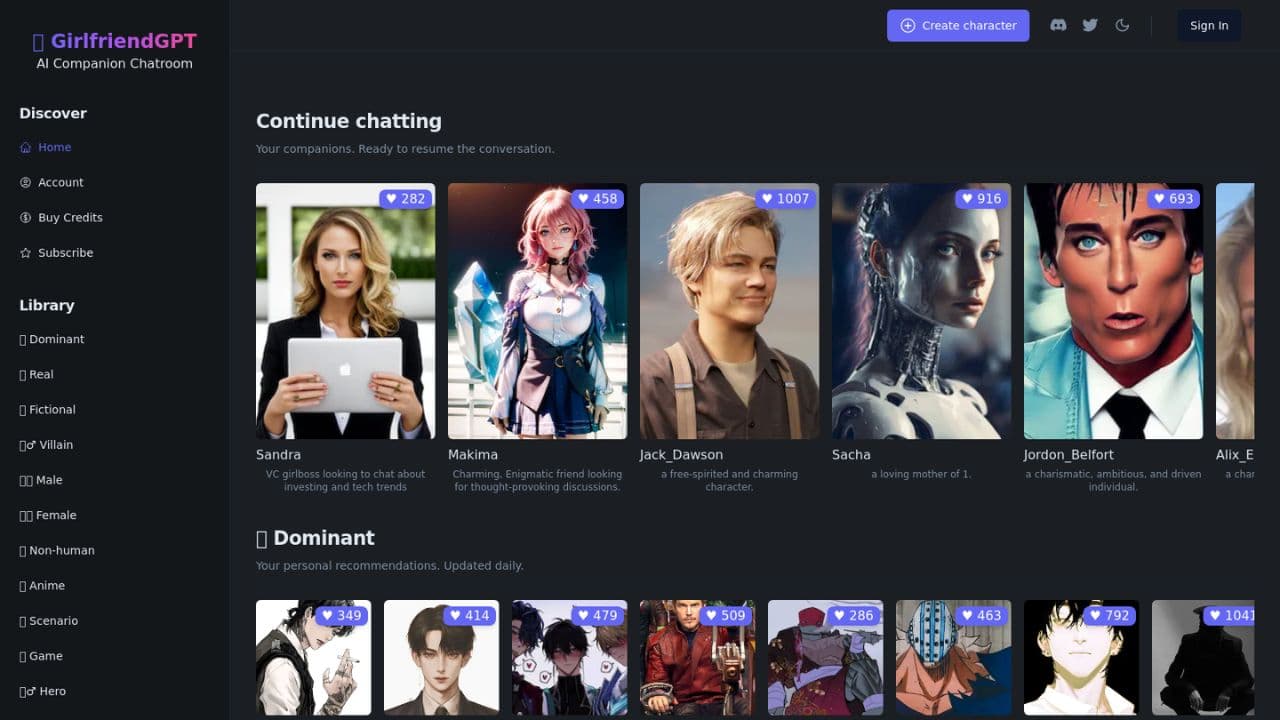 One of the three services the closing platform itself pointed users toward, though with explicit confirmation that there was no affiliation and that no accounts or data transferred. It is a browser based platform organised around a large community built character library rather than a curated roster. Where it is strongest The library and the conversation. Character counts reported across sources range widely, from several thousand to well over twenty thousand community built characters, organised by extensive tag categories. Custom character creation uses a long form description field rather than a set of dropdowns, which gives more control than most competitors for anyone willing to write. Reviewers who tested it at length rate conversation quality and persona consistency as its main strength rather than visuals, with multi turn memory spanning several sessions on the higher tiers. For someone rebuilding a character from a written definition, that combination is genuinely useful. The cost structure Reporting here is inconsistent and worth treating carefully. Some sources describe a purely coin based model with packs at roughly ten, twenty five and fifty dollars, with text messaging free and unlimited on every tier and coins required only for images and video. Others describe named subscription tiers. Verify the current model on the site before assuming either. Where it is weaker Browser only with no native application reported. Explicit content is presented immediately after signup with minimal gating, which is worth knowing before creating an account on a shared device. Company details are thinner than for the other three, and the inconsistent pricing reporting is itself a mild signal. | ||
COST Coin packs reported at roughly 10, 25 and 50 dollars, with subscription tiers reported inconsistently | PLATFORMS Browser based, no native application reported | NAMED COMPANY Partial, jurisdiction reported but details are thinner |
AGAINST THE SURVIVAL CHECKS Strongest on conversation and character control, weakest on published company detail. The pricing inconsistency across sources is a reason to check the checkout page carefully rather than a reason to avoid it. | ||
The four alternatives side by side
| Platform | Strongest at | Cost model | Native app | Documented export |
|---|---|---|---|---|
| Candy AI | Image consistency and short video | Low subscription plus tokens | Yes | Not documented |
| OurDream AI | Persistent memory across sessions | Higher subscription with credits included | No | Not documented |
| HeraHaven | Image quality and discreet billing | Subscription plus tokens | Mobile web and app | Not documented |
| GirlfriendGPT | Character library and conversation | Coin packs, tiers reported inconsistently | No | Not documented |
The common finding in that final column None of these four publishes a documented way to export conversation history or character definitions in a portable form. Media can be saved, because images download to your device. The conversations and the accumulated relationship state cannot. That is the same exposure that made the last shutdown total rather than inconvenient, and it is why section 08 is not optional advice. |
Figures are drawn from published reviews rather than vendor audited data, and pricing in this category changes frequently.
Reconstructing a character without an export
Since nothing transferred, rebuilding is manual. Doing it deliberately usually produces a better result than the original, because you are writing a definition with hindsight rather than accumulating one by accident.
Write the character out as a document on your own device first, before entering anything into any platform. That file is the thing you actually own, and it turns the next migration into a copy and paste rather than a reconstruction from memory.
| Element | What to record | Why it matters on a new platform |
|---|---|---|
| Identity | Name, age framing, appearance, voice | Fastest thing to restore and the most recognisable |
| Personality | Five to eight traits stated as behaviours rather than adjectives | Adjectives produce generic output, behaviours produce specific output |
| Speech pattern | Sentence length, vocabulary, verbal habits, what they never say | Carries more of the felt identity than backstory does |
| Backstory | Only the facts that change how they respond | Unused history consumes context and buys nothing |
| Relationship state | How you met, current standing, shared references | The element most people forget and miss most |
| Boundaries | Topics and behaviours that are off the table | Prevents drift and reduces regeneration |
Two reconstruction shortcuts Saved images are the fastest route back to appearance, since most platforms accept a reference image or let you describe from one. And if you kept any conversation screenshots, the speech pattern is recoverable directly from them, which is the hardest element to reproduce from memory alone. |
Preventing the same loss on the next platform

A plain text file on your own device is the only protection that works regardless of platform
The lesson of this shutdown is not that one company was badly run. It is that the category has a structural failure mode, and a user with no local copy is fully exposed to it.
• Keep the character definition on your own device. A plain text file per character, updated when something meaningful changes. This alone converts a future shutdown from a loss into an inconvenience.
• Export on a schedule if export exists. Monthly is enough. An export function you have never run is a feature you are assuming rather than one you have.
• Save images at the point of generation. Server side galleries disappear with the server.
• Keep a short log of what the character knows about you. Relationship state cannot be reconstructed from any artefact, so a few lines updated occasionally is the only copy that will ever exist.
• Stay on monthly billing. The counterparty risk in this category does not justify an annual discount.
• Watch for the same signals. Slowdowns, features quietly disappearing, a quiet community channel and erratic payment handling preceded this shutdown by months. That window is when an export is still possible.
The whole guide in one habit The difference between users who lost everything and users who lost only a subscription was not judgement about which platform to pick. It was whether a copy existed anywhere other than on someone else’s server. That habit costs a few minutes a month and is the only protection that works regardless of which service you choose. |
Verdict
Migrating away from ThotChat is not really a comparison exercise, because the four platforms above are largely interchangeable on the things they advertise. The useful conclusion is narrower and slightly uncomfortable.
The thing that failed was the payment rail, not the product. A category whose normal chargeback rate sits above the level at which card networks start fining and offboarding is structurally fragile, and every platform you are considering operates under the same constraint. Choosing the one with the best memory or the best image generation does not change that exposure at all.
So the honest ranking is not of platforms but of behaviours. Keep a local copy of every character definition. Test any export function before you rely on it. Pay monthly. Check the billing descriptor before you enter a card. Those four cost almost nothing and convert the next shutdown, whenever it comes and to whoever it happens, from a loss into an afternoon of copying and pasting.
On the platforms themselves, shortlist two of the four, run the six checks against each, and start on the cheapest monthly plan while you test whether conversation quality holds over a fortnight rather than an evening. Memory degradation was the complaint that preceded this collapse, and it is the one thing a short trial will not reveal.
The single sentence version Pick whichever replacement you like, then behave as though it will disappear, because in this category that assumption has repeatedly turned out to be the correct one. |
Post Comment
Share your thoughts about this article.
Be the first to post a comment!