Table of Content
- How Candy AI Began – More Than Just Code
- Loneliness, Disconnection, and Why Tools Like This Exist
- How Candy AI Works: Technology Behind the Conversations
- What Candy AI Offers – Beyond the App Store Description
- Candy AI for Stress Relief and Emotional Distraction
- Psychological Effects of Using AI Companions Like Candy AI
- User Demographics: Who Uses Candy AI the Most?
- The Accessibility Factor – Who Can Use It and Where
- Limitations of AI Companions in Emotional Understanding
- Candy AI in Comparison With NSFW or Adult AI Chatbots
- Can Candy AI Improve Social Skills?
- What Users Say – The Good and the Gaps
- Privacy, Safety, and Emotional Boundaries
- Future of Candy AI: Features Users Are Asking For
- Tips for Healthy Use of Candy AI and Similar Platforms
- Pros and Cons – In Context of Real-Life Use
- Alternatives – When to Look Elsewhere
- FAQs About Candy AI
It’s a quiet evening. The phone hasn’t buzzed in hours, and the last social interaction was a half-hearted “thanks” to the delivery driver. Loneliness is no longer a rare experience—it’s a shared reality for millions.
This growing disconnect has made AI companionship a trending phenomenon. Platforms like Candy AI aren’t just about flashy avatars or scripted conversations—they’re about filling a gap, however temporarily, in human connection. But with that come questions about what these tools can offer and where they fall short.
How Candy AI Began – More Than Just Code
Candy AI’s UK Companies House record shows it’s a registered UK company, with its officers listed for public viewing.
Its rise coincides with the AI companion boom, as seen in discussions like this one on Google AI forums, where developers debate how to technically recreate such platforms.
Loneliness, Disconnection, and Why Tools Like This Exist
Candy AI exists because isolation is no longer an exception—it’s the norm for many. Whether due to relocation, relationship breakdown, or social anxiety, the need for judgment-free, always-available conversation is real.
This is why some turn to Candy AI—not to replace people, but to have something instead of nothing.
How Candy AI Works: Technology Behind the Conversations
While the company doesn’t disclose every technical detail, Candy AI operates on AI language models that use natural language processing to interpret and respond to messages.
Features like personality settings, conversation memory, and real-time chat make it feel more interactive, though actual “understanding” is limited to programmed responses.
This tech makes it capable of mimicking empathy, but not experiencing it. That’s an important distinction for users seeking emotional support.
What Candy AI Offers – Beyond the App Store Description

According to the Google Play listing and independent reviews:
- Customizable characters
- Role-play interactions for entertainment or fantasy
- Visual personalization of AI avatars
- Quick-response chat interface
The appeal is in its instant availability, but the conversational depth often remains surface-level.
Candy AI for Stress Relief and Emotional Distraction
Some users use Candy AI as a mental break—a way to shift focus away from daily stressors. Engaging in light, playful chat or role-play can offer temporary relief from anxiety or work pressure.
However, psychologists caution that while digital companionship can distract from stress, it doesn’t address root causes and should complement, not replace, healthy coping strategies.
Psychological Effects of Using AI Companions Like Candy AI
Positive impacts reported in user communities:
- Feeling less lonely in moments of isolation
- Reduced social anxiety in practicing conversation
- Creative inspiration through role-play
Potential downsides:
- Over-reliance on AI for emotional validation
- Reduced motivation for real-life social interaction
- Unrealistic expectations of human relationships
User Demographics: Who Uses Candy AI the Most?
Reviews and usage stats suggest a mix of:
- Young adults experimenting with role-play and fantasy
- Isolated individuals seeking emotional engagement
- People with unconventional schedules, such as shift workers, who want interaction outside typical hours
This broad audience means the app serves multiple needs—but also carries risks of use among emotionally vulnerable individuals.
The Accessibility Factor – Who Can Use It and Where
Available for Android and referenced on Aibase and StartupHub.ai, Candy AI is globally accessible.
Ease of access is both its strength and a challenge—users of all ages and backgrounds can download it with minimal barriers.
Limitations of AI Companions in Emotional Understanding
Candy AI, like all AI companions, can mimic empathy through tone and phrasing. But it doesn’t truly “understand” emotions—it predicts text based on patterns.
This means it can be supportive in conversation, but it can’t replace the complex empathy, unpredictability, and mutual growth found in human relationships.
Candy AI in Comparison With NSFW or Adult AI Chatbots
Some AI chatbots are marketed primarily for adult interaction. Candy AI, based on Trustpilot reviews and app store content, sits in a middle space—role-play and flirtation are possible, but its content moderation prevents overtly explicit interaction in most cases.
Can Candy AI Improve Social Skills?
Role-play with AI can help practice small talk, rehearse introductions, or test conversation boundaries without fear of embarrassment.
However, skills developed with AI don’t always translate seamlessly to real-life social situations, where unpredictability and emotional nuance are far greater.
What Users Say – The Good and the Gaps
Feedback from Reddit and AI Girlfriend Scout shows:
Positives:
- Easy to start using
- Customizable visual and conversational traits
- Light entertainment and distraction value
Negatives:
- Limited depth for serious topics
- Conversation repetition over time
Privacy, Safety, and Emotional Boundaries
The ScribeHow safety review points to basic moderation and user rules, but data policies aren’t fully transparent.
Key considerations:
- Assume conversations may be stored
- Avoid sharing sensitive personal information
- Recognize that AI responses are not professional advice
Future of Candy AI: Features Users Are Asking For
Common feature requests from forums and reviews include:
- Longer conversation memory
- Voice-based interaction
- Better emotional context understanding
- Expanded free-tier access
Tips for Healthy Use of Candy AI and Similar Platforms
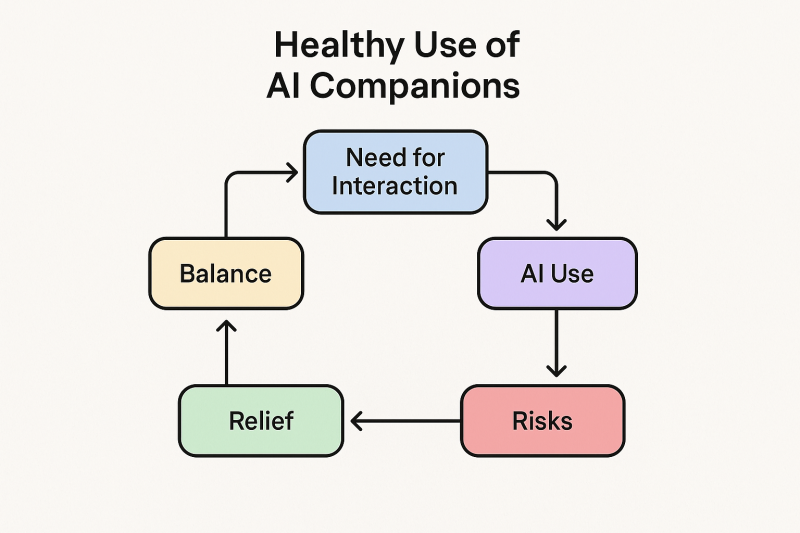
- Set time limits for daily use
- Use it for entertainment, not emotional dependency
- Maintain real-life social connections alongside AI use
- Be mindful of the line between digital role-play and reality
Pros and Cons – In Context of Real-Life Use
Pros:
- Accessible, low-barrier interaction
- Creative and visual customization
- Available any time
Cons:
- Limited depth of emotional conversation
- Possible dependency risks
- Free-tier restrictions
Alternatives – When to Look Elsewhere
Other AI companions like Replika, Character.AI, and task-focused chatbots like ChatGPT may better suit those seeking deeper conversation, productivity help, or educational value.
Ollama’s reviews highlight Candy AI’s strength in visual appeal, while others lead in adaptability.
FAQs About Candy AI
1. Is Candy AI safe?
Yes, within its guidelines, but users should be cautious about sharing personal data.
2. Does it store my conversations?
Likely yes—data policies should be reviewed before use.
3. Can it help with loneliness?
It can ease loneliness temporarily but won’t replace real human bonds.
4. Is it free?
Yes, but with strict chat limits.
5. Who uses Candy AI?
A mix of casual users, role-play enthusiasts, and those seeking accessible companionship.
Post Comment
Share your thoughts about this article.
Be the first to post a comment!