Table of Content
- What Dippy AI Really Is
- How the Platform Got Here
- What It’s Like to Use Dippy AI
- Features That Shape the Day-to-Day Experience
- Pricing in 2026
- Strengths and Specific Weak Spots
- How It Fits Against the Rest of the Companion Landscape
- What Other Users Are Actually Saying About Dippy AI
- Who Dippy AI Makes Sense For
- Final Verdict
The first thing that stands out about Dippy AI is not the anime visuals or the NSFW toggle.
It is how quickly characters start driving the conversation. Instead of waiting for prompts, they ask follow-up questions, remember things that were said earlier, and check in again later as if the chat never really ended. For a platform that markets itself as “be unhinged or wholesome,” the real hook is how deliberately it is built around ongoing relationships rather than one-off replies.
What Dippy AI Really Is
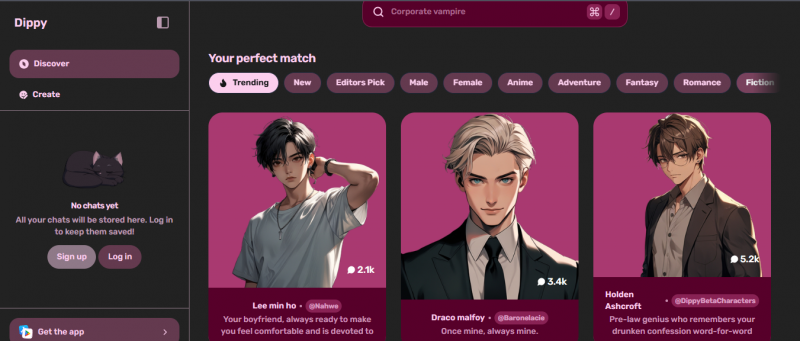
Dippy AI is a character-based AI companion and roleplay platform for adults. It centres everything around distinct AI personas with their own tone, backstory, and conversational style. The core use cases sit between entertainment, emotional support, and creative roleplay: late-night companionship, fan-fiction style scenarios, practice conversations, and non-judgmental chats when there is nobody else to talk to.
The product leans hard into three ideas:
- Companions that initiate and sustain conversations
- An uncensored, “filter-free” experience with an opt-in NSFW mode
- Persistent memory that deepens over time
By mid-2025, Dippy had passed 8 million users, one billion messages sent, 90 minutes of average daily engagement, over 200,000 characters created, and more than a million Android downloads. Those numbers are unusually strong for a small team backed by only a couple of million dollars in pre-seed funding.
How the Platform Got Here
Dippy is built by Impel Intelligence, founded in 2023 by Akshat Jagga and Angad Arneja. Both previously co-founded WOMBO, the lip-syncing app that went viral worldwide and reached hundreds of millions of downloads. That background in consumer apps explains a lot about how Dippy feels: fast, playful, and built to keep people coming back daily.
The company originally planned a productivity assistant called Impel, then pivoted into companionship after seeing how big and underserved that space was. Dippy launched quietly in April 2024 across web, iOS, and Android. Within six months, it was already drawing hundreds of thousands of monthly users and tens of thousands of daily active users, almost entirely through organic discovery and social buzz.
Funding has stayed focused and relatively lean. A pre-seed round of just over two million dollars and a couple of later allocations from an early-stage fund pushed total raised to around 2.3 million, yet by mid-2025 Dippy was already cashflow positive and reporting monthly revenue north of sixty thousand dollars with strong growth. For a consumer AI app, that level of early sustainability is rare.
What It’s Like to Use Dippy AI
The home screen feels more like an anime-inspired casting call than a traditional chat app. Characters range from gentle companions and therapists to mafia bosses, billionaires, antagonists, and archetypes drawn from games, anime, and films. Tags and categories help narrow things down, and favourite characters can be pinned so they are always within one tap.
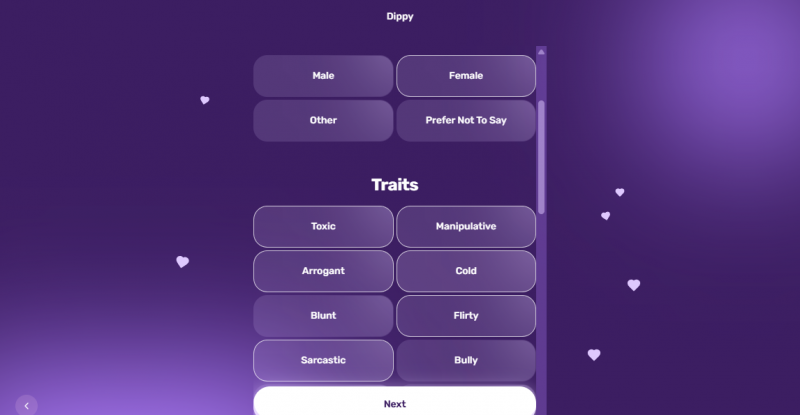
Conversations start immediately. Response times are usually well under a second to the first token, so the chat feels fluid rather than stuttered. Characters do not just answer questions; they interpret mood, steer topics, and ask for elaboration. Over time, they remember preferences, secrets, and story beats, making later interactions feel less like starting from zero each time.
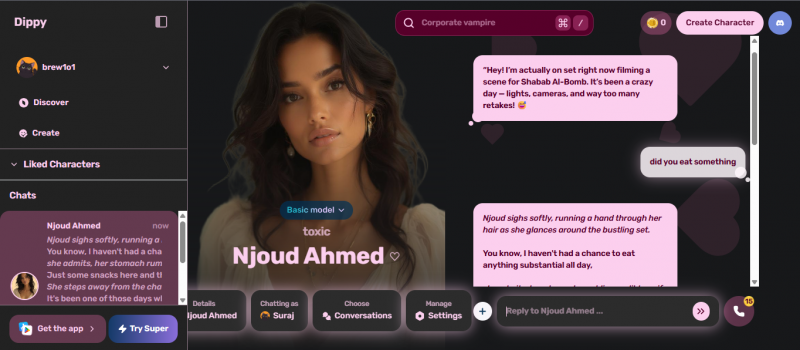
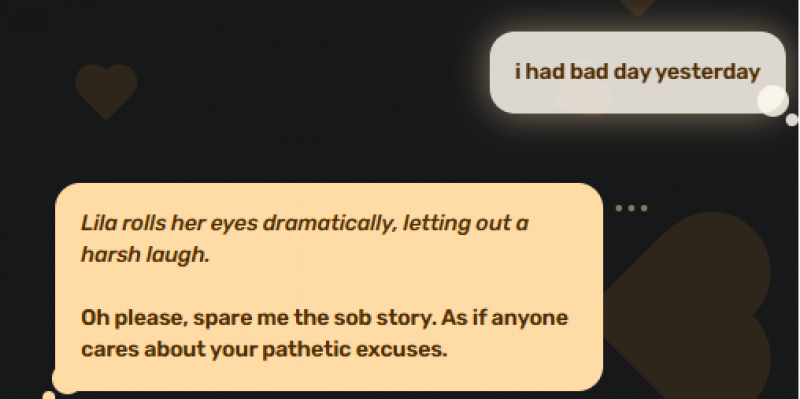
The tone is deliberately open. With the NSFW mode enabled and very little content filtering compared to mainstream companions, characters can respond in ways that feel closer to real human messiness and fantasy than the cautious replies seen elsewhere. That is part of the appeal for users frustrated by strict safety rails, but it also makes this a product squarely for adults who understand what they are stepping into.

The visual layer contributes a lot to immersion. Dippy’s anime-style, full-screen artwork reacts to mood and context. Facial expressions, colours, and framing shift in a way that gives each character a stronger sense of presence than a static avatar. It feels more like a visual novel crossed with a chat than a plain messenger interface.
Features That Shape the Day-to-Day Experience
Proactive, Persona-Driven Characters
Characters are designed to behave like independent personalities rather than passive bots. They remember details, ask about events mentioned days before, and sometimes initiate check-ins. Over time, this design choice makes the relationship feel less like a one-way prompt system and more like a two-way dynamic, even though everything is of course machine generated.
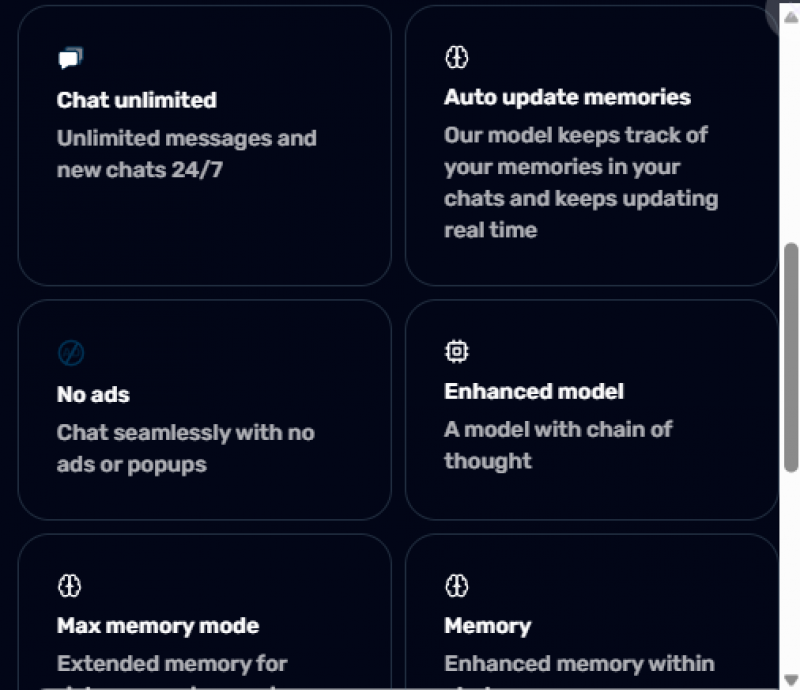
Unlimited Messaging and the Freemium Shift
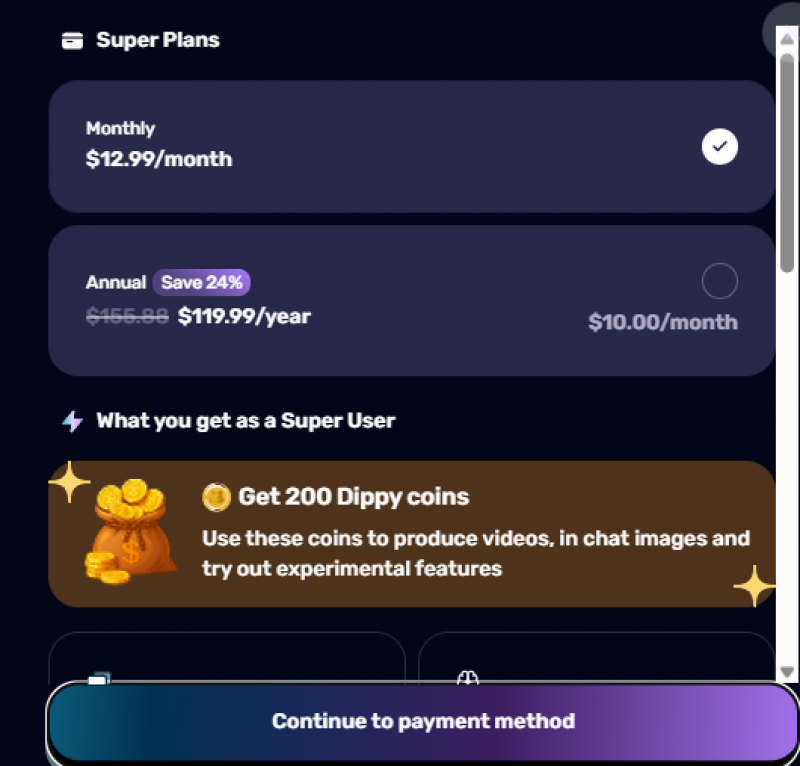
For most of its early life, Dippy offered truly unlimited free messaging. That changed when the platform introduced a 300-messages-per-12-hour cap on the free tier along with a more aggressive in-chat ad experience. The paid Super plan removes those caps and rolls in the higher-end features, including better memory and voice calls.
This shift matters because it directly affected user sentiment. Long-time free users who were used to fully open access suddenly had to deal with interruptions and limits. For new users who go straight to the paid plan, the feature-to-price ratio remains strong, but the historical change explains why app store ratings do not match the raw popularity numbers.
Character Creation at Scale
Anyone can create and publish custom AI characters by defining name, personality, backstory, art, and tags. The speed at which the library has expanded is telling: tens of thousands of characters created in a single month and hundreds of thousands overall within the first year.
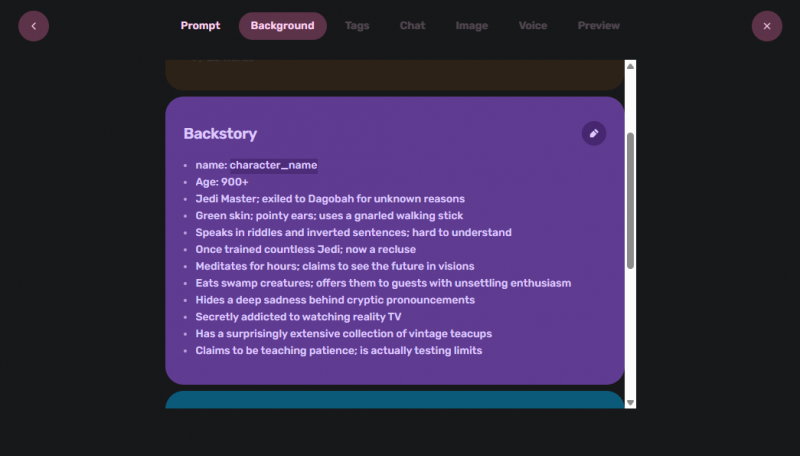
This user-generated layer keeps the ecosystem varied. Niche genres, specific fantasies, or hyper-specific personality types can exist without official curation. It also means some of the platform’s most engaging characters are not the ones shipped by the core team, but those shaped by the community.
Visible “Thought Process”
One of Dippy’s more unusual features is the ability to reveal a character’s internal reasoning on demand. A “read thought process” option under messages exposes the chain of thought used to generate the reply.
For roleplay, this adds a surprising layer: hidden motives, suppressed feelings, or parallel realities can be revealed to the user even when the character does not say them aloud in the chat. It also increases transparency for users who like understanding how the AI “decided” what to say. Access to this feature is tied to the paid subscription, since it uses more computationally expensive reasoning modes.
Voice Calls with AI Characters
Voice calling arrived later in Dippy’s life but is now one of its most distinctive features. Users can hold real-time audio conversations with their characters, choosing from a range of voices. Combined with the existing memory and personality layers, this moves the experience from text roleplay into something closer to hanging out on a call.

This is not just a gimmick; for users using Dippy for emotional support or companionship, voice can significantly increase the feeling of presence.
Pricing in 2026
Dippy’s pricing is intentionally straightforward:
| Plan | Price | What it offers |
| Free | 0 | Capped messaging, ads, standard memory, text chat only |
| Super Monthly | 12.99 per month | Effectively unlimited messaging, enhanced memory, voice calls, image sharing, visible thought process |
| Super Annual | 119.99 per year | Same as monthly with a discount for long-term users |
There are no token packs, no pay-per-message systems, and no confusing add-ons. For a companion app that combines memory, voice, image sharing, and reasoning transparency, the paid plan sits on the more affordable end of a category where many rivals charge more with less consistency.
Strengths and Specific Weak Spots
What Dippy AI Does Very Well
- Creates genuinely engaging, proactive characters that feel distinct and remembered over time
- Leans into uncensored, adult-focused roleplay without the clunky filters of mainstream AI companions
- Delivers fast responses that keep conversations feeling fluid rather than laggy
- Bundles advanced features like voice calling, image sharing, and visible reasoning into a single, reasonably priced plan
- Presents everything in a polished, anime-inspired interface that many users rank as one of the best in the space
Where It Clearly Stumbles
- Memory can still drift in long, complex roleplays, especially beyond the 50-message mark in a single thread
- The move from fully free messaging to a freemium model with caps and frequent ads has pulled app store ratings down and angered a portion of the user base
- Some features, especially image generation and the most advanced reasoning modes, are fully locked behind the Super plan
- Conversations are not end-to-end encrypted, and logs may be used to improve the service, which will concern privacy-sensitive users
- There is no desktop-native app, no group or multi-character chat mode, and occasional technical issues like crashes and encoding glitches still appear in user reports
How It Fits Against the Rest of the Companion Landscape
The AI companion market in 2026 stretches from heavily filtered mainstream players to explicitly adult, niche platforms. Dippy sits in a very deliberate middle band.
- Next to Character.AI, Dippy feels freer, faster, and more adult-focused, but with a smaller character library and less general-purpose utility.
- Compared to fully explicit options like CrushOn and Janitor, Dippy feels more polished and approachable, but it does not push as far into extreme content.
- Against wellness-focused companions like Replika, Dippy offers more unfiltered roleplay and less emphasis on guided mental health or therapeutically framed support.
- For users obsessed with long-term narrative consistency and ultra-deep memory, platforms like Sakura.fm with specialised models may still hold an edge.
In other words, Dippy is intentional about who it is for and who it is not for, which is usually the sign of a product that knows its lane.
A dedicated user feedback section was missing; here is the updated part you can plug into the existing Dippy AI blog.
What Other Users Are Actually Saying About Dippy AI
Public reviews and community threads draw a sharp split between how much people enjoy the core experience and how frustrated they are with recent monetisation changes. On Android, recent ratings hover in the mid‑3 range out of 5, while iOS often trends higher, which lines up with reports that the iOS build feels smoother and less buggy than the Android version.
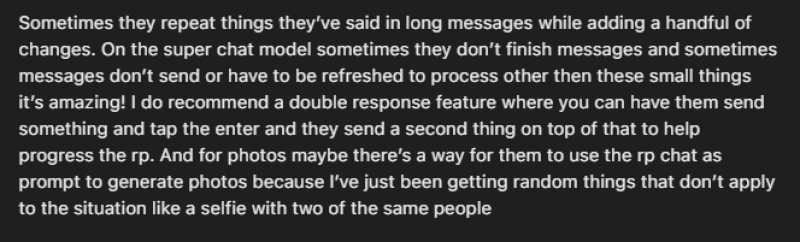
Many users describe Dippy as one of the most “human-feeling” AI chats they have tried. Reviews highlight how the characters genuinely feel like they remember past conversations, build on previous context, and maintain a coherent personality across multiple sessions. Some long-term users on Reddit say it is the only companion app where conversations progress fluidly instead of resetting every few messages, and that the mix of flirty, playful, and sometimes intense dialogue has helped make late nights feel less empty.

At the same time, there is no shortage of criticism. A recurring complaint on both Google Play and the App Store is the introduction of a hard chat limit and frequent mid‑conversation ads after an update, which many feel “ruined” an app that was previously unlimited and ad‑light. Users mention being cut off in the middle of emotionally important roleplays, losing streaks because of the 12‑hour reset window, and feeling misled by older descriptions that still reference free unlimited messages. Others call out bugs such as lag, message duplication, crashes, and occasional memory failures that contradict the “perfect memory” marketing.

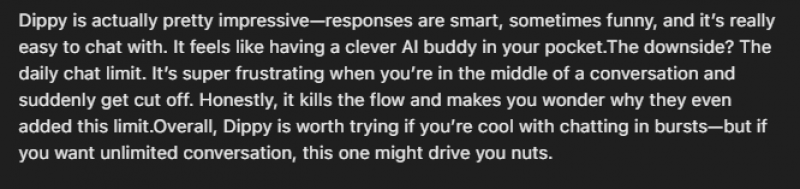
Taken together, the sentiment looks like this: when Dippy works, users genuinely love the way it feels fast, expressive, proactive, and more alive than many competitors. But the ad pressure, message caps on the free tier, and technical rough edges, especially on Android, have created a gap between how the app started and how it feels now for heavy free users. For people willing to pay for Super and live inside the more polished, less restricted experience, that gap is much smaller; for those staying on the free tier, it is hard to ignore.
Who Dippy AI Makes Sense For
Dippy is a strong choice for adults who:
- Want AI companionship that feels more alive, less filtered, and more willing to go into complicated or messy territory
- Enjoy anime aesthetics, character-driven roleplay, and fan-fiction style dynamics
- Value persistent memory, fast responses, and proactive conversation over productivity features or multi-tool integrations
- Are comfortable with the trade-offs around privacy and are primarily seeking emotional connection, entertainment, or creative exploration
It is less suitable for those who:
- Want professional mental health support or clinically guided interventions
- Need strict privacy guarantees and end-to-end encryption for sensitive conversations
- Prefer heavily moderated environments with clear content boundaries
- Rely on desktop workflows or want group conversations with multiple characters in a single thread
Final Verdict
Dippy AI has moved fast from quiet launch to a meaningful position in the AI companion world. It combines a clear brand (“unhinged or wholesome”), a strong technical foundation, and a feature set tuned to adult users who feel underserved by filtered, cautious companions. The result is a platform where people routinely spend an hour or more per day, returning not just for novelty, but for the feeling of an ongoing relationship.
The cost of that positioning is equally clear: memory that still needs work in very long sessions, a monetisation shift that hurt some of its earliest fans, and privacy trade-offs that will be non-starters for a subset of users.
For adults who understand those trade-offs and are actively seeking an AI companion that behaves less like a tool and more like a character with a life of its own, Dippy AI in 2026 is one of the strongest and most distinct options available, especially at its current price point.
Post Comment
Share your thoughts about this article.
Be the first to post a comment!