Table of Content
- What Type of Website Techexample.org Actually Is
- Content Structure: How Articles on Techexample.org Are Typically Written
- Topic Choice Patterns: What the Website Prioritizes
- Why Techexample.org Appears Across So Many Different Search Results
- Editorial Signals: What the Site Shows & What It Does Not
- Content Reliability: What Users Should Realistically Expect
- User Experience: What You Actually Encounter While Browsing
- Conclusion
Techexample.org appears regularly in search results across basic tech queries, cloud concepts, trending topics, gaming questions, and simplified explainers.
But beyond the homepage, many users still wonder:
- What kind of site is this?
- How does it operate?
- What patterns does the content follow?
- Why does it appear for unrelated keywords?
- What can you realistically expect from it?
The short answer: Techexample.org is a general-purpose informational blog optimized for broad keyword coverage. It’s safe to browse and fine for quick, surface-level definitions, but it lacks the editorial transparency, expert authorship, and technical depth needed to serve as a trusted reference for anything beyond casual reading.
This blog provides a clear assessment of Techexample.org based on its structure, content style, SEO patterns, and user-facing behavior.
What Type of Website Techexample.org Actually Is
Techexample.org functions as a general informational blog, not a specialized tech publication. Its catalog spans general technology, cloud computing basics, introductory AI topics, gaming and entertainment, productivity, and a long tail of miscellaneous digital subjects.
It publishes content across multiple categories:
- General technology
- Cloud basics
- AI introductions
- Gaming and entertainment
- Productivity
- Miscellaneous digital topics
It does NOT behave like:
- a news website
- a research platform
- a premium tech publication
- a specialized niche authority
That breadth is the first tell. Authoritative tech sites, such as engineering blogs, developer documentation hubs, and focused publications, build depth within a defined niche. Techexample.org does the opposite: it prioritizes width.
Content Structure: How Articles on Techexample.org Are Typically Written
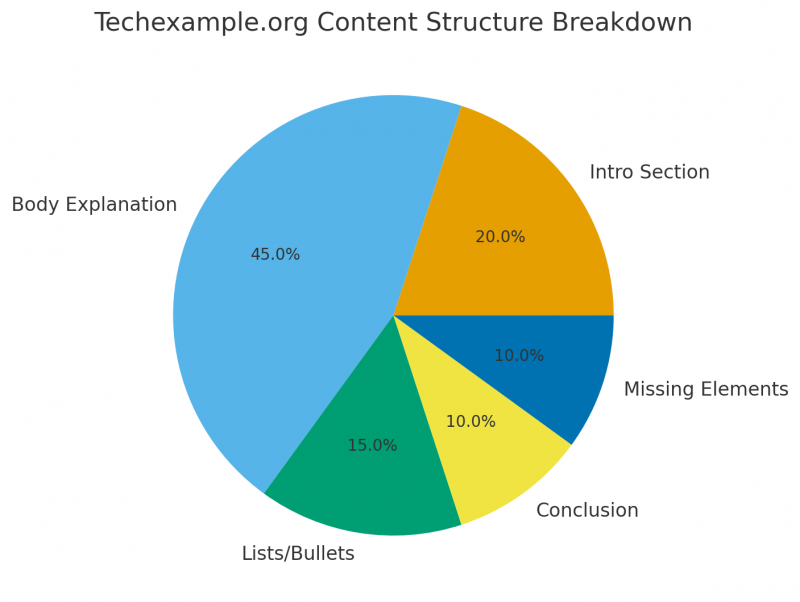
A close reading of multiple posts shows a very consistent pattern:
Predictable Intro Format
Most posts open by restating the topic in general terms rather than establishing a specific angle or answering the query immediately.
Middle Section with Simplified Explanations
Points are broken down into:
- basic definitions
- high-level descriptions
- short paragraphs
No Expert Commentary
The writing lacks:
- technical depth
- engineering insights
- coding examples
- factual citations
Template-Like Ending
Most posts conclude with a simple summary, often repeating earlier points.
This formula isn’t accidental. It’s engineered for readability scores and crawlability: short sentences, zero jargon, consistent formatting. Those are legitimate qualities, but they optimize for search engines and skimmers, not for readers who need substance.
Topic Choice Patterns: What the Website Prioritizes
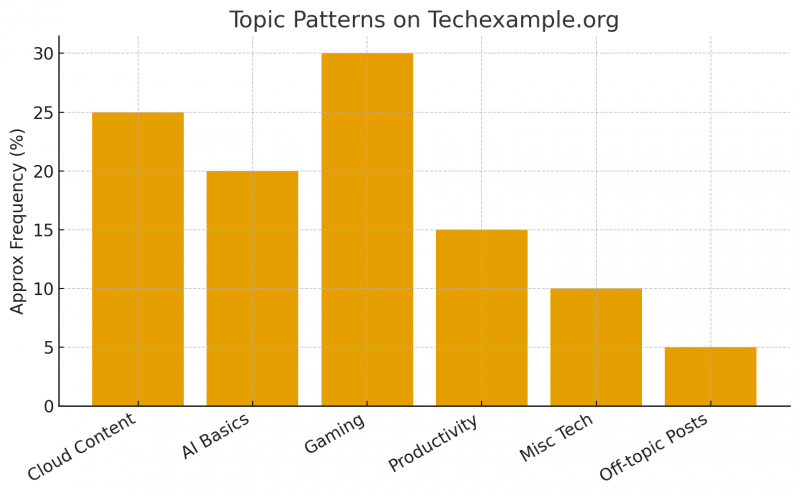
Techexample.org posts show clear patterns:
High search-volume terms
(e.g., cloud, AI basics, gaming terms)
Evergreen content
(e.g., “What is X?”, “How does Y work?”)
Beginner-oriented digital topics
(simple definitions, conceptual introductions)
Broad content categories
(not tightly niche)
- No step-by-step tutorials
- No advanced tech breakdowns
- No subject-matter expertise
- No technical case studies
It appears to be optimized for wide keyword coverage, not specialized excellence.
Why Techexample.org Appears Across So Many Different Search Results
If the content is shallow, why does Techexample.org appear so often in search results? Four reasons, and none of them involve manipulation:
It targets top-of-funnel queries. Google frequently ranks simple explainers for beginner searches, where a plain-language answer genuinely serves intent better than a technical document would.
It publishes consistently. Regular output signals freshness and prompts more frequent crawling, which keeps the site’s pages competitive for long-tail terms.
It’s technically clean. The site avoids black-hat tactics, spammy redirects, and aggressive ad behavior, the things that get domains penalized or deindexed. Staying “clean” keeps its wide net of pages safely in the index.
Breadth compounds. Every new category the site enters expands its long-tail keyword footprint. Covering gaming, AI, cloud, and productivity simultaneously means the domain can surface in thousands of loosely related queries.
The result is high visibility without high authority. That combination is exactly why readers should understand what they’re looking at before treating it as a source.
Audience Profile
Based on tone, topics, and depth, the site clearly aims at:
- Beginners exploring technology
- Students needing simple breakdowns
- Readers looking for high-level explanations
- People who prefer short, easy-to-read content
Techexample.org is NOT designed for:
- Developers
- Engineers
- Researchers
- Professionals needing reliable sources
- Anyone needing verified, technical accuracy
If you’re evaluating software, troubleshooting a system, or writing anything that will be fact-checked, this site should not be in your citation list.
Editorial Signals: What the Site Shows & What It Does Not
This is where the site’s biggest weakness sits. Here’s the scorecard:
| Signal | Present? |
| Consistent formatting and readable writing | Yes |
| Category-based organization | Yes |
| Working navigation | Yes |
| Named authors | No |
| Author credentials or bios | No |
| Visible editorial or fact-checking process | No |
| Citations or references to primary sources | No |
| Expert contributions | No |
What the Site Shows
- consistent article formatting
- structured paragraphs
- readable English
- category-based organization
- working internal navigation
What the Site Does NOT Show
- author names
- credentials
- editorial review process
- citations or official references
- detailed learning material
- expert contributions
This makes it a generic information hub rather than an expert-backed platform.
Content Reliability: What Users Should Realistically Expect
Shallow content isn't the same as wrong content, so it's worth asking the reliability question separately: when Techexample.org states a fact, can you take it at face value?
Mostly, yes, but only because the site rarely says anything risky. Definitions and broad overviews are hard to get badly wrong, and in the articles we sampled we didn't catch outright errors. The reliability concern is less about mistakes and more about what the site gives you no way to check. There are no visible publication or last-updated dates on most posts, no corrections policy, and no way to tell whether an article about a fast-moving topic like AI tools was written last month or two years ago. In tech, an explanation that was accurate at publish time can quietly become outdated, and this site gives you no signal for when that has happened.
So the practical rule is simple: trust it for the timeless basics, verify it for anything time-sensitive, version-specific, or decision-relevant. If a post influences what you buy, build, or write, spend two minutes confirming the claim against an official source before you act on it.
Why the Website Has Mixed Topic Categories
Many visitors notice the presence of posts that feel unrelated especially gaming, trending culture, and sometimes borderline irrelevant topics.
This usually indicates:
- multi-writer contributions
- SEO-targeted content expansion
- outsourced writing
- content farming patterns
- quantity over niche specialization
This is a common approach for websites aiming for wide search engine presence.
User Experience: What You Actually Encounter While Browsing
A neutral UX analysis reveals:
- The site loads normally
- No heavy ads or disruptive pop-ups
- Mobile experience is clear
- Articles open quickly
- Navigation is simple
However:
- There is no sense of identity
- Pages lack contextual linking
- No deep content hubs or knowledge clusters
- No reader engagement tools
Each article exists as an island, which reinforces the impression of a site assembled for search traffic rather than built for a returning audience.
Overall Takeaway: What Techexample.org “Really” Is
Techexample.org is:
- A broad, beginner-friendly information site
- Focused on simplified explanations
- Operating with minimal editorial identity
- Built to attract search traffic through wide topic coverage
- Not a specialized or expert-led tech publication
It provides basic information, but should not be treated as a definitive source for technical subjects.
Conclusion
Use it for: quick definitions, first-pass orientation on an unfamiliar term, or simple explanations you’ll verify elsewhere.
Don’t use it for: technical decisions, academic or professional citations, implementation guidance, or anything where accuracy matters more than convenience.
Techexample.org is best understood as a general-purpose digital glossary with a blog format. It’s accessible, safe to browse, and genuinely useful for the casual reader it targets. But it offers no transparency about who writes it, no sourcing behind its claims, and no depth beyond the introductory level. For serious understanding
Post Comment
Share your thoughts about this article.
Be the first to post a comment!