The Elon Musk versus Sam Altman trial has become one of the most closely watched legal battles in the tech industry, but much of the public conversation around it has been misleading.
This is not a courtroom referendum on artificial general intelligence. The jury is not deciding whether OpenAI is building dangerous AI, whether Sam Altman is morally right, or whether Elon Musk “invented” OpenAI.
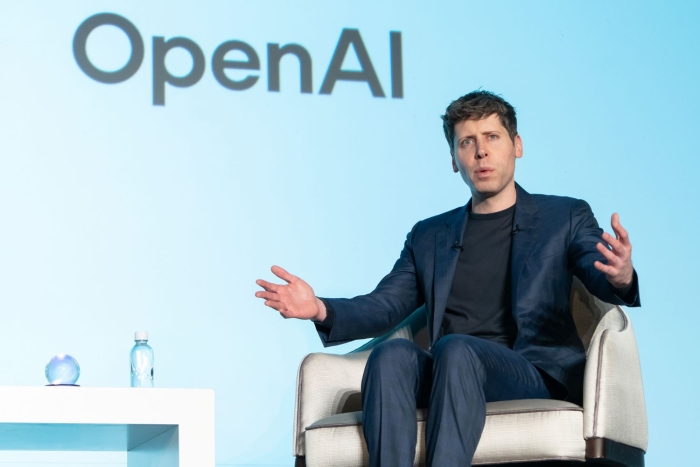
What the jury is actually deciding is far narrower, yet potentially far more important for the future of AI companies: whether OpenAI’s leadership violated the organization’s original legal obligations when it transformed from a nonprofit research lab into one of the most commercially powerful AI companies in the world.
At the center of the case is a basic claim from Musk.
He argues that OpenAI’s founders originally agreed the organization would develop advanced AI for humanity’s benefit rather than for private profit. According to Musk, OpenAI later abandoned that mission as it evolved into a massive commercial business tied closely to Microsoft and billions of dollars in investment.
OpenAI disputes that interpretation.
The company argues there was never a binding agreement preventing commercial restructuring and says Musk himself previously supported for-profit ideas while trying to gain greater control over the organization.
That means the trial is fundamentally about governance, contracts, fiduciary duties, and nonprofit obligations rather than AI ideology itself.
The jury’s job is focused on several key legal questions.
| Core Legal Question | Why It Matters |
|---|---|
| Did OpenAI violate its founding commitments? | Could affect how nonprofit AI labs operate in the future |
| Did Altman and OpenAI improperly enrich themselves? | Could lead to damages or restructuring |
| Was Musk misled when donating money to OpenAI? | Central to Musk’s breach-of-trust claims |
| Did OpenAI unlawfully shift toward profit maximization? | Could reshape OpenAI’s governance structure |
| Were any legal obligations actually enforceable? | Determines whether Musk’s case succeeds at all |
The jury is not deciding whether OpenAI should exist or whether AI should be regulated broadly.
Instead, jurors are evaluating whether OpenAI’s evolution violated legal obligations tied to its original nonprofit structure.
The case matters because OpenAI became the blueprint for much of the modern AI industry.
OpenAI started as a nonprofit lab focused on AI safety and public benefit. Today it operates more like a highly aggressive frontier AI company competing directly with Google, Anthropic, Meta, xAI, and Microsoft-backed ecosystems.
That transformation mirrors a larger tension across Silicon Valley:
| Original AI Narrative | Current AI Industry Reality |
|---|---|
| Open research and public benefit | Massive commercial competition |
| AI safety focus | Infrastructure and revenue race |
| Nonprofit ideals | Multi-billion-dollar valuations |
| Collaboration | Closed-model rivalry |
| Shared advancement | Strategic AI arms race |
The trial effectively asks whether organizations can use nonprofit credibility to build public trust and then later evolve into highly commercial entities without violating legal or ethical obligations.
That question extends far beyond OpenAI itself.
A major part of the trial has centered around credibility battles between Musk, Altman, and other early OpenAI figures.
Musk’s legal team has tried to portray Altman and OpenAI president Greg Brockman as leaders who abandoned OpenAI’s founding mission while enriching themselves financially.
OpenAI’s lawyers have responded by arguing Musk is rewriting history after leaving the company and later becoming a direct competitor through xAI. They claim Musk knew OpenAI would eventually require enormous funding and may have pursued similar commercial ambitions himself.
That dynamic has turned the trial into something larger than a technical corporate dispute. It has become a public breakdown of one of Silicon Valley’s most important founding relationships.
The outcome may influence how future AI companies structure themselves legally.
OpenAI’s unusual structure, where a nonprofit controls a capped-profit subsidiary, has already become one of the most debated governance experiments in modern tech.
If Musk wins significant claims, the consequences could include:
If OpenAI wins, it could strengthen the argument that frontier AI development requires highly commercial structures capable of raising enormous amounts of capital.
Either outcome will likely shape how future AI labs balance:
| Competing Pressure | Why It Matters |
|---|---|
| Public-benefit missions | Builds trust and legitimacy |
| Commercial scaling | AI development is extremely expensive |
| Investor expectations | Frontier AI requires massive funding |
| Safety governance | Governments increasingly demand oversight |
| Founder control | AI companies are becoming strategic assets |
This is why the trial has attracted so much attention across the AI industry.
One unusual aspect of the case is that the jury’s decision may ultimately be advisory on some issues rather than fully final. Judge Yvonne Gonzalez Rogers still holds significant authority over remedies and broader structural outcomes.
That means even after the jury reaches conclusions, the court could still play a major role in determining:
The trial is therefore as much about shaping legal narratives as it is about immediate penalties.
Underneath the legal arguments, the case reflects something deeper happening across AI.
The industry is rapidly consolidating around a small number of organizations controlling advanced models, enormous compute infrastructure, and strategic partnerships. OpenAI sits at the center of that transformation.
The trial repeatedly returns to one underlying question:
Who should control the development of advanced artificial intelligence?
That question appears in different forms throughout the courtroom battle:
The jury is not answering all of those questions directly.
But its decision may heavily influence how the industry answers them going forward.
The Musk versus Altman trial is often framed as a personal feud between two Silicon Valley billionaires, but the legal issues are much larger than that. The jury is not deciding whether AI is good or bad. It is deciding whether OpenAI’s transformation from nonprofit idealist lab to commercial AI giant crossed legal boundaries tied to its founding mission.
The outcome could shape how future AI companies are governed, funded, and structured for years to come.
Because beneath all the courtroom drama, the case is really about something much bigger than Musk or Altman themselves:
Who gets to control the institutions building the future of AI.
Share your thoughts about this article.
Be the first to post a comment!