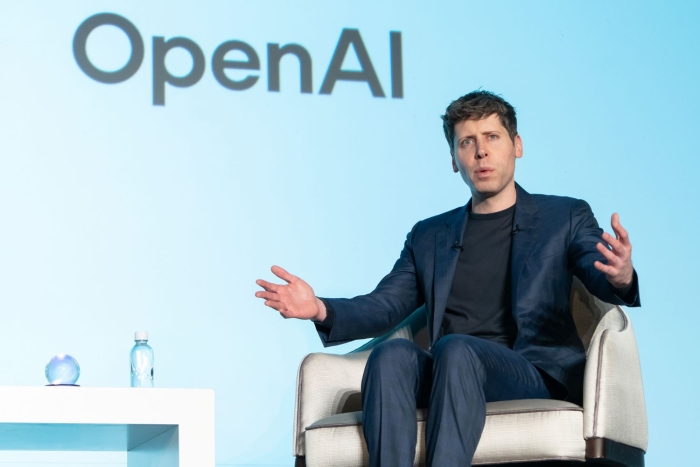
The courtroom battle between Elon Musk and Sam Altman took another dramatic turn this week after Altman testified that Musk once discussed the idea of OpenAI eventually being controlled by his children.
The testimony emerged during the ongoing legal fight over OpenAI’s original mission, governance structure, and transition into a commercial AI powerhouse. What began as a dispute over nonprofit principles has increasingly turned into a public examination of how some of the world’s most influential AI leaders thought about power, ownership, and control during OpenAI’s early years.
According to Altman’s testimony, Musk repeatedly pushed for stronger personal control over OpenAI during the company’s early formation years. Altman described one conversation as “particularly hair-raising,” claiming Musk suggested OpenAI’s governance could eventually pass to his children if he died.
Altman argued that the idea conflicted directly with OpenAI’s founding philosophy. OpenAI was originally created around the belief that advanced artificial intelligence should not be controlled by any single person, corporation, or inherited power structure. The organization initially positioned itself as a nonprofit research lab focused on AI safety and broad societal benefit.
The testimony is significant because Musk’s lawsuit is built around the argument that OpenAI itself abandoned those original principles when it evolved into a more commercially driven organization closely tied to Microsoft.
Altman’s defense, however, is increasingly portraying Musk as someone who also sought concentrated control over the company long before OpenAI became the corporate giant it is today.
The legal fight between Musk and OpenAI has evolved into one of the most consequential disputes in the AI industry. Musk accuses OpenAI and its leadership of betraying the organization’s nonprofit mission by building a highly valuable for-profit structure around frontier AI systems.
Musk has argued that OpenAI moved away from its original promise to develop artificial intelligence openly and safely for humanity. He has also challenged OpenAI’s relationship with Microsoft and its increasingly commercial direction.
OpenAI, meanwhile, argues that Musk previously supported many of the structural changes he now criticizes. The company has also claimed Musk attempted to gain greater authority over OpenAI during internal discussions years earlier.
The trial has become less about a technical corporate dispute and more about competing visions of AI governance:
| Core Question | Musk’s Position | OpenAI’s Position |
|---|---|---|
| Who should control advanced AI? | OpenAI abandoned its original nonprofit mission | Musk himself pushed for centralized control |
| Was OpenAI meant to become commercial? | Musk argues the shift violated founding principles | OpenAI says commercialization became necessary for scaling AI |
| What is the real conflict about? | AI safety and public interest | Competition, governance, and power struggles |
| Why does it matter? | The outcome could influence future AI governance models | The case may affect OpenAI’s structure and partnerships |
The comment itself is striking because it touches on a growing concern inside the AI world: whether frontier AI systems are becoming concentrated in the hands of a very small number of individuals and companies.
The AI industry increasingly revolves around a few dominant players including OpenAI, xAI, Anthropic, Google DeepMind, and Meta. These organizations control enormous computing resources, advanced models, and strategic partnerships.
In that context, Altman’s testimony reframes the OpenAI dispute as not only a disagreement about nonprofit structure, but also a disagreement about who should ultimately hold authority over artificial general intelligence.
That is part of why the testimony received immediate attention across Silicon Valley. The idea of one individual treating control of an AI lab almost like inherited ownership clashes sharply with the original rhetoric around AI being developed for humanity as a whole.
The courtroom exchanges have also exposed how deeply the relationship between Musk and Altman deteriorated over time.
Both men were once central figures in OpenAI’s founding story. Musk helped launch the organization in 2015 alongside Altman, Greg Brockman, Ilya Sutskever, and other early AI researchers. Musk later left the company in 2018 following internal disagreements and strategic tensions.
Since then, the relationship has evolved into direct rivalry. Musk launched xAI, built the Grok AI model, and repeatedly criticized OpenAI publicly. OpenAI has responded aggressively in court filings, accusing Musk of attempting to slow the company down while benefiting his own competing AI interests.
The trial has now exposed years of private disagreements, personality conflicts, governance debates, and competing ambitions that were previously discussed mostly behind closed doors.
This lawsuit matters far beyond the personal feud between Musk and Altman.
The outcome could influence how future AI companies are governed, how nonprofit AI organizations transition into commercial entities, and whether courts become more involved in defining AI accountability structures.
Investors, regulators, startups, and major tech companies are all watching because the case raises larger questions:
The answers may shape how the next generation of AI companies is structured.
Sam Altman’s testimony added another explosive chapter to the increasingly public collapse of OpenAI’s founding alliance. The allegation that Elon Musk once considered passing OpenAI control to his children transformed the trial from a debate about corporate restructuring into a broader conversation about power, inheritance, and who gets to control advanced AI systems.
What makes the case so important is that it is no longer just about OpenAI’s past. It is becoming a test case for how the AI industry itself may be governed in the future.
Share your thoughts about this article.
Be the first to post a comment!