The Elon Musk versus OpenAI trial has turned into something much larger than a legal fight over nonprofit structures and AI governance. Underneath the courtroom arguments, one issue keeps resurfacing again and again: who, if anyone, can actually be trusted to control advanced artificial intelligence.
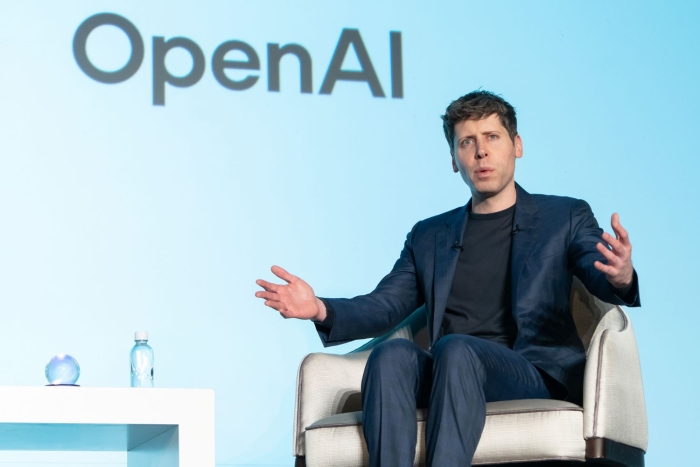
That question has become one of the defining themes of the trial’s final weeks, especially as lawyers focused heavily on the credibility of OpenAI CEO Sam Altman, Elon Musk, and the people surrounding the company’s transformation into an AI giant.
The case increasingly feels less like a traditional corporate lawsuit and more like a public referendum on the personalities now shaping the future of AI.
Technically, the case focuses on whether OpenAI violated its original nonprofit mission when it evolved into a massive commercial AI company backed heavily by Microsoft. Musk argues he funded OpenAI believing it would remain focused on public benefit rather than profit maximization.
But as testimony unfolded, the courtroom conversation repeatedly shifted toward something more personal:
Can Sam Altman be trusted?
Musk’s legal team spent large portions of the trial attacking Altman’s credibility directly. Attorney Steve Molo reportedly grilled Altman over past public statements, congressional testimony, internal communications, and allegations from former colleagues who claimed Altman had misled or manipulated people inside OpenAI.
That strategy matters because the jury is not only evaluating documents and contracts. Jurors are also deciding whose version of OpenAI’s history feels believable.
The trust issue intensified because several former OpenAI executives and board members testified about internal concerns regarding Altman’s leadership style.
Former board members Helen Toner and Natasha McCauley reportedly described situations where they believed Altman had not been fully transparent with the board. Former CTO Mira Murati testified that Altman created “chaos” and distrust among senior leadership by saying different things to different people.
Perhaps most damaging was testimony tied to Ilya Sutskever, one of OpenAI’s most respected technical leaders, who reportedly supported concerns about Altman’s honesty during the company’s 2023 leadership crisis.
| Witness or Insider | Reported Concern |
|---|---|
| Mira Murati | Claimed Altman fostered distrust internally |
| Helen Toner | Raised transparency concerns |
| Natasha McCauley | Questioned Altman’s candor |
| Ilya Sutskever | Supported concerns around honesty |
| Musk’s legal team | Accused Altman of misleading donors and the board |
The accumulation of testimony transformed the case into something broader than a dispute about nonprofit law.
It became a debate over whether one of the most influential figures in AI can be trusted with enormous power.
The complication for Musk is that the trust issue cuts both ways.
OpenAI’s lawyers aggressively pushed back by portraying Musk himself as unreliable, contradictory, and motivated by personal rivalry after leaving OpenAI and launching xAI.
The defense argued Musk knew OpenAI would eventually require massive funding and may have supported commercialization ideas himself before losing influence inside the company. OpenAI also pointed to Musk’s own history of controversial public statements and unpredictable behavior.
That creates an unusual dynamic where neither side emerges as a completely clean moral authority.
| Trust Questions Around Altman | Trust Questions Around Musk |
|---|---|
| Allegations of misleading colleagues | History of controversial public claims |
| Concerns from former board members | Frequent contradictory statements |
| Questions around governance transparency | Accusations of pursuing control |
| Leadership instability during 2023 crisis | Competing AI company through xAI |
| Commercialization concerns | Aggressive litigation strategy |
As TechCrunch’s Equity podcast reportedly summarized it, the trial increasingly circles around one uncomfortable question: can the people leading AI companies actually be trusted?
The reason the trust issue feels so important is that AI companies now hold enormous influence over technology, information, infrastructure, and potentially society itself.
OpenAI is no longer just a startup. The company sits at the center of:
That concentration of influence raises the stakes dramatically.
The trial repeatedly exposes a broader fear inside the AI industry:
What happens when systems this powerful are controlled by a very small number of individuals and organizations that the public may not fully trust?
The trust debate also reflects deeper structural issues across frontier AI.
Most leading AI companies now operate in environments involving:
| AI Industry Pressure | Resulting Tension |
|---|---|
| Massive investor expectations | Pressure to commercialize aggressively |
| National strategic importance | Geopolitical competition |
| Rapid capability growth | Safety concerns |
| Founder-driven leadership | Weak institutional oversight |
| Enormous infrastructure costs | Dependence on large corporate backers |
That combination makes trust unusually important because much of the AI industry still relies heavily on informal assurances from founders and executives rather than mature governance systems.
OpenAI originally positioned itself as an organization built specifically to avoid concentrated AI power. The lawsuit now questions whether that mission survived once billions of dollars entered the picture.
Trust is not only about honesty or governance. It is also about whether AI leaders genuinely prioritize safety over competition and profit.
Musk’s legal team repeatedly argued that OpenAI abandoned its original safety-focused mission as commercial incentives grew.
The case even included testimony from AI researcher Stuart Russell, Musk’s only expert witness directly focused on AI technology, who warned about the dangers of an uncontrolled AGI arms race.
That matters because public trust in AI increasingly depends on whether companies appear willing to slow down, self-regulate, or prioritize long-term risks over short-term growth.
Right now, many observers are not convinced.
Legally, the jury’s role remains relatively narrow.
Jurors are deciding issues such as:
But emotionally and symbolically, the case has become much bigger than those technical questions.
The courtroom battle increasingly feels like a public examination of whether the AI industry’s most influential figures deserve the extraordinary power they now hold.
The trial matters because AI increasingly depends on public trust to keep advancing.
Governments, enterprises, and consumers are being asked to trust AI companies with:
If trust in the people leading those companies collapses, the broader AI industry could face stronger regulation, political backlash, or public resistance.
That is why this trial resonates far beyond Musk and Altman themselves.
The Musk versus OpenAI trial started as a legal fight over nonprofit governance and corporate restructuring. It has increasingly evolved into something more uncomfortable: a public debate about whether the people building advanced AI systems can actually be trusted.
Sam Altman’s credibility has faced intense scrutiny from former colleagues, board members, and Musk’s legal team. But Musk himself carries his own long history of controversial behavior and competing incentives.
The result is a trial where trust itself became unstable.
And that may be the most important signal to emerge from the courtroom.
Because the future of AI increasingly depends not only on whether the technology works, but also on whether the public believes the people controlling it deserve that power at all.
Share your thoughts about this article.
Be the first to post a comment!