Replit CEO Amjad Masad says he has little interest in selling the company, even as acquisition speculation grows across the fast-moving AI coding industry.
Speaking at TechCrunch’s StrictlyVC event in San Francisco, Masad addressed growing chatter surrounding AI developer tools, including reports that coding assistant startup Cursor has explored acquisition discussions tied to a massive valuation. Instead of focusing on exits, Masad made it clear that Replit’s goal is to build an independent long-term platform.
The comments arrive during one of the most aggressive expansion periods the software industry has seen in years, where AI-powered coding tools are rapidly changing how applications are built, tested, and deployed.
Replit started as an online coding environment focused on accessibility and collaboration. Over the last two years, the company has transformed into a broader AI-powered software creation platform.
Masad believes the next phase of computing will allow far more people to build software without traditional engineering backgrounds. AI coding assistants are already reducing the technical barrier for creating websites, apps, automations, and internal business tools.
Instead of positioning Replit as a simple code editor, the company increasingly describes itself as a platform where users can “build software through conversation.”
That vision places Replit directly into competition with companies like Cursor, GitHub Copilot, Bolt, Lovable, and even large platform players such as Microsoft and Google.
| AI Coding Trend | Why It Matters |
|---|---|
| Natural language coding | More non-engineers can build apps |
| AI debugging | Faster software iteration |
| Automated deployment | Reduced operational complexity |
| Conversational interfaces | Coding becoming more accessible |
| Full-stack AI workflows | Smaller teams can ship faster |
Masad’s comments were partly driven by the industry conversation surrounding Cursor, one of the fastest-growing AI coding startups in the market.
Reports suggesting that Cursor could potentially pursue large strategic deals or acquisitions have fueled broader speculation about consolidation inside the AI developer ecosystem. Investors increasingly view coding AI as one of the most commercially valuable areas of generative AI because developers are among the first groups willing to pay for productivity gains.
Masad acknowledged the intense competition but suggested that selling too early could limit the long-term opportunity.
According to him, the AI coding market is still in its early stages, and the companies building foundational developer platforms today could eventually become major infrastructure players for the broader software industry.
Another major topic during the discussion was Apple.
Masad criticized the power large platform owners still hold over software ecosystems, particularly around app distribution and platform restrictions. While he did not focus only on Apple, he argued that developers increasingly want more open systems where they can create and distribute software with fewer limitations.
That perspective aligns closely with Replit’s browser-based model.
Because Replit runs largely through the cloud, users can develop and launch applications directly from browsers without relying heavily on traditional operating system workflows. That creates a more platform-independent experience compared to older software development environments.
The broader AI shift may strengthen that approach.
As software creation becomes more conversational and cloud-based, companies like Replit believe the importance of traditional operating system lock-in could weaken over time.
| Replit Strategy | Long-Term Goal |
|---|---|
| Browser-first development | Reduce platform dependency |
| AI-assisted coding | Expand software creation access |
| Cloud deployment | Simplify app publishing |
| Conversational interfaces | Lower technical barriers |
| Independent platform focus | Avoid ecosystem restrictions |
One of Masad’s strongest arguments is that AI will fundamentally reshape software development itself.
Historically, building applications required years of technical education, infrastructure knowledge, and specialized engineering experience. AI coding systems are now compressing many of those steps into natural language workflows.
Users can already generate:
Masad believes this shift could dramatically expand the number of people capable of creating software products.
That does not mean professional engineers disappear. Instead, the role of engineers may evolve toward system architecture, AI orchestration, product thinking, and infrastructure design while AI handles more repetitive coding tasks.
The race around AI coding tools is intensifying at an extraordinary pace.
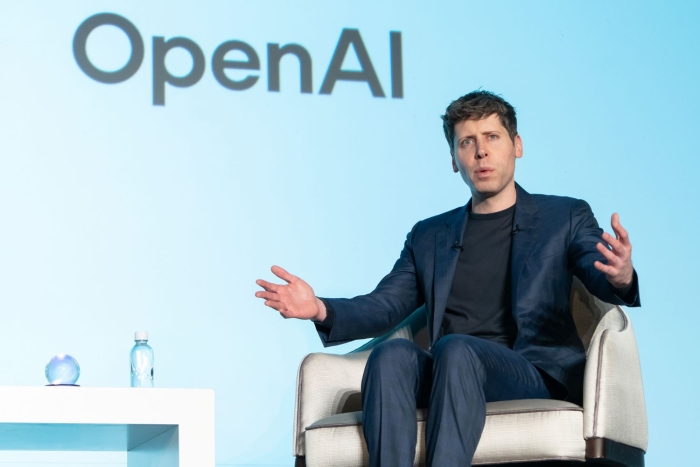
Microsoft continues integrating GitHub Copilot deeper into enterprise workflows. Google is aggressively expanding Gemini-powered coding systems. OpenAI-backed tools are evolving rapidly, while startups such as Cursor and Replit are attracting enormous investor interest.
At the same time, software development itself is becoming one of the clearest commercial use cases for generative AI.
Unlike some experimental AI products, coding assistants produce measurable productivity improvements that companies can quantify directly through engineering speed and reduced development time.
That is why investors are treating AI developer platforms as potentially massive businesses.
| Company | AI Developer Focus |
|---|---|
| Replit | Browser-based AI app building |
| Cursor | AI-native coding environment |
| Microsoft | GitHub Copilot ecosystem |
| Gemini developer tools | |
| OpenAI ecosystem | AI coding infrastructure |
Masad’s resistance to selling reflects a larger mindset shared by many AI startup founders right now.
The industry is moving so quickly that companies believe today’s tools could evolve into tomorrow’s dominant computing platforms. Selling too early may mean giving up control of infrastructure that could become central to how software is built in the future.
For Replit, the ambition appears much larger than simply becoming another coding assistant.
The company wants to position itself as a complete AI-native software creation platform at a time when AI is reshaping who can build technology and how quickly they can do it.
That also explains why the competitive pressure is escalating so rapidly across the entire AI coding ecosystem.
Everyone is trying to become the platform developers build on before the market fully matures.
Share your thoughts about this article.
Be the first to post a comment!