Amazon’s cloud division is growing at one of its fastest rates in years, but the company’s latest earnings also revealed another major trend shaping the tech industry in 2026: enormous AI infrastructure spending.
The company reported strong first quarter results this week, driven largely by continued momentum inside Amazon Web Services (AWS), its cloud computing business. AWS revenue climbed 28% year over year to $37.6 billion, beating analyst expectations and marking the unit’s fastest growth in roughly 15 quarters.
That growth is being powered by enterprise demand for AI computing, large language model infrastructure, and cloud-based AI services. Amazon CEO Andy Jassy described the current AI wave as unlike anything the company has previously experienced.
“It’s very unusual for business to grow this fast on a base this large,” Jassy said while discussing AWS growth and AI demand.
AWS has become one of the central infrastructure providers for the generative AI boom. Companies building AI agents, training foundation models, and deploying enterprise AI applications increasingly rely on cloud providers with large-scale GPU capacity, networking infrastructure, and specialized AI chips.
Amazon says the scale of the current AI cycle is dramatically larger than the company’s earlier cloud expansion era.
According to Jassy, AWS generated roughly a $58 million revenue run rate three years after launch. By comparison, Amazon says its AI-related AWS revenue run rate has already surpassed $15 billion during the first three years of the generative AI wave.
That growth has pushed Amazon deeper into the AI arms race alongside Microsoft, Google, and Meta. AWS has recently expanded its AI ecosystem through services like Bedrock, managed AI agents, and partnerships with companies including OpenAI and Anthropic.
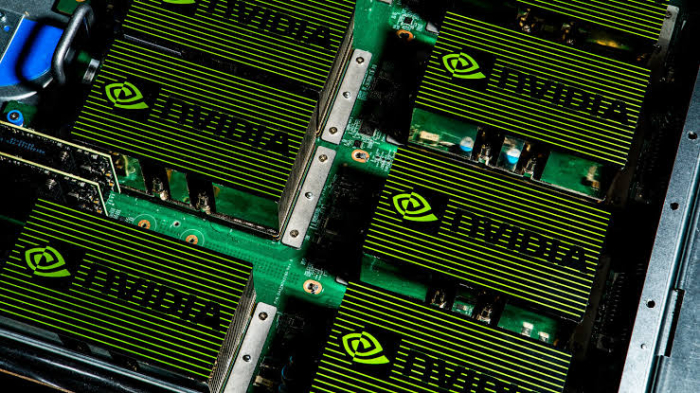
The company is also aggressively promoting its in-house Trainium AI chips as an alternative to Nvidia hardware, an area becoming increasingly important as cloud providers try to reduce dependence on expensive third-party accelerators.
The strong AWS growth came with a major tradeoff: soaring capital expenditures.
Amazon disclosed that free cash flow over the trailing twelve months fell sharply to $1.2 billion, down from $25.9 billion a year earlier. The decline was driven primarily by a $59.3 billion increase in spending on property and equipment, much of it tied to AI infrastructure investments.
The company spent more than $44 billion on capital expenditures during the quarter alone, a year-over-year increase exceeding 76%, according to Reuters.
Much of that spending is going toward:
Jassy framed these investments as necessary long-term infrastructure bets rather than short-term operational costs.
“The faster AWS grows, the more short-term capex we’ll spend,” he said during the earnings discussion.
Amazon argues that these assets have long operational lifespans, with data centers potentially remaining useful for more than 30 years.
Amazon is not alone in dramatically increasing AI spending.
The broader technology sector is entering what analysts increasingly describe as a global AI infrastructure race. According to multiple industry estimates, major U.S. technology firms could collectively spend more than $700 billion on AI infrastructure in 2026.
Google, Microsoft, Meta, and Amazon are all accelerating data center construction while competing for GPU supply, electricity access, and enterprise AI customers.
Google Cloud recently reported 63% revenue growth, outpacing AWS in percentage terms, while Microsoft is also planning enormous AI-related infrastructure expansion.
The competition is no longer just about cloud storage or virtual servers. It is increasingly about who controls the computational backbone of the AI economy.
Despite the massive spending increases, investors largely responded positively to Amazon’s earnings report.
Shares rose after the results as analysts focused on AWS growth momentum and enterprise AI demand rather than short-term profitability pressure.
Amazon executives appear confident that the infrastructure investments will eventually produce stronger long-term cash generation, similar to how AWS itself evolved from a costly experiment into one of Amazon’s most profitable businesses.
The company also issued strong second quarter guidance, forecasting revenue between $194 billion and $199 billion.
For now, Amazon’s message to investors is clear: the AI opportunity is large enough that slowing infrastructure spending could be more dangerous than overspending.
And across Silicon Valley, most major tech companies appear to agree.
Share your thoughts about this article.
Be the first to post a comment!