Table of Content
Before diving into how Koupon.ai works or whether it deserves a spot in your shopping routine, it helps to break the platform down in measurable terms. Below is a rating table based on publicly available information, app-store reviews, user feedback, and feature depth—not assumptions.
Koupon.ai Ratings (Out of 5)
| Category | Rating | Notes |
| Accuracy of Promo Codes | 4.6 | Real-time validation removes most expired or fake codes |
| Ease of Use | 4.4 | Clean interface, simple browsing, minimal friction |
| Deal Coverage | 4.7 | Large inventory across major Amazon categories |
| Mobile Experience | 4.5 | Strong iOS/Android performance; no login required |
| Personalization Quality | 4.2 | Recommendations improve with continued use |
| Trust & Security | 4.8 | No payment linking, no Amazon account access needed |
| Overall Value | 4.6 | Free service, strong savings, low risk |
What Koupon.ai Is Trying to Do

Koupon.ai positions itself as more than just another coupon directory. At its core, the platform’s goal is to use AI-driven validation and behavior-based deal selection to help shoppers avoid expired codes and find working Amazon discounts faster. The system pulls from thousands of deals, scores them based on freshness, discount depth, and reliability, and presents only those that pass its filters.
A small number of introductory bullet points help clarify the product’s scope:
● The platform maintains one of the largest AI-curated libraries of Amazon promo codes online.
● It updates deals daily and verifies them in real time so users don’t waste time manually testing.
Outside of these, the platform remains relatively lightweight, avoiding logins, credit-card connections, or intrusive data collection. This simplicity is part of its appeal.
How Koupon Works
A shopper can open the website, search for a product or browse collections based on brands, categories and discount levels. Promo-code offers are marked separately from ordinary retailer price reductions.
When an offer requires a code, the user copies it, opens the retailer’s product page and enters the code during checkout. Koupon does not place the order or receive the customer’s card information.
The process generally involves four steps:
- Search for a product, category or brand on Koupon.
- Open the offer and review the seller, shipping cost and code conditions.
- Copy the promo code when one is required.
- Complete the purchase and payment directly through the retailer.
This manual process is less convenient than a browser extension that automatically tests codes. It also means Koupon does not need permission to read every shopping cart or interact with checkout pages across the web.
How Koupon Makes Money
Koupon is free for shoppers, but that does not mean the service operates without a revenue model. Koupon's official Terms and Conditions state that it participates in the Amazon Associates program and can earn from qualifying purchases.
Koupon itself also describes the service as an affiliate partner. When a shopper selects an eligible deal and follows the link to a retailer, Koupon may receive an affiliate commission if that visit results in a qualifying purchase. The customer still completes the transaction on the retailer's website rather than paying Koupon directly.
This distinction is useful when evaluating any deal platform. Affiliate compensation does not automatically make a discount unreliable, but shoppers should still compare the final price against competing sellers before deciding that a promoted offer is the best available deal.
How Koupon.ai Performs in Everyday Use
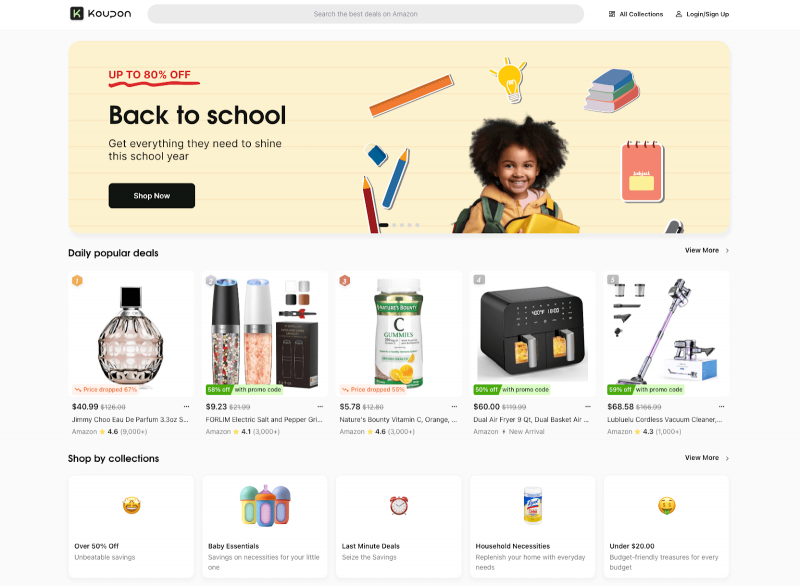
The interface is intentionally minimalistic, prioritizing speed over visual complexity. Most users describe the experience as straightforward: search for a category, pick a deal, copy the code, and manually apply it on Amazon. Because Koupon.ai does not integrate directly into checkout, it avoids the privacy concerns that come with browser extensions or apps that read shopping carts.
One of the more impressive aspects of the platform is its accuracy rate. Where many coupon sites feel like a graveyard of expired codes, Koupon.ai’s AI pipeline filters aggressively, allowing only codes that pass its verification layer. This makes it less frustrating than older coupon portals.
Shoppers looking for maximum savings will appreciate that the tool also analyzes price history, a feature that helps distinguish between real deals and artificially inflated “markdowns.”
Koupon Is No Longer Limited to Amazon Deals
Although Amazon remains a major part of Koupon's identity, its current mobile app has expanded beyond a purely Amazon-focused experience.
The official Apple App Store description currently advertises verified promo codes and deals from retailers including:
- Amazon
- eBay
- Walmart
- Woot!
- Macy's
- Best Buy
- Newegg
The app also advertises deal analysis based on product features, pros and cons, discount history, and overall deal quality. According to the developer's current App Store description, promotional codes are checked and validated frequently, while mobile alerts can notify users about flash sales, trending items, Black Friday promotions, and prices identified by the service as all-time lows.
This makes Koupon more broadly useful than its Amazon-first positioning might suggest, although retailer coverage and individual deal availability can change over time.
Does Koupon.ai Actually Help With Amazon Savings?
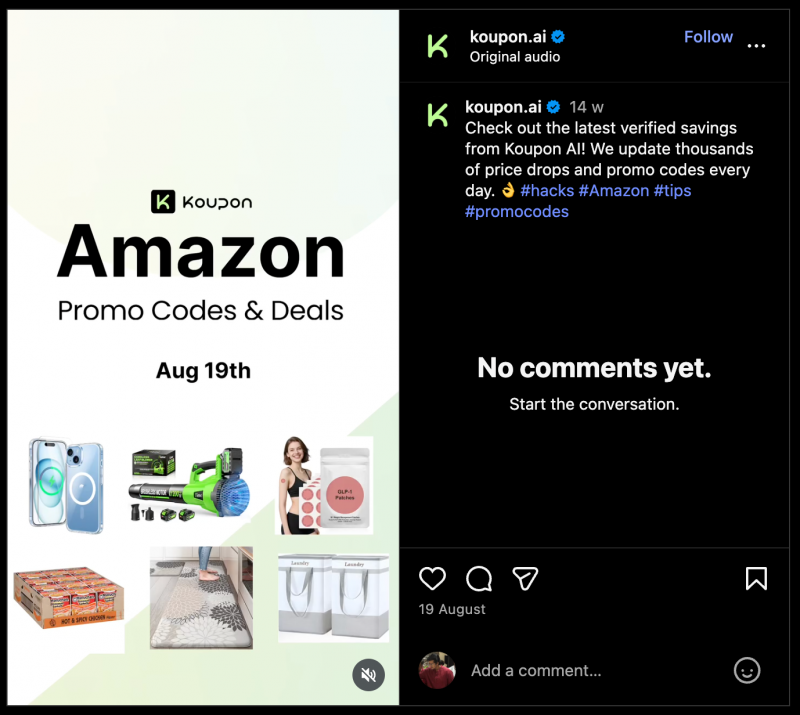
Koupon.ai’s value becomes more visible when focusing specifically on Amazon. The platform was built around the Amazon ecosystem, which means the majority of its deal inventory is optimized for:
● Home & Kitchen
● Beauty & Personal Care
● Electronics
● Outdoors & Fitness
This Amazon-first design becomes clear through its dedicated page layouts, higher density of Amazon-exclusive codes, and features that push Amazon deals higher in search results. The AI engine identifies patterns in Amazon price drops and pairs them with matching promo codes, increasing the probability of stacking multiple forms of savings.
Users report that discounts commonly fall within 25%–50%, though deeper cuts appear in categories like accessories, home goods, and niche retail bundles. Because it doesn’t automate checkout, results depend heavily on users copying the right code and applying it correctly, but the savings upside is real.
A Verified Code Still Isn't a Guaranteed Discount
Koupon's current App Store listing says codes are checked and validated frequently, and Koupon's own documentation says Amazon promo codes are checked before being listed and may display when they were last verified. Users can also manually verify some codes before proceeding to Amazon.
However, verification should not be interpreted as a guarantee that every shopper will receive the advertised discount. Promo codes can be affected by factors including eligible product variations, seller restrictions, minimum purchase requirements, geographic availability, usage limits, account eligibility, and expiration dates.
Koupon's own Terms of Service reinforce that distinction by stating that it does not guarantee the accuracy or completeness of service content or third-party content.
For that reason, the most reliable number is always the final price displayed by the retailer at checkout.
What Koupon Does Well
Koupon is strongest when a shopper knows roughly what they need and wants to check whether a current promo code or unusually deep discount is available.
Its main advantages are:
- Basic browsing is free and does not require an account.
- Payment remains on the original retailer’s website.
- Promo codes are continuously checked and can be manually verified.
- The platform now covers several major retailers.
- Mobile users can receive flash alerts and save deals.
- Users can report expired offers.
- App-store ratings are strong across large samples.
These benefits make Koupon more practical than a traditional coupon directory filled with codes that have not been checked recently.
Current Mobile-App Footprint
Koupon now has a substantial mobile presence in addition to its website.
As of August 2026, the U.S. Apple App Store lists Koupon: Real Deals & Codes with a 4.9 out of 5 rating from approximately 24,000 ratings. The listing describes the app as free and identifies Student Outlets Inc. as the seller.
The Android version is also actively maintained. Google Play lists the Koupon app as having been updated on July 6, 2026. Its current Data Safety section says the app may collect personal information, app information and performance data, and device or other identifiers. Google Play also reports, based on information supplied by the developer, that data is encrypted in transit and that users can request deletion.
App-store ratings and review totals change continually, so these numbers should be treated as a snapshot rather than permanent figures.
Where Koupon.ai Could Be Better
Despite its strengths, the platform isn’t flawless. Since Koupon.ai relies on merchants to provide many of their codes, the inventory can occasionally fluctuate, and sometimes categories feel thin during off-peak seasons. The personalization system also takes time to mature—your first few sessions may feel generic.
There’s also a dependency on user action: every code must be applied manually. While this avoids privacy issues, it does require more effort than browser-extension competitors.
Koupon.ai in Context: How It Stacks Against Competitors
Capital One Shopping
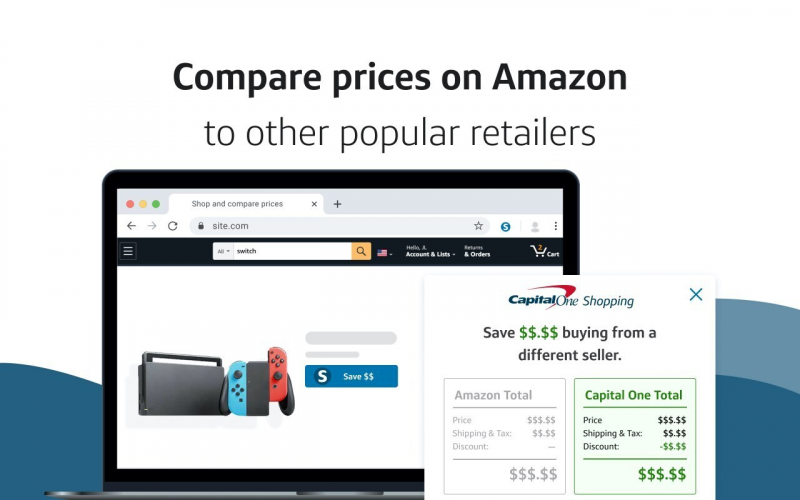
● Many users choose Capital One Shopping because it automatically tests coupon codes at checkout without requiring manual copying and pasting.
● However, it requires a browser extension and account linking, which introduces privacy considerations that some shoppers prefer to avoid.
● Compared with Koupon.ai, it’s more automated but far less privacy-friendly.
Slickdeals

● Slickdeals attracts a massive community that constantly posts, upvotes, and discusses deals across thousands of categories.
● Its strength is volume — if a deal exists somewhere, chances are the community has noticed it.
● But since it isn’t Amazon-focused and offers no AI-driven validation, users often have to dig through expired or irrelevant submissions, something Koupon.ai explicitly aims to eliminate.
Coupert
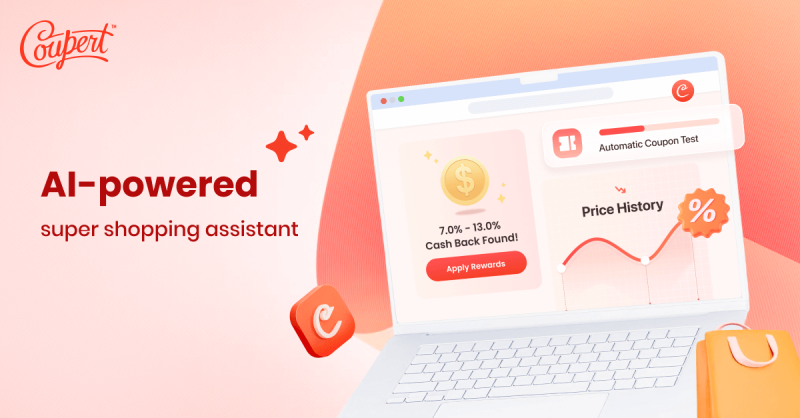
● Coupert blends coupons with cash-back rewards and browser-based auto-application features, giving shoppers additional ways to save beyond promo codes.
● While it works across countless websites, its Amazon promo code accuracy is inconsistent because it relies more on aggregated sources than real-time AI filtering.
● Koupon.ai pulls ahead here by prioritizing verified, Amazon-specific deals rather than volume-driven aggregation.
Koupon Finds the Deal, but the Retailer Handles the Purchase
There is another useful distinction when something goes wrong with an order.
Koupon's Terms and Conditions state that purchases made through third-party websites are transactions between the shopper and the applicable third party. The terms say Koupon does not take responsibility for purchases completed through those external websites.
That means issues involving shipping, returns, product quality, refunds, warranties, seller performance, or payment generally need to be resolved with Amazon or whichever retailer or seller completed the transaction.
This is also why shoppers should check the retailer, seller name, return conditions, shipping charges, and final checkout price rather than evaluating an offer based only on the percentage discount shown by a deal-discovery service.
Should You Actually Use Koupon.ai?
Koupon.ai is not a revolutionary shopping tool, but it is a consistently useful one. The platform delivers exactly what shoppers expect: working Amazon promo codes, daily deal updates, and AI-verified savings that don’t require account linking or risky permissions. It isn’t perfect in terms of category coverage or automation, yet the core experience remains strong and noticeably more trustworthy than many traditional coupon sites.
If your primary goal is to save money specifically on Amazon without installing extensions or giving apps access to personal shopping data, Koupon.ai is one of the safer and more reliable options. For users who want a hands-off, automated experience, competitors with browser extensions may feel more convenient, but they come with trade-offs.
In short, Koupon.ai is worth using—especially if you value privacy, accuracy, and Amazon-specific deals—but it won’t eliminate all the manual steps involved in finding and applying promo codes.
Post Comment
Share your thoughts about this article.
Be the first to post a comment!