Cars now record more than speed. They record intent, or at least what looks like it. In 2026, vehicle data recording has moved from a niche forensic tool to a central pillar of accident liability. Tesla's Autopilot-related lawsuits already changed how courts treat machine-generated logs. This piece covers what's new in EDR standards, how telematics data reshapes fault analysis, and why digital evidence verification now determines who pays.
The EDR Is No Longer Just a Black Box
For years, the Event Data Recorder was the device nobody thought about. A small module, mandated by NHTSA since 2014, quietly logs pre-crash speed, brake application, seatbelt status. Five seconds of data before impact. Useful. But limited.
That's changed.
In high-stakes accident cases across Southern California, including those handled by a personal injury lawyer Palm Springs residents turn to after freeway collisions involving semi-automated vehicles, the volume of relevant data per incident has expanded beyond anything the original EDR specification anticipated.
The 2026 NHTSA update to 49 CFR Part 563 introduced minimum capture duration requirements for Level 2 and Level 3 ADAS vehicles:
● 30 seconds pre-event — enough to reconstruct driver behavior, not just the crash itself
● 15 seconds post-event — capturing system response and vehicle state after impact
● ADAS engagement status — mandatory log entry confirming whether automation was active at the moment of collision
That last point alone shifts how fault arguments get framed in court.
Three Standard Changes Worth Tracking in 2026
Three things are happening simultaneously. They're connected.
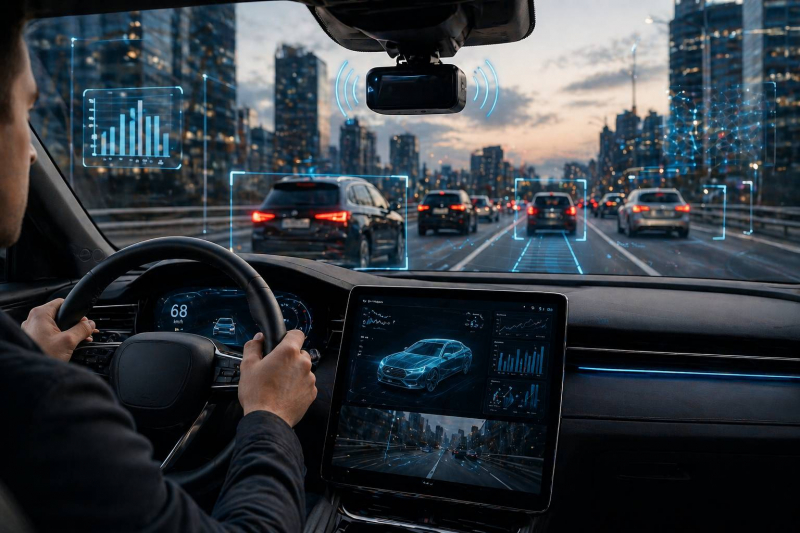
1. Mandatory ADAS logging. Partially automated systems — GM's Super Cruise, Ford's BlueCruise, any SAE Level 2+ configuration — must now log engagement status at the event moment. Was the driver in control, or was the vehicle? Used to be answered by witness testimony. Now there's a timestamped entry for it.
2. Sensor integrity metadata. It's not just the sensor reading that gets recorded — it's a confidence flag attached to that reading. Was the LiDAR return clean? Was the camera degraded by rain or direct sun? The idea is to let analysts, and courts, evaluate data quality, not just data content. Garbage-in is still garbage-out, even in legal discovery.
3. Continuous telematics sync. GM, Stellantis, Hyundai — all running connected vehicle platforms where driving behavior streams to cloud infrastructure by default. OnStar's latest iteration logs hard-braking, rapid acceleration, lane departure frequency. Not on crash. Continuously. That distinction matters more than people tend to realize.
Telematics Data and the Fault Question
Traditional accident reconstruction relied on physical evidence: skid marks, crush profiles, airbag deployment thresholds. EDR data supplemented this. Telematics data doesn't supplement — it dominates.
Consider a rear-end highway collision. Pre-2024, you'd have EDR data showing speed and brake status at impact. Post-2026, you potentially have 30 days of following-distance behavior from the at-fault driver's telematics provider. Consistent tailgating patterns change the character of evidence from situational to habitual. Juries respond to that differently.
Insurance carriers have understood this for years. Progressive's Snapshot program has logged driving behavior since 2008. State Farm, Allstate, Liberty Mutual — all expanding telematics-adjusted premium programs. The data collection infrastructure is mature.
What's lagging is the legal framework. Can a plaintiff's attorney subpoena a driver's cloud telematics history? In California, increasingly yes — under Code of Civil Procedure section 2031.010. But the fight over what counts as "reasonable" production scope has barely started.
Sensor Integrity and the Chain of Custody Problem
Vehicle sensor data is not inherently trustworthy. Not primarily because manufacturers manipulate it — though the NHTSA investigation into how Tesla classified certain FSD-related events raised that question. More fundamentally: digital data requires a verifiable chain of custody to be admissible, and most vehicle data ecosystems were not designed with litigation in mind.
The weak points are predictable:
● A camera that fails to detect its own degradation produces no integrity flag
● Flash memory with partial post-crash corruption can still output plausible-looking data
● Proprietary log formats from cloud platforms have no public validation standard
The Bosch CDR (Crash Data Retrieval) system handles classical EDR extraction well — certified analysts, documented procedures, Daubert-accepted since at least 2010. But courts are now being asked to evaluate CAN bus logs, GNSS track histories, and ADAS event classifications written in formats that vary by manufacturer and firmware version. The forensic frameworks for these are less mature. That's a problem for both sides.
What Courts Are Actually Seeing
The most developed case law on vehicle data evidence isn't in passenger cars — it's in commercial trucking, where electronic logging devices have been federally mandated since 2017. ELD data has been admitted and successfully challenged in dozens of injury and wrongful death cases.
The challenges that work share a pattern: they attack the extraction process, not the data itself.
● Device not downloaded within the manufacturer's preservation window
● Extraction tool not validated for that specific firmware version
● Source file modified without a logged audit trail
Passenger vehicle cases are beginning to follow the same playbook. Some plaintiffs' firms now retain dedicated digital forensic consultants for any serious injury case involving a vehicle manufactured after 2022. Unusual five years ago. Standard practice now.
The authentication issue under FRE 901(b)(9) gets harder as the data chain gets longer. CDR-extracted EDR data: achievable. Cloud-synced telematics transmitted through a manufacturer's API and stored on third-party infrastructure: every link in that chain is a potential vulnerability. Opposing counsel will find them.
The Bottom Line
Vehicle accidents involving newer cars are increasingly documentary events. There's a record. Often a detailed one. That cuts both ways — more clarity about what happened, but also more material for selective interpretation.
A telematics log showing the plaintiff was briefly distracted two minutes before impact doesn't establish comparative fault on its own. But it creates a data point. Defense teams will use it.
The practitioners who understand how to read these logs, challenge their provenance, and explain CAN bus event sequences to juries without engineering backgrounds — those are the people who will shape liability outcomes in this space for the next several years. The data exists. The legal frameworks are still catching up.
Post Comment
Share your thoughts about this article.
Be the first to post a comment!