You've probably seen the phrase "end-to-end encrypted" thrown around a lot. Messaging apps use it as a selling point. Services put it in their privacy policies. But what does it actually mean for you and your files? Let’s get into it…
Standard Encryption vs. End-to-End Encryption
Most online services encrypt your data in transit. That means your files are scrambled while they travel between your device and a server. Once they arrive, though, they're decrypted on the provider's end so the service can process, index, or store them. The provider holds the keys.
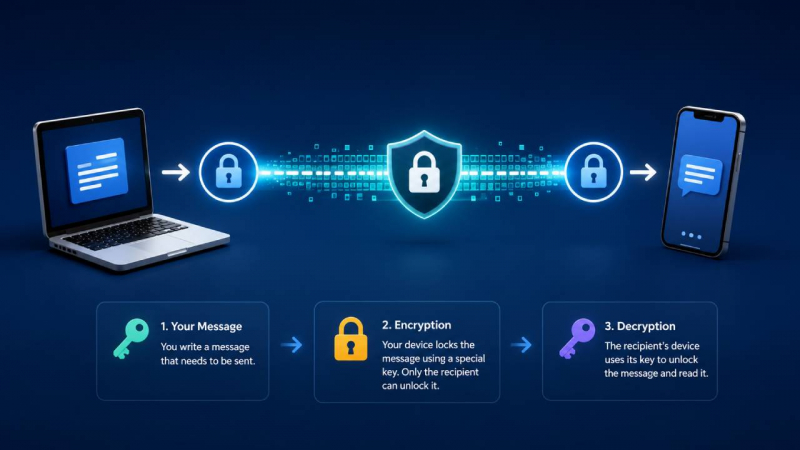
End-to-end encryption (E2EE) works differently. Your data is encrypted on your device before it leaves, and it stays encrypted until it reaches the intended recipient or until you open it yourself. The provider never holds the decryption key. They can see that a file exists, but they can't read what's in it.
Who Can Actually Access Your Files?
This is where most people are surprised. With standard encrypted storage, the company you trust with your files could, in theory, read them. So could anyone who gains access to their systems through a data breach or a legal order.
With E2EE, even the service provider can't access your data. The only person with the key is you. If a hacker broke into the company's servers, they'd find nothing but unreadable encrypted data. That changes the risk picture quite significantly.
How Encryption Changes What You Have to Trust
When you store files online, you're trusting a third party with documents that can be personal, financial, or professionally sensitive. The type of cloud storage you use determines how much of that trust you actually need to extend.
With a service that uses end-to-end encryption, you don't have to trust that the provider will handle your data responsibly. The design of the system makes it technically impossible for them to misuse it. That's a meaningful distinction, especially as more people keep sensitive documents like contracts, ID scans, and financial records in the cloud.
What End-to-End Encryption Can't Do
E2EE protects your files from outside access, but it doesn't cover every risk. Here are a few things it doesn't guard against:
- If someone gets hold of your password or device, they can still access your files
- If you share a file with someone and their device is compromised, the content is exposed at their end
- It won't protect you from your own mistakes, like sharing a link publicly by accident
In other words, encryption is one part of good security practice. It won't replace strong passwords, two-factor authentication, or careful sharing habits.
What to Look for in an Encrypted Storage Provider
Not all providers that claim to offer encryption are offering the same thing. It's worth asking a few specific questions before you commit to a service:
- Is the encryption end-to-end, or just in transit?
- Is the service zero-knowledge? (This means the provider can't access your data even if they wanted to)
- Has the encryption been independently audited?
- Where are the servers based, and what jurisdiction applies?
Providers based in countries with strong privacy laws and no mandatory data-sharing requirements will generally offer better protection than those operating under more permissive regimes.
In a Nutshell
End-to-end encryption means your data is encrypted before it leaves your device, and nobody but you holds the key to unlock it. It's the difference between a lockbox the storage company can open and one only you control. For anyone keeping sensitive files in the cloud, it's worth knowing exactly what kind of protection you're getting.
Post Comment
Share your thoughts about this article.
Be the first to post a comment!