The increasingly bitter legal battle between Elon Musk and OpenAI is no longer just about corporate structure, nonprofit governance, or personal rivalries. It is also becoming a public debate about the future risks of artificial general intelligence.
At the center of that debate is Stuart Russell, the only AI expert witness called by Musk’s legal team during the ongoing OpenAI trial. Russell, a well-known UC Berkeley computer scientist and longtime AI safety researcher, warned that the current competition between major AI companies could evolve into a dangerous AGI arms race.
Russell’s testimony reflects a growing divide inside the AI industry. While companies like OpenAI, Google, Anthropic, Meta, and xAI continue accelerating model development, some researchers fear competitive pressure is pushing safety concerns into the background.
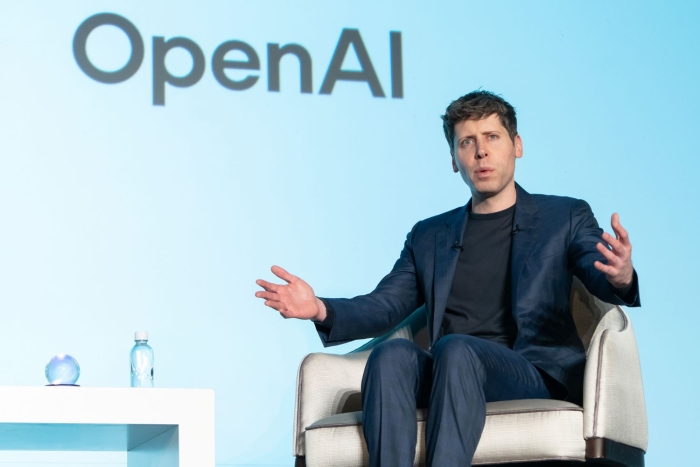
Musk’s lawsuit against OpenAI originally focused on claims that the company abandoned its nonprofit mission and shifted toward profit maximization. Musk argues that OpenAI’s partnership structure and commercial expansion violated the organization’s founding principles.
OpenAI has strongly rejected those claims and accused Musk of attempting to slow down a competitor while building his own AI company, xAI.
But Russell’s testimony pushed the courtroom discussion into a broader issue: whether competition between frontier AI labs is creating incentives to prioritize speed over safety.
According to reporting from inside the courtroom, Russell described tensions between the pursuit of AGI and responsible governance, warning that companies could feel pressured to release increasingly powerful systems before proper safeguards exist.
The concern is not new. Russell has spent years arguing that advanced AI systems may eventually become difficult for humans to control if safety alignment is not solved early.
The idea of an AGI arms race has become increasingly common among AI safety researchers.
The race intensified dramatically after OpenAI’s ChatGPT launch in late 2022 triggered a global surge in generative AI investment. Since then, nearly every major technology company has accelerated AI development timelines.
Over the past two years:
The result is an industry moving at extraordinary speed.
According to multiple reports, major tech companies are now collectively spending hundreds of billions of dollars building AI infrastructure, data centers, and specialized chips.
Russell and other AI safety advocates worry that this competitive environment creates incentives to deploy increasingly capable systems before alignment and oversight mechanisms are mature enough.
Musk himself has spent years publicly warning about existential AI threats, even while simultaneously investing heavily in AI companies.
He previously supported initiatives like the Future of Life Institute, which called for slowing down advanced AI development and introducing stronger safeguards around frontier models.
Critics, however, argue Musk’s current legal campaign against OpenAI is at least partly driven by business competition.
OpenAI’s lawyers have repeatedly argued that Musk originally supported OpenAI’s commercial direction before later turning against the company after leaving its leadership structure.
That tension has become one of the defining themes of the trial.
The case increasingly blends:
Russell is considered one of the most influential academic voices in AI safety research.
His work focuses heavily on the long-term risks of highly autonomous AI systems and the challenge of aligning machine objectives with human values. He has consistently argued that powerful AI systems should be designed to remain uncertain about human preferences rather than acting with unchecked autonomy.
Unlike some newer AI critics, Russell’s concerns predate the current generative AI boom by many years.
His appearance in the OpenAI trial highlights how seriously Musk’s legal team wants the court to consider broader AGI safety implications, even though parts of the trial remain narrowly focused on contracts and nonprofit governance.
At one point during proceedings, the judge reportedly pushed back on broader “AI doom” discussions, signaling limits on how far existential risk arguments could shape the case itself.
The OpenAI trial is exposing a larger ideological split inside artificial intelligence.
One side believes rapid AI progress is necessary to unlock economic growth, scientific discovery, automation, and productivity gains. Companies like Nvidia, Microsoft, OpenAI, and Meta continue framing AI acceleration as both inevitable and beneficial.
The other side fears that competitive pressure is weakening safety culture across the industry.
Some researchers worry companies may eventually release systems with capabilities they do not fully understand simply because rivals are moving too quickly to pause.
That debate has intensified as AI models become more capable in coding, reasoning, multimodal generation, robotics, and autonomous task execution.
Even among AI leaders themselves, disagreement is growing sharper.
Anthropic CEO Dario Amodei has warned about potential labor disruption and long-term AI risks, while Nvidia CEO Jensen Huang recently criticized overly pessimistic AI narratives and argued AI will create more jobs than it destroys.
While the lawsuit technically centers on OpenAI’s structure and obligations, the broader implications are becoming much larger.
The trial is increasingly functioning as a public referendum on questions such as:
The answers may ultimately matter far beyond the courtroom itself.
Because regardless of who wins the legal battle between Musk and OpenAI, the race toward more powerful AI systems is continuing to accelerate.
Share your thoughts about this article.
Be the first to post a comment!