The race between OpenAI and Anthropic is no longer just about building better AI models. It is now expanding into enterprise consulting, private equity, and large-scale corporate transformation.
Both companies are launching massive joint ventures designed to push their AI systems deeper into enterprise operations, especially inside private-equity-backed businesses. The moves signal a major shift in how leading AI labs plan to make money from generative AI over the next decade.
Instead of simply selling chatbot subscriptions or API access, OpenAI and Anthropic are now building entire deployment ecosystems around enterprise AI adoption.
Anthropic announced a new joint venture backed by major Wall Street firms including Blackstone, Hellman & Friedman, and Goldman Sachs Asset Management. The venture is reportedly worth around $1.5 billion and will focus on helping companies integrate Anthropic’s AI systems into daily operations.
According to reports, Anthropic, Blackstone, and Hellman & Friedman will each contribute roughly $300 million, while Goldman Sachs is expected to invest around $150 million. Additional investors reportedly include General Atlantic, Apollo, GIC, Leonard Green, and Sequoia Capital.
The initiative is aimed heavily at private-equity portfolio companies.
That matters because firms like Blackstone and Hellman & Friedman collectively control hundreds of businesses across industries including healthcare, finance, logistics, retail, manufacturing, and software. Instead of selling AI tools company by company, Anthropic now gains access to enormous enterprise networks almost instantly.
The venture will reportedly function partly like an AI-native consulting organization, helping companies redesign workflows, automate operations, and integrate Claude-based systems into core business processes.
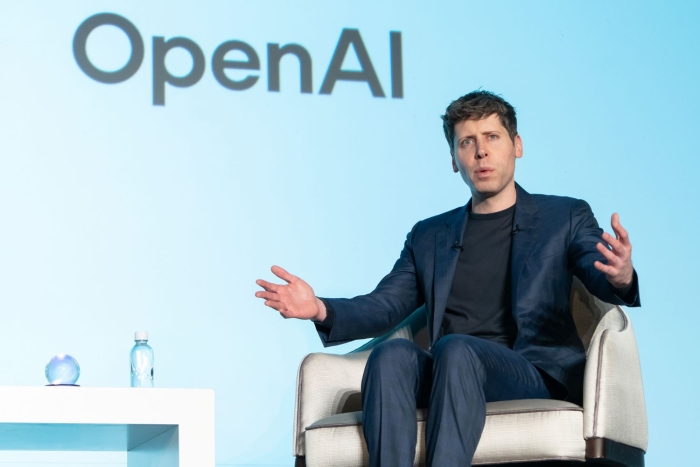
OpenAI is building a parallel enterprise deployment initiative of its own.
Reports indicate OpenAI has formed a venture called the “Deployment Company,” backed by firms including Bain Capital, Brookfield Asset Management, TPG, and Advent. The project reportedly involves more than $10 billion in committed capital aimed at accelerating enterprise AI adoption.
The broader goal appears remarkably similar to Anthropic’s strategy:
OpenAI has already been expanding aggressively into enterprise partnerships over the past year through collaborations with companies like Infosys and large consulting firms.
According to MarketWatch reporting, OpenAI is also expanding its use of “forward-deployed engineers,” a strategy popularized by Palantir. These engineers work directly with customers to customize AI systems around internal workflows and business operations.
Anthropic is pursuing a similar model through partnerships that train consultants and deployment specialists around Claude products.
The larger shift here is strategic.
For much of the generative AI boom, companies focused heavily on consumer growth:
But enterprise AI is increasingly where the largest long-term revenue opportunities exist.
Large corporations are willing to spend enormous amounts on systems that can:
Private equity firms are especially interested because AI promises operational efficiency improvements across entire portfolios of companies.
That explains why Wall Street money is now flowing directly into enterprise AI deployment vehicles rather than just model development itself.
One of the most important implications is what these ventures could mean for traditional consulting firms.
Historically, enterprise transformation projects were dominated by companies such as:
But AI companies are increasingly trying to move upstream into that territory themselves.
Rather than merely licensing AI models to consultants, OpenAI and Anthropic appear to want direct control over enterprise implementation.
Business Insider described Anthropic’s venture as an attempt to create an “AI-native enterprise services” company, essentially positioning AI firms as operational transformation partners rather than just software vendors.
Some analysts believe this could fundamentally reshape consulting economics if AI systems begin automating portions of strategy analysis, workflow optimization, coding, reporting, and operations management.
Consumer AI products still generate headlines, but enterprise adoption is increasingly becoming the industry’s most important competition layer.
OpenAI and Anthropic are both under enormous pressure to justify their massive valuations and infrastructure spending.
OpenAI’s valuation recently climbed above $850 billion following new funding rounds, while Anthropic’s valuation has reportedly approached $380 billion.
Sustaining those valuations likely requires much larger and more predictable enterprise revenue streams than consumer subscriptions alone can provide.
That is why these new ventures matter.
They are not simply consulting projects. They are distribution systems designed to embed AI models directly into thousands of companies before rivals can do the same.
The launch of these ventures suggests the AI market is evolving into something much bigger than chatbot apps and consumer productivity tools.
The next phase of the industry may revolve around who controls enterprise workflows, operational infrastructure, and long-term corporate AI dependency.
OpenAI and Anthropic are effectively racing to become foundational operating layers inside modern businesses.
And with Wall Street firms now directly funding and distributing enterprise AI adoption, the relationship between Silicon Valley and private equity is becoming increasingly intertwined.
The result could be one of the largest corporate technology transformation waves since the original cloud computing boom.
Share your thoughts about this article.
Be the first to post a comment!