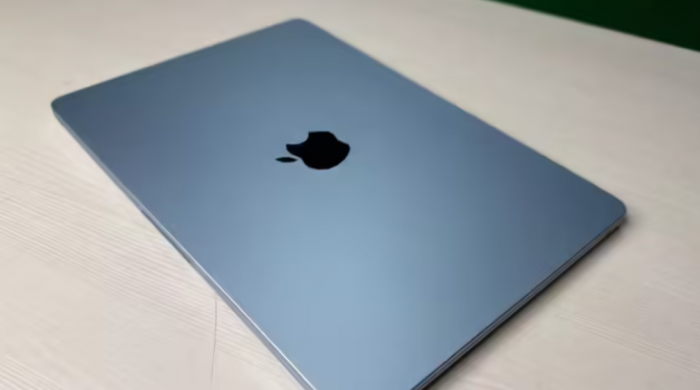
Artificial intelligence is starting to reshape the personal computer market, and Apple says even it underestimated how quickly that shift would happen. During its latest earnings discussion, the company revealed that AI-focused demand has become a major driver behind Mac sales growth in 2026.
The surprise comes as more developers, creators, startups, and even casual users begin using Macs for local AI workloads. Instead of relying entirely on cloud platforms, many users are now running AI tools directly on their devices for better privacy, faster performance, and lower long-term costs.
Apple says this growing interest helped push Mac revenue higher than expected during the March quarter, showing that the AI boom is no longer limited to data centers and enterprise servers. It is now directly influencing consumer hardware buying decisions.
For years, Mac purchases were largely tied to creative work, software development, education, and business productivity. That pattern is now expanding.
The rise of generative AI tools has created a new category of buyers who specifically want hardware capable of handling AI processing locally. Apple’s unified memory architecture and power-efficient Apple silicon chips are becoming attractive for people experimenting with large language models, AI image generation, coding assistants, and automation tools.
This demand appears especially strong among developers and AI enthusiasts who want machines capable of running models without depending completely on cloud subscriptions.
Apple executives reportedly acknowledged that the company did not fully anticipate how strong this demand would become.
One of the biggest winners from this trend is the Mac mini.
The compact desktop machine has become increasingly popular among developers building local AI workflows because it delivers relatively strong performance without the high cost of enterprise AI hardware. The device is also smaller, quieter, and more power efficient than many traditional desktop setups.
In recent months, some Mac mini configurations reportedly became difficult to find due to increased demand linked to AI experimentation and local model deployment.
That shift highlights an important change happening across the tech industry. AI computing is no longer limited to expensive server infrastructure. Many users now want personal systems that can run smaller AI models directly from home or office environments.
| Mac Trend in 2026 | What Is Driving It |
|---|---|
| Higher Mac sales | AI-focused computing demand |
| Strong Mac mini interest | Local AI model usage |
| Memory-heavy configurations selling faster | AI workloads need more RAM |
| Increased developer adoption | AI app building and testing |
| Supply pressure | Industry-wide memory demand |
Another factor helping Mac growth is Apple’s own AI push.
The company has been integrating Apple Intelligence features across its ecosystem, including writing tools, summarization systems, AI-powered image generation, and productivity enhancements. Many of these features are designed to run partly on-device rather than entirely in the cloud.
That approach aligns with Apple’s long-standing focus on privacy and local processing.
As AI becomes more integrated into everyday workflows, users are starting to pay closer attention to hardware performance, memory capacity, and device efficiency. Macs are benefiting from that shift because Apple silicon chips are optimized for handling machine learning tasks efficiently.
The company’s recent hardware releases are also reinforcing that positioning.
The unexpected demand is also creating pressure.
Apple warned that some Mac products may remain supply constrained in upcoming quarters because AI workloads require higher memory capacity and advanced components. The broader AI industry is already competing aggressively for memory and semiconductor supply, affecting everything from cloud servers to consumer devices.
This means the same AI boom helping Apple increase Mac sales could also create production challenges moving forward.
Higher-end Mac configurations with larger unified memory setups are reportedly seeing especially strong demand because AI applications benefit heavily from RAM availability.
| AI Workflow | Why Users Prefer Powerful Macs |
|---|---|
| Local language models | Faster offline AI processing |
| AI coding tools | Better multitasking performance |
| Image generation | High memory requirements |
| AI research/testing | Stable Unix-based environment |
| Content automation | Efficient Apple silicon performance |
For years, AI hardware discussions focused mostly on NVIDIA GPUs and large cloud providers. That conversation is now expanding into consumer computing.
Apple appears to be entering a new phase where Macs are increasingly viewed as practical AI machines, especially for users who prioritize local workflows, lower noise, energy efficiency, and privacy-focused computing.
The trend may also help Apple strengthen its position among developers and creative professionals who are rapidly adopting AI-assisted workflows.
Industry analysts expect AI-driven PC demand to continue growing throughout 2026 as more software tools integrate generative AI features directly into everyday applications.
For Apple, the situation represents both an opportunity and a challenge. The company is benefiting from the AI shift, but it must also keep up with growing hardware expectations and supply chain pressure.
What is clear is that AI is no longer just influencing software. It is now changing the way people choose computers, and Apple’s Mac lineup is becoming one of the unexpected beneficiaries of that transformation.
Be the first to post comment!