Casual mobile games are now the biggest part of the global video game market in 2026. These are some of the secrets behind why.
Part of the reason mobile gaming is a $100 billion-dollar-plus market today, is that these games are designed with behavioral psychology principles in mind that encourage daily play. On top of that, their interfaces are constantly tweaked to reduce friction, making onboarding simple while getting players into games as quickly as possible.
Mobile Gaming is Huge, Actually
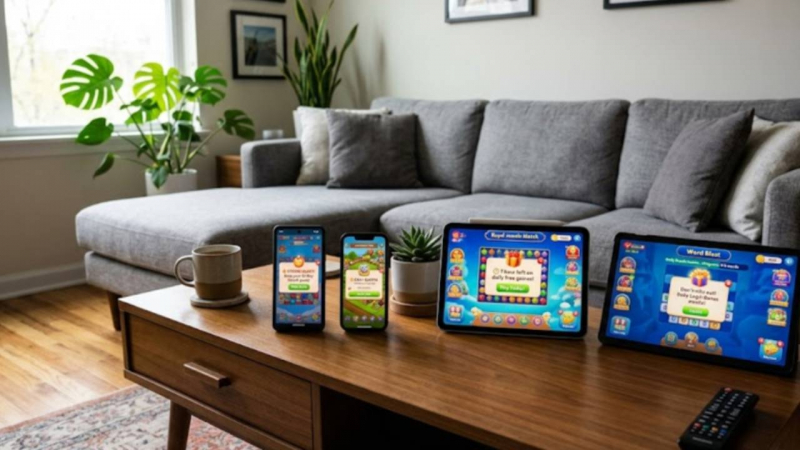
It is hard to pin down an exact estimate on how much mobile gaming is worth, because it is quite a varied market. For example, someone sitting at home emulating classic games or streaming Fortnite to a tablet is much different from someone playing Monopoly GO! on their work lunch break.
Estimates vary from around $100 billion to $160 billion on the high end, depending on what kind of games are included. Player counts are still huge too, with casual games like the nearly 15-year-old Candy Crush still holding the attention of some 200 million players.
Another interesting part of the market is sweepstakes slots gaming, like ACE social casino. These sites are popular with players because they emulate established casino gambling principles without any purchases necessary - while adding the extra layers of mobile gaming psychology on top.
Whether or not social casinos are included in mobile gaming depends on the researcher, and could be part of the variation in estimates for the global market size. Most specific estimates for social casino games hit around the $10 billion a year mark, which shows just how popular they are, especially in the US.
Micro Rewards and the Psychology Behind Them
Probably the most influential factor in the success of casual mobile games has been the slow borrowing of behavior-led design choices from earlier video games. However, mobile game developers are now way ahead of most in this regard. Here are just some of the common UX choices and the principles behind them:
| Design Choice | Behavior Principle | Influence |
| Daily Streaks | Loss Aversion, Habits | Players want to keep up the streak |
| Random Rewards | Variable Reinforcement | Anticipation and persistence |
| Leaderboards | Social Comparison | Players want to hit top ranks or beat their friends |
| Limited Offers | Exclusivity and Fear of Missing Out | Encourages immediacy, increases conversions |
| Progress Bars | Goal Gradient Effect | Setting goals increases drive to play |
The most successful games don't leverage these design strategies for increased player spending (although plenty do still follow that route).
Instead, the top games that have longevity relentlessly focus on keeping players engaged and playing daily. Once you have a hundred million regular players, even a tiny fraction of them spending money will drive revenues - while the massive player base also keeps the game current and in the public consciousness.
One strategy to do that is to create rewards that aren't only focused on winning. Rewards for progression are arguably just as (if not more) important for keeping players coming back.
These ideas have proved so successful that even non-gaming mobile apps have been busy gamifying their products, such as the (in)famous Duolingo streak.
Notifications and Habit Forming
In the modern world, every entertainment choice is competing with a million other things for people's attention and time. One way that casual games can make the most of their master-crafted systems, is by ensuring players know about them. Mainly, through notifications. Such as:
- "Don't lose your streak!"
- "Only 1 hour left to claim your free reward"
- "You have daily quests pending!"
While some players find these annoying, recurring cues are proven to be highly effective in prompting repeat play in others.
These notifications can also be linked to other aspects like progress bars. Keep up your daily login streak to unlock higher status, bigger rewards and so on.
They're also not (usually) actually tied to things that require players to spend money. Remember, the point of the model is just to encourage repeat play. The freemium model ensures if there are enough players, revenue will come after.
Day 1 Retention Remains King
Despite all of that success, and the tightly-honed strategies described above, it isn't as easy as you might think to convert a first-time player into a long-term one.
For example, research shows that in 2025 day one retention across most casual gaming apps was around 27%. Only 27% of players, across the whole business, returned after the first day.
Therefore, developers also put a lot of attention into making that first day run as smoothly as possible. After all, you can't build a habitual customer out of someone who leaves quickly on their first experience. This is why you'll often see UX design choices like:
- Early boosts or sign up offers for extra coins or other in game tokens/currency
- One tap onboarding via Google/Facebook, or other accounts
- Simple interfaces and minimal choices before the first game
- Opening levels that are manually and auto-tested for maximum engagement - just difficult enough to be stimulating, without being too hard
Post Comment
Share your thoughts about this article.
Be the first to post a comment!