AI note-taking tools have become good at capturing meetings, lectures, interviews, and everyday ideas. They can turn speech into text, summarize long recordings, organize notes, and make old information easier to search.
But Bible study creates a slightly different note-taking problem.
A sermon is not simply another meeting. A Bible passage is not just another source document. People may want to preserve what a pastor said, identify Scripture references, keep their own reflections separate, return to the biblical text, and continue studying the same material throughout the week.
That means a generic notes app can handle part of the workflow, but not necessarily all of it.
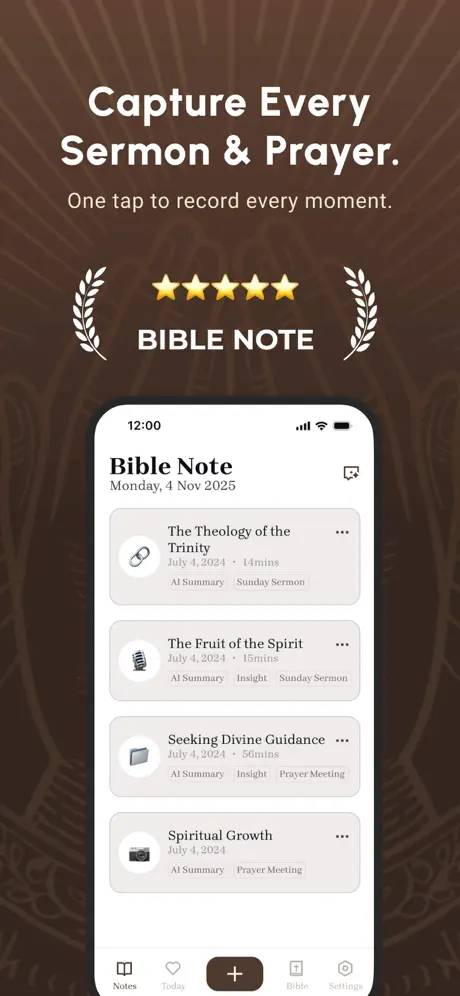
A purpose-built Christian note taking app can connect sermon recordings, transcripts, Scripture references, structured notes, and later review in one place. Bible Note is designed specifically for this kind of sermon and Bible-study workflow, combining sermon capture with Scripture-aware notes and follow-up study tools. The value comes from having features that match what the user is actually trying to do.
Generic AI Notes Usually Start With the Recording
Most AI note-taking tools follow a familiar process.
They capture audio, create a transcript, generate a summary, and make the result searchable.
That works well for meetings because the questions are usually practical:
What was decided?
Who owns the next task?
What deadline was mentioned?
What should happen next?
A sermon creates different follow-up questions.
Someone may want to know:
● Which Bible passages were mentioned?
● What was the main theme?
● How did the speaker connect two passages?
● What point do I want to revisit later?
● What should I read in context?
● What question could I bring to my small group?
Transcription is still useful, but Bible study usually needs more context around the transcript.
Bible Note approaches the recording as part of a larger sermon-study record, where Scripture references, sermon structure, and later review all matter alongside the spoken text.
Scripture References Need Their Own Layer
Bible references can appear naturally inside spoken language.
A preacher may say, “We see the same idea again in Romans 8,” and continue speaking without pausing to format the reference neatly.
Generic transcription software may preserve the sentence, but Bible-focused note-taking can go a step further by recognizing that the reference itself matters.
Bible Note includes Scripture-reference recognition as part of its sermon workflow, helping users identify passages mentioned during a message and return to them afterward.
That matters because the sermon transcript and the biblical text serve different roles.
The transcript preserves what the speaker said.
The Bible passage allows the listener to examine the text directly.
A useful Bible study workflow should make moving between those two sources easier.
Sermon Notes Need More Than a Short Summary
AI summaries are convenient because nobody wants to reread thousands of words every time they revisit a sermon.
But a short paragraph may remove too much structure.
Bible study notes can be more useful when they separate information into categories such as:
Main Theme
What central idea shaped the message?
Key Points
Which arguments or observations supported it?
Scripture References
Which passages did the speaker use?
Application
What responses or actions were discussed?
Personal Reflection
What did the listener want to remember or explore?
Questions
What still needs further reading or discussion?
Bible Note can organize sermon material into structured areas such as themes, key points, Scripture, application, and prayer, giving users a shorter way to review a message without relying only on the full transcript.
This makes the notes useful for more than recalling what happened on Sunday. They can support later reading, reflection, and discussion.
Search Matters More as Notes Accumulate
The usefulness of digital notes changes once someone has months or years of material.
Finding yesterday's sermon is easy.
Finding the sermon from eight months ago that discussed a specific passage is much harder.
Traditional keyword search works best when the user remembers the exact phrase or title. Digital sermon records can make older material easier to revisit by keeping transcripts, Scripture references, and notes in a more consistent format.
Someone may want to return to material related to:
● prayer;
● forgiveness;
● suffering;
● discipleship;
● a particular Bible book;
● a recurring church theme.
For Bible Note users, the benefit of keeping sermon material organized is that useful notes remain available beyond the week in which they were created.
Bible Chat Adds Another Way to Continue Study
Some sermon notes naturally lead to new questions.
Instead of ending with a transcript or summary, users may want to understand the surrounding context of a passage, identify other relevant Scripture, or prepare questions for a group discussion.
An AI Bible study app can support questions around a current passage or existing sermon notes while showing Scripture references that users can check themselves.
Bible Note's Bible Chat is designed for this follow-up stage. Users can ask questions around Scripture or their sermon-note context, while the responses include Scripture references that can be opened and examined directly.
Questions might include:
● What passages were mentioned in this sermon?
● What happens before this section?
● What other passages could I read around this topic?
● What questions could I explore before our group discussion?
Bible Chat can help organize the next stage of study while keeping the biblical references visible.
Good Bible Study AI Should Make Verification Easier
Generative AI can produce very confident answers.
That makes source visibility especially important.
If an AI response refers to a particular passage, users should be able to open that Scripture and examine it themselves.
They should also consider:
● what comes before and after the verse;
● who is speaking;
● the literary form of the passage;
● the original audience;
● whether the response is describing the text or interpreting it.
Different Christian traditions may understand some passages differently.
Bible Note's use of visible Scripture references in Bible Chat gives users a clearer path back to the source material instead of leaving the generated response disconnected from the text.
The user can then continue reading, compare reliable study resources, or bring more difficult questions into conversations with pastors, teachers, or their church community.
AI Should Support Study, Not Replace It
The most useful role for AI in Bible study is often practical.
It can help with:
● transcription;
● Scripture-reference detection;
● structured sermon notes;
● review material;
● discussion questions;
● follow-up study.
These are areas where Bible Note is specifically designed around Christian sermon and study use cases.
Its features can help users preserve more of a sermon, return to important passages, and prepare material for later reflection or small-group discussion.
The study itself still depends on reading Scripture carefully and engaging thoughtfully with the material.
Sermon Transcription Still Needs Human Checking
Bible-focused transcription does not eliminate the usual limitations of speech recognition.
Potential problems include:
● room echo;
● background music;
● multiple speakers;
● unfamiliar biblical names;
● theological terminology;
● weak microphone audio;
● accents or fast speech.
Important Scripture references and quotations should therefore be checked against the original recording and the biblical text.
Bible Note's timestamped sermon transcript can make that review easier because users can return to the relevant part of the original sermon when something needs clarification.
The transcript provides a detailed working record while leaving room for human verification.
Recording Permission Matters Too
AI makes it easy to upload audio or video, but technical convenience does not remove questions about permission.
Before recording, importing, sharing, or republishing sermon material, users should consider the rights of the church, speaker, platform, or other relevant copyright holder.
Publicly available content is not automatically free to reuse in any way.
For personal note-taking, church distribution, or broader publication, the appropriate permissions may differ.
This applies to Bible Note in the same way it applies to any other recording or transcription tool.
Why a Purpose-Built Tool Can Fit Bible Study Better
Generic AI note-taking tools are designed to work across many types of content.
Bible Note is narrower by design.
Its confirmed feature set includes:
● live sermon recording;
● imported audio and video;
● timestamped sermon transcription;
● Scripture-reference recognition;
● structured sermon notes;
● flashcards;
● devotional plans;
● small-group discussion questions;
● Bible Chat connected to Scripture and sermon-note context.
That specialization changes how the features fit together.
A transcript can support sermon review.
Scripture recognition can help users return to passages.
Structured notes can make the message easier to revisit.
Flashcards and devotional plans can support later review.
Discussion questions can help with group preparation.
Bible Chat can provide another way to continue exploring Scripture-related questions.
The individual technologies may also exist in general-purpose AI products, but Bible Note brings them together around the specific way Christians listen to sermons and continue Bible study afterward.
Final Thoughts
Bible study creates a different note-taking challenge from a business meeting or lecture.
Users may want to preserve what was said, identify the passages behind it, keep their own reflection organized, and continue working with the material after the sermon ends.
Bible Note is built around those specific needs. Its combination of sermon recording, transcription, Scripture recognition, structured notes, review tools, and Bible Chat gives sermon material a clearer path from Sunday listening to later study.
For users who want their sermon notes to remain useful after the service, that Bible-specific context is what gives a purpose-built tool its value.
Post Comment
Share your thoughts about this article.
Be the first to post a comment!