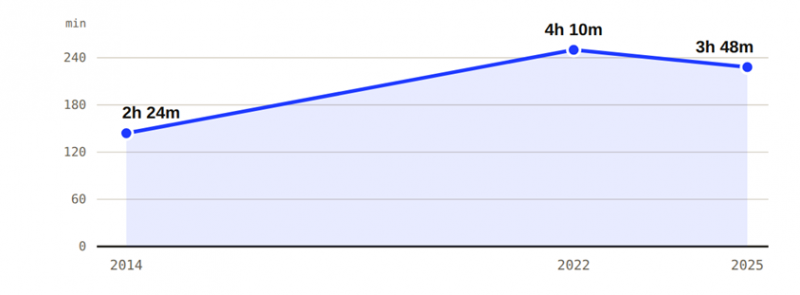
The average blog post takes almost four hours to write. Then most of them are read once and forgotten. The real waste in content is not a shortage of ideas. It is a failure to reuse the good ones.
Repurposing is leverage. One strong article can become a week of posts, a video, an email, and a download, each shaped for where it lands. What follows is the system, the ten formats, and the data on what actually pays back.
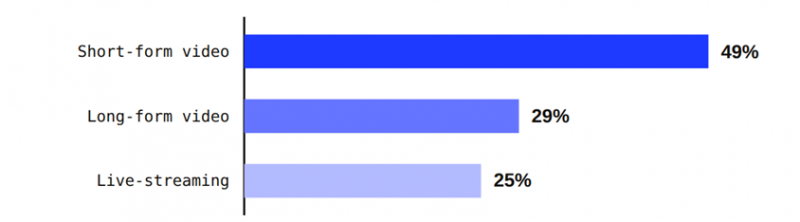
3h 48m to write the average post Orbit Media 2025 | ×10 pieces from that one post This guide | 49% rank video top for ROI HubSpot 2026 | 60 to 80% less time than net-new Industry estimate |
Why one article is never enough
Your audience is not waiting on your blog. They are spread across inboxes, feeds, and apps, and most of them will never visit your site to find the piece you wrote. To reach them, the idea has to travel to where they already are.
They also need more than one exposure. Many business buyers take in three to five pieces of content before they ever reach out, so a single article, published once, cannot do the job on its own.
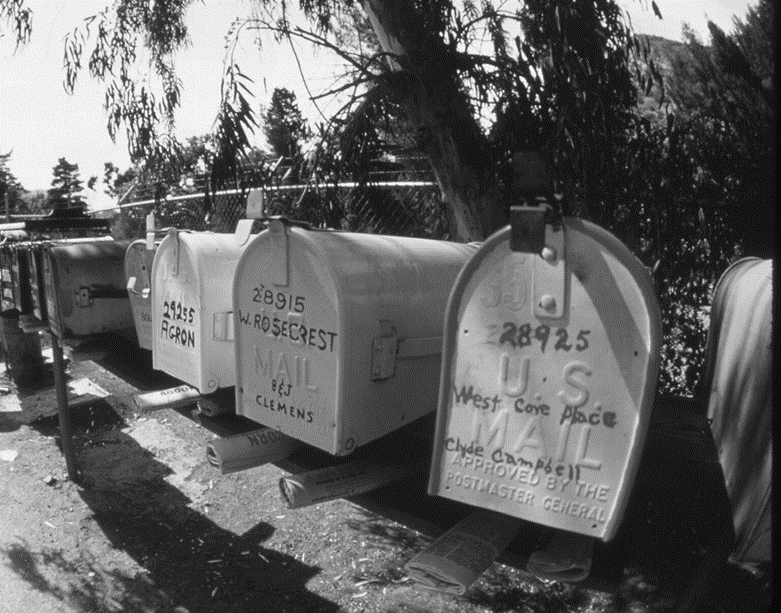
One message, many mailboxes. Your readers are scattered across as many channels as this road has boxes. Repurposing is how a single idea gets delivered to all of them. Image, Charles O'Rear, U.S. National Archives, public domain.
The math favors reuse. Reworking an existing piece for a new format costs a fraction of starting over, commonly sixty to eighty percent less, which is why nearly every marketing team already does some version of it. You are not lowering your standards. You are refusing to pay full price twice for thinking you already finished.
The time you already sink into one article
Average minutes to write a single blog post. Even after AI arrived, it still runs close to four hours.
One article, ten pieces
Here is the move. Pull the article apart, then rebuild the pieces in the forms your audience actually consumes. Ten pieces, grouped by how people take them in, read, watch, listen, and keep.
| Piece | Pull from the article | Platform | Time |
|---|---|---|---|
| Read: text to skim in a feed or an inbox | |||
| LinkedIn post | The single strongest insight | 15 min | |
| X thread | The subheads as a numbered arc | X | 20 min |
| Email newsletter | The story, plus a link back | Your list | 25 min |
| Watch: visual pieces built for the scroll | |||
| Short-form video | One tip, said to camera | Reels, TikTok, Shorts | 30 min |
| Carousel | The steps, one per slide | LinkedIn, Instagram | 30 min |
| Infographic | One process or data set | Pinterest, your blog | 45 min |
| Listen: audio for hands-busy moments | |||
| Podcast clip | The article read and expanded | Spotify, YouTube | 40 min |
| Keep: things worth saving or an email | |||
| Quote cards | A memorable line or a stat | Instagram, X | 15 min |
| Slide deck | The framework as slides | LinkedIn, SlideShare | 40 min |
| Lead magnet | The checklist version | Your site | 60 min |

Lead with the formats that pay back
Share of marketers ranking each format among their highest for return on investment. Video sweeps the top three.
You do not need all ten every time. Start where your audience already is, and lead with the formats that pay back. For most teams that means short-form video first, and one piece that captures an email.
Five moves you can repeat
Repurposing sticks when it is a routine, not a one-off. Five moves, and it gets faster each time you run it.
- Pick the pillar. Choose one substantial, evergreen article that earned its keep, or should have. News dates fast. A guide, a framework, or a strong take travels.
- Break it into parts. Pull out every standalone idea, statistic, quote, and step. Each one is raw material. A single good guide usually hides ten posts inside it.
- Match parts to formats. Send data to an infographic, a story to video, a framework to a carousel, a line to a quote card. Let the shape of the idea pick the medium.
- Adapt, then space it out. Rewrite for each platform rather than pasting the same text, then stagger the pieces over weeks. Done right, one article can cover a month.
- Measure and repeat. Watch what lands, make more of it, and feed the winners into your next pillar. The routine compounds a little more every cycle.
Prompts
Hand these to your AI
Paste your article into one of these. The first breaks the piece apart, the second reshapes it for a channel, and the third plans the rollout.
Prompt 1: Atomize
| Here is my article: [paste]. Pull out the ten most valuable standalone ideas, each strong enough to become its own social post. For each one, give the core idea in a single sentence and the one statistic or example from the article that backs it up. |
Prompt 2: Reshape
| Turn the article below into a [LinkedIn post / X thread / 45-second video script / email newsletter]. Keep my main point about [topic], match the length and tone of [platform], open with a hook that earns attention, and end with one clear call to action. Article: [paste]. |
Prompt 3: Plan
| Based on this article, build a two-week repurposing calendar. For each day, give me the format, the platform, the hook, and which part of the article it draws from. Prioritize short-form video and include one lead magnet. Article: [paste]. |
The Guardrailes
Five swaps that save the effort
A few ways teams waste the effort, and what to do instead.
| Instead of | Do this |
|---|---|
| Posting the same text on every platform | Reshape each piece for where it lands |
| Repurposing a post that already flopped | Start from something that already worked |
| Dumping all ten pieces in a single day | Space them out across a few weeks |
| Sending that attention nowhere | Point every piece at a clear next step |
| Guessing which formats are working | Track the results and repeat the winners |
The Bottom Line
You wrote it once. Now make it work for a month.
- The shift
The bottleneck in content was never ideas, and these days it is barely the writing. It is distribution. Most teams pour their hours into making new things and almost none into getting the good things seen. Repurposing flips that ratio. It treats every strong article as a source to mine, not a post to publish once and abandon.
- Why it compounds
The payoff grows over time. Each pillar you repurpose leaves you with a library of assets and a habit that runs faster every cycle. Your best ideas resurface in new forms, your presence across channels turns steady instead of sporadic, and a single afternoon of writing keeps paying out for weeks. Over a year, the gap between publishing once and shipping ten pieces per article is the gap between showing up now and then and being where your audience already looks.
- What it is not
None of this means spamming or thinning your quality. Every piece is adapted to its platform, native to how people read or watch or listen there, and it points back to something worth their time. Done well, repurposing respects the work and the audience at the same time. The goal is not more noise. It is more mileage out of the ideas that already deserve it.
So build the system once, run it on everything you publish, and start this week with one move. 1 Take one post that already worked, not a new idea 2 Make three pieces from it, and let one be a short video 3 Schedule them across the next two weeks, then track what lands |
Post Comment
Share your thoughts about this article.
Be the first to post a comment!