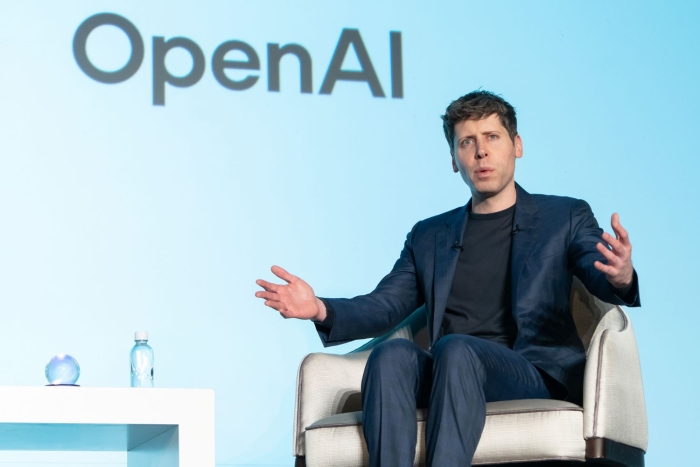
OpenAI’s recent run of deals and product moves is starting to look less like routine expansion and more like a company trying to answer deeper questions about what comes next. In a recent TechCrunch Equity discussion, reporters argued that OpenAI is grappling with two core issues: how to build products people will pay more for beyond a chatbot, and how to shape its public image at a time of rising scrutiny.
Those questions have come into sharper focus after OpenAI’s acquisition of Hiro, a personal finance startup, and TBPN, a fast-growing business talk show. On paper, neither deal looks large enough to transform OpenAI’s business overnight. But taken together, they suggest a company experimenting on several fronts while trying to strengthen both its product strategy and its influence over the broader AI conversation.
The Hiro deal stands out because it hints at OpenAI’s interest in building more specialized consumer products. Hiro was a personal finance startup, and TechCrunch reported that OpenAI confirmed the acquisition after founder Ethan Bloch announced it. The reporting around the deal suggests it was likely an acqui-hire, with Hiro’s team and talent being the main attraction rather than the standalone product itself.
Still, the logic behind the acquisition matters. ChatGPT remains OpenAI’s flagship success, but there are still open questions about whether chatbot subscriptions alone can support the scale of spending required to compete in AI. That is why a team experienced in consumer app building could be valuable. The broader idea is that OpenAI may be looking for products with stronger daily utility, clearer use cases, and pricing power that goes beyond general-purpose conversation.
The TBPN acquisition raised a different set of questions. OpenAI announced the deal earlier this month and said the move would help accelerate global conversations around AI. TechCrunch reported that TBPN would report to OpenAI chief political operative Chris Lehane, which immediately fueled debate about how independent the outlet could remain under OpenAI ownership.
That matters because OpenAI is no longer just a product company. It is also a company under constant political, regulatory, and public scrutiny. Owning a media property, especially one with reach inside the tech and founder world, can be read as an attempt to gain more control over how its story is told. Even if TBPN continues operating with editorial distance, the acquisition shows OpenAI understands that narrative and influence now matter almost as much as model quality.
The competitive backdrop also explains why these questions feel more urgent. TechCrunch’s reporting says OpenAI is increasingly focused on enterprise use cases, especially coding tools, where the most obvious path to durable revenue may lie. That focus comes as Anthropic gains momentum with Claude Code and builds a stronger reputation among developers and enterprise buyers.
TechCrunch recently described the contest between OpenAI and Anthropic as a low-grade war over AI coding tools, with Anthropic appearing to have an edge in convenience and business adoption. OpenAI’s answer has been a more capable Codex and a broader push into workflow-oriented tools. In that context, small acquisitions like Hiro and TBPN do not look random. They look like moves from a company trying to reinforce its weaknesses while protecting its lead.
The bigger story is not just about two acquisitions. It is about whether OpenAI can evolve from the company that made AI chat mainstream into a business with durable products, stronger enterprise footing, and a more controlled public identity. ChatGPT gave OpenAI scale and cultural relevance. The next stage will require something harder: proving that relevance can turn into a sustainable long-term business.
For now, OpenAI still has the attention, the talent, and the momentum. But the recent flurry of deals suggests that inside the company, there is no illusion that early success alone will be enough. The existential questions are no longer abstract. They are shaping product strategy, acquisition choices, and the company’s fight for position in the next phase of the AI race.
Share your thoughts about this article.
Be the first to post a comment!