Meta, formerly known as Facebook, is taking a bold step into the future of artificial intelligence. In a recent announcement, CEO Mark Zuckerberg revealed Meta’s plan to launch its own AI infrastructure initiative, called Meta Compute. This massive undertaking aims to give the company unprecedented control over its AI capabilities and solidify its position in the global AI race.
But what exactly is Meta Compute, why is it important, and how will it impact Meta’s products and the broader tech landscape? Here’s a complete breakdown.
What Did Mark Zuckerberg Announce?
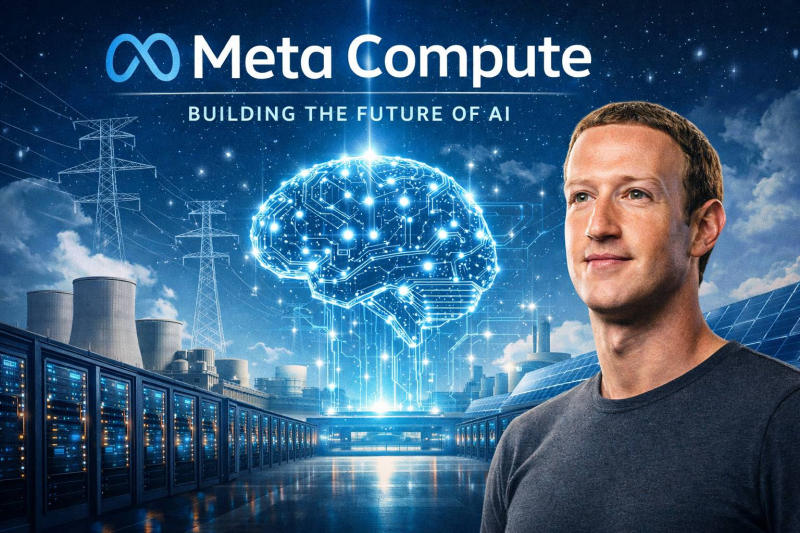
Mark Zuckerberg officially announced that Meta is building its own large-scale AI infrastructure. Unlike relying solely on third-party cloud services, Meta will now own and operate AI-optimized data centers capable of supporting the company’s massive AI models.
This initiative, Meta Compute, is expected to scale from tens of gigawatts of computing power today to hundreds of gigawatts in the future, rivaling the electricity consumption of small countries. The focus is on developing a robust, long-term infrastructure that can support AI research, products, and services across Meta’s platforms Facebook, Instagram, WhatsApp, and beyond.
Why Is Meta Building Its Own AI Infrastructure?
There are several strategic reasons behind this ambitious move:
● Reducing reliance on third-party cloud providers: By owning its hardware, Meta can save on costs and avoid dependence on external providers.
● Faster AI innovation: Having a dedicated AI compute infrastructure allows Meta to train and deploy models more quickly.
● Competitive pressure: Tech giants like Google, Microsoft, and Amazon are already investing heavily in AI infrastructure. To remain competitive, Meta must keep pace.
● Control over AI roadmap: Owning infrastructure gives Meta full control over optimization, security, and scaling of its AI services.
In short, Meta is positioning itself to own the backbone of AI, giving it a potential edge in both consumer-facing products and AI research.
What Is Meta Compute?
Meta Compute is Meta’s internal initiative to design, build, and operate AI-optimized computing infrastructure. It includes:
● Data centers: Facilities equipped to handle AI workloads at massive scale.
● Custom hardware: Optimized chips and servers for AI training.
● Energy management: Partnerships for reliable and sustainable power sourcing, including nuclear and renewable energy.
● Global reach: Infrastructure distributed worldwide to support Meta’s international platforms.
Think of Meta Compute as Meta’s private “AI superpower”, designed to train and run some of the largest AI models in the world.
Gigawatt-Scale Computing: How Big Is This?
When Meta talks about building “tens to hundreds of gigawatts of computing capacity”, it’s not just a catchy term, it's a measure of massive computing power and energy consumption.
● What is a gigawatt?
1 gigawatt (GW) = 1 billion watts of power. For perspective:
○ A modern nuclear power plant produces roughly 1 GW of electricity, enough to power about 750,000 homes.
○ If Meta reaches hundreds of gigawatts, the energy required could match or exceed the electricity consumption of some small countries.
● Why does AI need this much power?
○ Training large AI models, like generative AI or LLMs (large language models), requires thousands of GPUs running 24/7.
○ These GPUs process millions of calculations per second, consuming enormous amounts of electricity.
○ Example: OpenAI’s GPT models require hundreds of petaflops of compute, which translates to megawatts of continuous power.
● Implications for Meta:
○ Meta’s AI ambitions go beyond just building AI it’s essentially building a private, high-speed AI “power plant”.
○ Owning the hardware and energy means faster, more flexible AI training without depending on external cloud providers.
Energy and Sustainability Concerns
Building AI infrastructure at this scale raises serious environmental and energy questions.
● Energy Demand:
○ Running data centers at gigawatt scale consumes huge amounts of electricity daily.
○ Without careful planning, this can strain local power grids, especially in regions already under energy stress.
● Sustainability Measures:
○ Meta is reportedly pursuing long-term power sourcing, including renewable energy (solar, wind) and nuclear energy deals.
○ Optimizing AI workloads to reduce energy waste: AI training can be scheduled during low-demand periods, or hardware can be made more efficient.
○ Goal: Ensure AI growth doesn’t come at the expense of carbon footprint or environmental harm.
● Industry Context:
○ AI energy consumption is now a global concern. Estimates suggest training one advanced AI model can emit as much CO₂ as five cars over their lifetimes.
○ Companies like Google, Microsoft, and Nvidia are also balancing AI power with sustainability goals, making energy management a competitive factor.
Impact on Meta Products
Meta Compute is not just a backend project it will directly improve Meta’s products:
● Smarter AI on Instagram and Facebook feeds
● Improved AI assistants and chatbots on WhatsApp
● Faster rollout of generative AI tools and personal AI experiences
● Support for Zuckerberg’s vision of “personal superintelligence”
For users, this could mean more personalized, intelligent, and responsive experiences across Meta’s platforms.
How Meta Compares With Other Tech Giants
Meta is joining a small group of tech giants building their own AI infrastructure:
| Company | Approach | Key Notes |
| Meta | Own data centers and AI-optimized hardware | Meta Compute; gigawatt-scale; energy partnerships |
| TPUs and custom AI chips | AI-first cloud infrastructure; leader in large models | |
| Microsoft | Azure cloud + OpenAI partnership | AI compute scale via cloud; focuses on enterprise + consumer AI |
| Amazon | AWS cloud + custom chips | Cloud-first AI services; consumer and business AI focus |
| Nvidia | AI GPUs and data center hardware | Supplies AI chips to other companies; leader in AI hardware |
Meta’s approach is high-risk, high-reward, as it requires massive investment but provides complete control over AI infrastructure.
Risks and Challenges
Meta Compute is ambitious, but it comes with real risks:
1. Financial Risk:
○ Gigawatt-scale AI infrastructure could cost tens of billions of dollars over time.
○ Investors may question ROI, especially if AI monetization takes longer than expected.
2. Operational Complexity:
○ Designing, building, and maintaining hundreds of AI-optimized data centers worldwide is incredibly challenging.
○ Issues like cooling, chip shortages, and hardware failures can slow progress.
3. Energy & Environmental Risk:
○ Even with renewable deals, massive AI compute still consumes huge electricity.
○ Grid overload, sustainability criticism, and regulatory scrutiny are potential hurdles.
4. Talent & Expertise:
○ Running AI infrastructure at this scale requires top-tier engineers, AI researchers, and energy specialists.
○ Competition for talent is intense, with companies like Google, Microsoft, and OpenAI also hiring heavily.
5. Market & Competitive Risk:
○ Other tech giants already have advanced AI infrastructure. If Meta’s rollout is slower or less efficient, it may fall behind in AI capabilities.
What This Means for the Future of AI
Meta Compute isn’t just a corporate project it signals a broader trend in AI development:
● Infrastructure as a competitive moat:
○ AI isn’t just about models anymore it’s about who controls the compute power.
○ Companies with private, high-scale AI infrastructure can innovate faster and maintain a strategic edge.
● Acceleration of AI innovation:
○ Owning infrastructure allows faster training of larger, more capable models, potentially leading to breakthroughs in generative AI, personal assistants, and social media personalization.
● Energy and environmental implications:
○ The AI arms race may increase global energy consumption.
○ Tech companies will need to innovate energy-efficient AI algorithms and renewable energy solutions.
● Impact on smaller players:
○ Startups and smaller AI firms may rely on public cloud providers and cannot compete with gigawatt-scale infrastructure.
○ This could consolidate AI power among big tech companies, including Meta.
● AI’s role in everyday life:
○ Faster and smarter AI may enhance social media feeds, content creation, translation, AI assistants, and personal productivity tools.
○ Meta’s vision of “personal superintelligence” may become closer to reality if infrastructure scales successfully.
Conclusion
Mark Zuckerberg’s announcement of Meta Compute highlights the company’s determination to lead in AI by owning the underlying infrastructure. While the initiative is ambitious and comes with significant risks, it positions Meta to be a major player in AI innovation for years to come.
With Meta building its own gigawatt-scale AI computing capacity, the future of AI could increasingly depend on which companies control the most powerful AI engines and Meta is clearly aiming to be one of them.
Post Comment
Be the first to post comment!