In a fresh move that underscores how quickly classrooms are changing, three former Google employees have introduced Sparkli, an AI-powered learning app built to turn children’s questions into interactive lessons rather than static answers. Targeting kids aged 5 to 12, the platform is already in pilots across schools serving more than 100,000 students, signaling an aggressive push to bring real-time generative AI into everyday learning.
A New Kind Of AI Classroom
Sparkli is designed to address a gap its founders saw in existing AI tools for children, where most experiences stop at text or voice replies. “Kids, by definition, are very curious, and my son would ask me questions about how cars work or how it rains,” co-founder Lax Poojary said, explaining that using tools like ChatGPT or Gemini still left children facing “a wall of text” instead of a truly interactive experience.
The app converts every child’s question into what Sparkli calls a learning “expedition,” blending audio, video, images, quizzes, and games into a structured but playful journey that can be generated in around two minutes. “When a kid asked what Mars looks like fifty years ago, we might have shown them a picture. Ten years ago, we might have shown them a video. With Sparkli, we want kids to interact and experience what Mars is like,” Poojary noted.
Founders’ Vision And Tech Roots
Sparkli was founded by Lax Poojary, Lucie Marchand, and Myn Kang, all alumni of Google and its internal startup incubator Area 120. Before Sparkli, Poojary and Kang co-founded travel aggregator Touring Bird and video-focused social commerce app Shoploop, while Marchand, now CTO, was also a Shoploop co-founder who later continued her career at Google.
As parents, Poojary and Kang say the product is deeply informed by their own struggles to satisfy their children’s constant “why” and “how” questions in a way that keeps them engaged. The team’s background in consumer products and video-led experiences is now being redirected into education, with Sparkli pitched as a focused, pedagogy-first alternative to general-purpose AI assistants.
How Sparkli Works For Students And Teachers
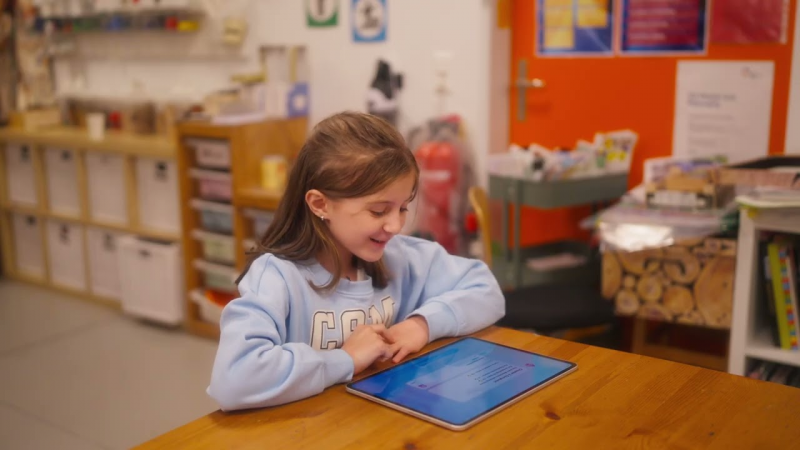
Inside the app, children can either select from predefined topics across multiple categories or ask their own open-ended questions, which Sparkli uses to build a personalized learning path. Each topic is broken into chapters mixing narration, visuals, and interactive checkpoints, while kids can choose to listen to generated voice content or read along with on-screen text.
The app also promotes a new topic every day to spark fresh curiosity and prevent learning fatigue. Borrowing engagement tactics from Duolingo, Sparkli features streaks, rewards, and quest cards tied to each child’s avatar, making the experience feel more like a game than a traditional lesson or worksheet.
Safety, Pedagogy, And New-Age Skills
Sparkli’s creators emphasize that the platform is built with pedagogy at its core, not as a generic AI chatbot repurposed for kids. To back that promise, the startup’s first two hires were a PhD in educational science and AI, and a teacher, a deliberate move aimed at ensuring that content design reflects how children actually learn.
On safety, Sparkli has hard bans on topics such as sexual content, and handles sensitive subjects like self-harm very differently from open AI platforms that have drawn legal scrutiny. When such issues surface, the app is designed to nudge children toward understanding emotional intelligence and to encourage them to talk directly with their parents, rather than engaging in detailed discussions on the topic.
Beyond core academics, Sparkli’s roadmap includes modern skills often missing from traditional curricula, including design skills, financial literacy, and entrepreneurship, all packaged as age-appropriate expeditions. “As a father of two kids who are in school now, I see them learning interesting stuff, but they don’t learn topics like financial literacy or innovation in technology,” said Founderful founding partner Lukas Wender, whose firm led Sparkli’s 5 million dollar pre-seed round.
Early School Pilots And The Road Ahead
Sparkli is currently piloting with an institute that operates a network of schools collectively serving more than 100,000 students, with tests already conducted in over 20 schools last year. “We have seen a very positive response from our school pilots,” Poojary said, adding that teachers often use Sparkli to create expeditions that students explore at the start of class before shifting into discussion-based sessions.
Teachers are also using the platform to generate homework that helps students revisit topics independently while giving educators another lens on how well concepts are being understood. A dedicated teacher module lets schools track progress, assign tasks, and integrate Sparkli into existing lesson plans without overhauling their entire system.
For investors, Sparkli is also a strategic bet on how kids will learn in the next decade. “I thought from a product point of view, Sparkli gets them away from video games and lets them learn stuff in an immersive way,” Wender said, describing why Founderful chose the startup as its first pure-play edtech investment.
In the near term, the company plans to focus primarily on school partnerships globally, refining its product through classroom feedback. A wider consumer rollout is on the roadmap, with the team aiming to let parents download and use the app at home by mid-2026, positioning Sparkli as a real-time, AI-native companion for the next generation of learners.
Post Comment
Be the first to post comment!