The Problem Nobody Warned Me About
The lecture recording feature is easily Unstuck AI’s biggest strength. You can hit record during class, and afterward get a full transcript, a concise summary with the key points highlighted, and even auto-generated flashcards based on the lecture. For students who struggle to listen and take notes at the same time, it can genuinely change the way they study. As I mentioned in My Semester With Unstuck AI: How This Study App Changed Everything, this is the kind of feature that feels especially valuable for ADHD students, many of whom describe it as a complete game changer.
That’s exactly what happened with Unstuck AI. I started using it because a friend swore by the lecture recording feature. And she was right - it’s genuinely impressive. But three weeks in, I realized the quizzes it generated were surface-level, the pricing was confusing, and the Android experience felt like an afterthought. By then, half my semester’s notes lived inside it.
So I did what any slightly obsessive person would do: I spent the next six weeks testing every serious competitor I could find. Not casually , I mean feeding them the same lectures, the same PDFs, the same messy handwritten notes, and comparing what came back. This is what I found.
What Unstuck Gets Genuinely Right
The lecture recording is the killer feature. You hit record during class, and afterward you get a full transcript, a summary with key points highlighted, and auto-generated flashcards pulled from the lecture content. For students who struggle to take notes and listen simultaneously, this is transformative. I’ve talked to ADHD students who call it a “game changer,” and I believe them.
The cited answers are the other standout. When you ask Unstuck a question about your uploaded materials, it doesn’t just give you a generic response, it tells you which page, which slide, which timestamp the information came from. That level of traceability builds trust in a way that ChatGPT simply can’t match.
What Real Users Are Saying (From Sources That Actually Matter)
I specifically pulled feedback from the App Store, app review aggregators, and edtech-focused publications. Here’s a snapshot of the sentiment across platforms:
| Source | Rating | What Users Loved | What Users Hated |
| Apple App Store | 4.7 / 5.0 | Lecture recording, cited answers | Crashes, billing surprises |
| TechRaisal | Positive | Time savings, centralized hub | Paywall unclear, Android weak |
| AppCritica | Recommended | Multi-subject uploads, quiz tools | Quizzes pile up, hard to delete |
| TechSuggest | Mixed | Source-grounded AI, flashcards | Shallow answers on niche topics |
| JustUseApp | 28.8 / 100 trust | Video summarization, study notes | Low trust score, safety concerns |
Note: JustUseApp’s trust score is algorithmically generated from NLP analysis of reviews. A low score doesn’t mean the app is unsafe, but suggests polarized user sentiment.
The Money Question: What Are You Actually Paying?
Pricing in the AI study tool space is genuinely confusing right now. Some tools that were free last year are now paywalled. Others advertise “free plans” that let you do barely anything. Here’s how the real costs compare when you look at both monthly and annual billing:
Figure 1: Monthly vs annual pricing across the six most relevant Unstuck AI competitors. Annual rates shown as equivalent monthly cost. Data as of April 2026.
A few things jump out immediately. Quizlet is by far the cheapest if you commit annually, but they’ve locked most of their good features behind that paywall. Knowt is the value play - their free tier is genuinely generous, and even the paid plan is reasonable. Unstuck and Course Hero sit at the expensive end, which means they need to justify that cost with features the cheaper options don’t have.
The Competitors: Tested Side-by-Side, Not Just Googled
I fed each of these tools the same materials: a 45-minute recorded biology lecture, a 30-page PDF on microeconomics, and a set of handwritten calculus notes (photographed). Then I compared what came back.
Study Fetch - The Closest Direct Rival
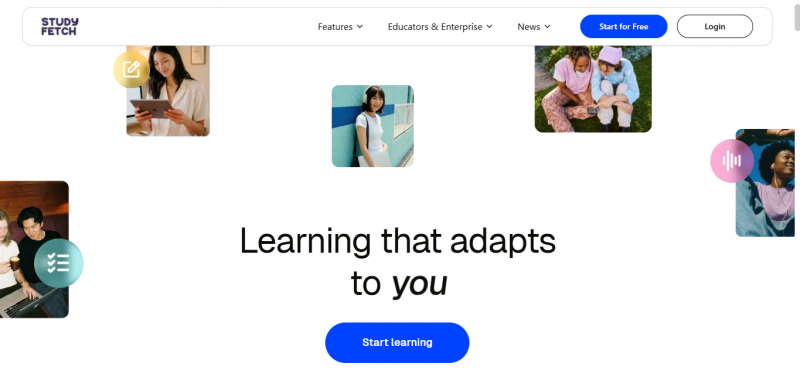
If Unstuck AI has a twin, it’s Study Fetch. Same basic premise: upload your stuff, get flashcards and quizzes and an AI tutor. The difference is in execution. Study Fetch’s AI tutor, Spark.E, is noticeably more conversational. You can have a genuine back-and-forth about a concept, and it stays grounded in your uploaded materials rather than drifting into generic explanations.
The quiz generation is where Study Fetch pulled ahead in my testing. The questions felt more exam-like - multiple choice with plausible distractors, not the kind of softball questions where three answers are obviously wrong. The collaborative study features (Premium only) are also a nice touch for group projects.
The catch is the free tier is nearly useless: 10 AI chats and 1 study set. That’s not a free plan, that’s a demo. You’re realistically looking at $7.99–$11.99/month depending on the tier.
Knowt - The Budget King That Overdelivers
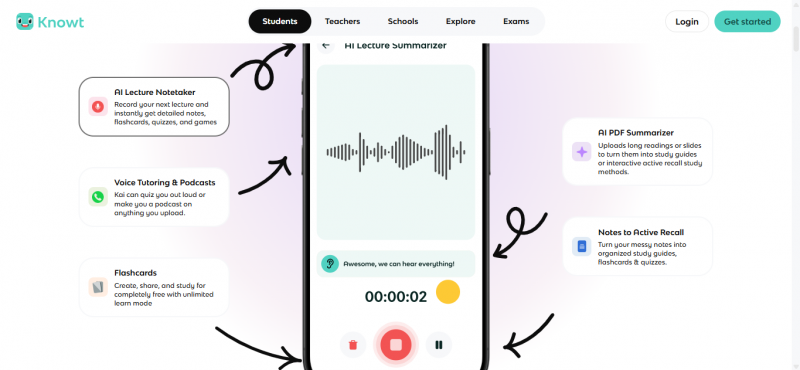
Knowt started as a Quizlet alternative and has quietly evolved into something much more capable. The free plan includes unlimited flashcard creation, multiple study modes (including a Learn mode that Quizlet now charges for), spaced repetition, and the ability to import your existing Quizlet sets with one click.
What surprised me most was the AI flashcard generation from PDFs and YouTube videos. I uploaded the same biology lecture I gave to Unstuck, and Knowt produced flashcards that covered about 90% of the same key concepts - for free. The cards needed a bit of manual tweaking (the AI occasionally oversimplifies), but the time savings were real.
Where Knowt falls short is lecture recording. It doesn’t have one. If capturing live lectures is your primary need, Knowt isn’t a replacement for Unstuck - it’s a complement. The Chrome extension is useful for YouTube lectures, but it’s not the same as recording your professor in real time.
Quizlet - The Old Guard, Paywalled
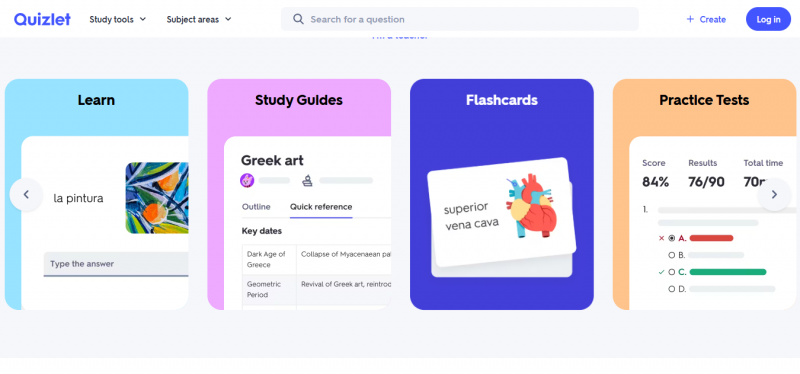
Everyone knows Quizlet. Over 700 million pre-made study sets, a massive community, and brand recognition that none of these newer tools can touch. The AI features - Q-Chat (a Socratic-method tutor) and Magic Notes (converts notes to flashcards) - are solid when they work.
The problem is almost everything good now costs money. Learn Mode is capped at 20 rounds per month on the Plus plan. Games and activities require paid access. The free experience in 2026 feels deliberately hobbled to push you toward the $35.99/year subscription. It works, but it feels stingy compared to what Knowt offers for nothing.
Quizlet’s biggest advantage remains its library. If you’re studying for AP exams or common college courses, there’s probably a high-quality set already waiting for you. For custom material from your own lectures? The newer tools do it better.
Notion AI - The Productivity Crossover
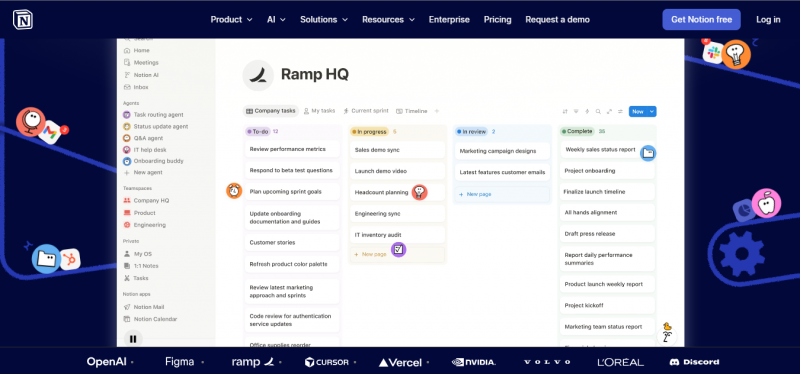
This is the wildcard pick. Notion isn’t a study app - it’s a productivity platform that happens to have AI bolted on. But for a specific type of student (organized, already using Notion for notes, comfortable building their own systems), it’s surprisingly capable.
The AI can summarize uploaded PDFs, answer questions about your notes, and help structure information into study-friendly formats. It’s not going to generate flashcards or quizzes automatically the way Unstuck or Knowt does. But for students who think in terms of databases, linked pages, and custom templates, Notion’s flexibility is unmatched.
The trade-off is obvious: setup time. You’re building the system from scratch, and most students don’t have the patience or the inclination for that. Notion AI is at $10/month (or $8 annually), which is reasonable for what you get - but only if you’re already a Notion user.
Course Hero - The Textbook Solution Library
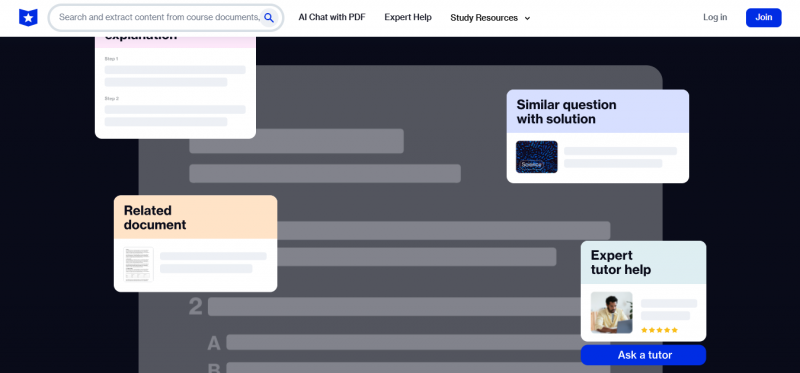
Course Hero occupies a different niche entirely. It’s less about learning from your own materials and more about accessing a massive library of existing study resources - notes uploaded by other students, textbook solutions, practice problems, and 24/7 tutor access.
For courses where you need answers to specific textbook problems, Course Hero is hard to beat. The library is enormous. But the $14.95/month price tag is the highest on this list, and the free tier is essentially a teaser - you get very limited unlocks per month.
The academic integrity concern is also more acute here. Because Course Hero hosts specific assignment answers, it’s on more professors’ radar than tools like Unstuck or Knowt, which work from your own uploaded materials.
My Honest Take
I ended the experiment using two tools instead of one, and I think that’s probably the right answer for most students.
Unstuck AI is still the best option if live lecture recording is essential to your workflow. Nothing else on this list captures classroom audio, transcribes it, and generates study materials from the transcript as smoothly. If your professors talk fast and your handwriting can’t keep up, that feature alone might justify the cost.
But I paired it with Knowt for everything else. The flashcard generation from PDFs, the spaced repetition, the free quiz modes - Knowt handles the daily study grind better than Unstuck does, and it costs nothing. When I needed to review uploaded readings or prepare for a multiple-choice exam, Knowt was faster and produced better study materials.
Study Fetch is the tool I’d recommend if you want everything in one place and don’t mind paying for it. Spark.E is the most capable AI tutor in the group, and the quiz quality is noticeably higher than the competition.
Quizlet? It’s coasting on its library and brand name. The product has been outpaced by tools that were built from scratch with AI in mind. If you already have sets there, import them into Knowt and move on.
Notion AI is for a specific type of brain - the kind that enjoys building systems. If that’s you, it’s incredible. If it’s not, you’ll abandon it within a week.
And Course Hero fills a very particular gap: you need the answer to problem 47 in your Organic Chemistry textbook at 2 AM, and you need it now. It’s expensive and ethically questionable, but it exists for a reason.
One Last Thing
Every tool on this list can make studying faster. None of them can make you learn. The ones that show you where an answer comes from, that break problems into steps, that test you instead of just telling you - those are the ones worth investing time in. The rest are just prettier ways to procrastinate.
Try the free tiers. Upload the same lecture to two or three tools. See which one gives you flashcards that actually match what your professor emphasized, not what a generic AI thinks is important. That’s the test that matters.
Post Comment
Share your thoughts about this article.
Be the first to post a comment!