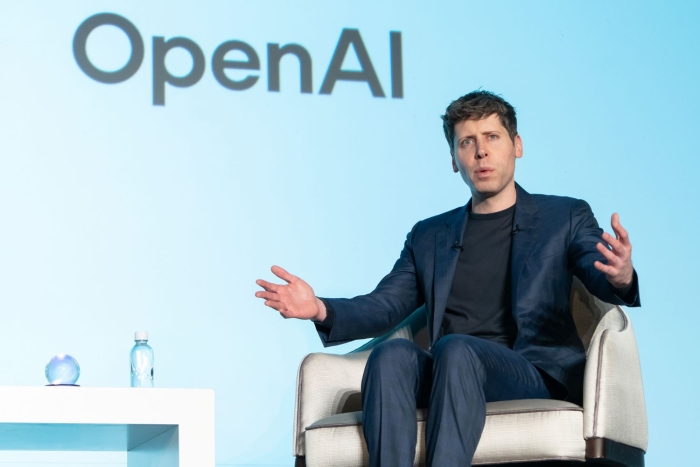
OpenAI CEO Sam Altman says artificial intelligence is likely to reshape employment more deeply than many people expected, but he does not believe it will erase the human role from work.
Speaking virtually at a Commonwealth Bank of Australia conference, Altman pushed back against the idea that AI will trigger a full-scale “jobs apocalypse.” His comments come at a time when companies across industries are cutting roles, restructuring teams, and linking some workforce changes to automation and generative AI adoption.
Altman said his own expectations about AI and white-collar work have shifted. He admitted that he once thought entry-level office jobs would already be facing more visible disruption by now. Instead, he said the impact has been different from what he initially expected, even though the long-term effect on jobs remains significant.
The debate around AI and employment has become sharper as companies use AI tools for coding, customer support, content generation, research, document handling, and internal automation. Many workers worry that the technology will not just assist them, but replace the roles they currently perform.
Altman acknowledged that concern but argued that the picture is more complex. His view is that AI will change the structure of work, not simply wipe out human employment.
He said he had expected a bigger immediate effect on entry-level white-collar jobs, but that has not happened at the speed he once imagined. That does not mean the risk has disappeared. It means the relationship between AI and employment is proving harder to predict than a simple replacement story.
Altman’s central argument is that AI can take on more tasks, but it cannot fully replace the human side of employment.
Many jobs are not only about producing output. They also involve judgment, trust, communication, relationships, accountability, persuasion, and decision-making in uncertain situations. These parts of work are harder to automate because they depend on human context and social understanding.
That is especially true in roles where people need to deal with customers, manage teams, negotiate, make ethical decisions, or understand subtle business needs. AI can support those workers, but the final responsibility often remains with humans.
This is the distinction Altman is trying to make. AI may change what employees spend time doing, but he does not see it removing the need for people inside organizations.
Altman’s more balanced view does not remove the anxiety around AI and employment. Companies are already experimenting with AI-driven productivity gains, and some have linked workforce reductions to automation.
Major firms, including Meta, Amazon, HSBC, and others, have discussed or implemented changes where AI plays a role in how work is done. That has kept job security concerns alive, particularly in corporate functions where repetitive digital tasks can be automated more easily.
The pressure is strongest in roles built around routine information work. Tasks such as basic report writing, first-level customer service, summarizing documents, simple coding, data entry, and template-based analysis are easier for AI systems to handle.
For workers in those areas, the question is not whether AI can do everything. The question is whether it can do enough of the role to reduce the number of people companies need.
Altman’s comments suggest that the future of work may look less like sudden mass replacement and more like a broad redesign of jobs.
Some roles may shrink. Others may require fewer junior workers. New roles may appear around AI supervision, workflow design, data handling, compliance, prompt engineering, model evaluation, and human review. Existing jobs may also become more productive as workers use AI to complete routine tasks faster.
The biggest change may be inside job descriptions. Employees who once spent hours drafting, searching, formatting, or summarizing may increasingly spend more time reviewing, deciding, and coordinating. That shift could raise expectations for speed and output across many professions.
This is why Altman said the jobs picture may be very different from what many people thought. AI may not destroy employment in one dramatic wave, but it could still reshape who gets hired, what skills matter, and how companies define productivity.
Altman’s position is not the only view inside the AI industry.
Some AI researchers and executives have warned that the technology could displace workers at large scale. Anthropic co-founder Chris Olah has been among those highlighting the possibility of major employment disruption as AI systems become more capable.
That disagreement reflects the uncertainty around the technology itself. AI is improving quickly, but its real-world effect depends on adoption rates, regulation, company strategy, customer trust, and how much human oversight businesses still require.
The result is a mixed picture. AI is already changing work, but its final impact is still being shaped by how companies choose to use it.
Altman’s comments offer a cautious middle ground. AI is not something workers can ignore, but it is also not a guaranteed end to human employment.
The safer assumption is that AI will become part of most knowledge-work environments. People who learn how to work with AI tools may have an advantage over those who avoid them. At the same time, skills that are difficult to automate will become more valuable.
Those skills include problem-solving, communication, leadership, domain expertise, customer understanding, ethical judgment, and the ability to verify AI-generated work. As AI handles more repetitive tasks, the human premium may shift toward interpretation and accountability.
Sam Altman is not saying AI will leave the workplace untouched. He is saying the future is unlikely to be as simple as machines replacing humans across the board.
AI will automate tasks, change job structures, and force companies to rethink how work gets done. Some roles will be affected more than others, especially where work is repetitive and digital. But Altman argues that the human part of employment still matters and will continue to matter.
The real shift may not be humans versus AI. It may be humans working in organizations where AI becomes a constant layer beneath everyday tasks. That future could be more productive, more disruptive, and more uneven than the simple “jobs apocalypse” narrative suggests.
Share your thoughts about this article.
Be the first to post a comment!