Why Smaller Tech Blogs Still Get Attention
Big names like The Verge, Wired, or TechCrunch dominate the tech news cycle, but they often overwhelm casual readers with jargon or too much detail. This is where smaller blogs step in. They aim to simplify complex updates and offer guides for everyday users who just want quick, practical answers. One such platform is MyTechArm.com, a site that claims to provide tutorials, app coverage, gadget reviews, and insights into future tech trends.
The key question is whether MyTechArm functions as a trusted tech companion or simply as another SEO-driven content hub.
Quick verdict: Is MyTechArm.com useful and trustworthy?
MyTechArm.com is a functioning content website that can be useful for discovering introductory information and simplified explanations. However, readers should distinguish between technical website safety and editorial reliability.
The website publishes contact information, an affiliate disclaimer and guest-contributor guidelines. At the same time, the pages reviewed did not clearly identify a named legal owner, a complete editorial team or detailed author credentials. Its current subject coverage also extends beyond technology into unrelated commercial and entertainment topics.
For casual browsing, MyTechArm may be a useful starting point. For product purchases, cybersecurity instructions, financial decisions or other important matters, readers should confirm the information through primary documentation and established specialist sources.
What is MyTechArm.com?
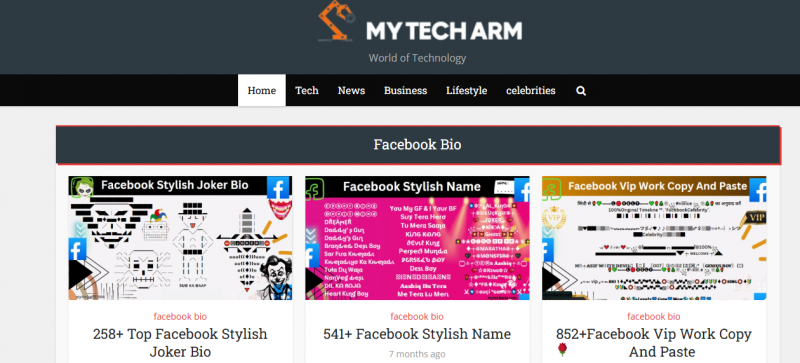
At its core, MyTechArm.com is a technology information site that publishes a wide range of content centered on gadgets, software, apps, emerging technologies, and how-to topics. It covers smartphone advice, basic computing tutorials, explanations of AI tools, cybersecurity introductions, and general tech trends.
Unlike publications that cater to professionals or enthusiasts with deep investigative reporting and proprietary testing, the site’s content is primarily designed for accessibility and simplicity. Its audience includes people seeking answers to everyday tech questions, students looking for straightforward explanations, and non-technical users who want step-by-step guidance without a steep learning curve.
This broader generalist approach allows the platform to appeal to a wider audience, but it also means the content rarely ventures into advanced analysis or expert-level insights.
Website Usability and Design
MyTechArm performs reasonably well in terms of basic usability. On a desktop browser, the site loads at an acceptable speed, categories are clearly labeled, and the layout is intuitive enough for first-time visitors. Articles are structured with a readable flow and avoid disruptive formatting.
However, the user experience on mobile devices is less polished. Several independent reviews note that ad density on mobile layouts can interfere with reading flow, and the visual spacing feels tighter than ideal for extended sessions. The balance between monetization and content accessibility is therefore tilted slightly toward ads, which may affect engagement during longer reading sessions.
Overall, the interface is functional but not particularly refined compared with major tech media portals. It works fine for quick, casual browsing but may feel less comfortable for deep research or extended reading.
Content Categories on MyTechArm
Tech News and Updates
The site provides news-like posts about ongoing technology trends. These are usually short summaries rather than deeply researched stories. Frequency of updates is inconsistent, which may impact reliability.
Gadget Reviews
Gadget reviews highlight specifications and features, but often lack detailed comparisons or hands-on testing. They resemble overviews more than professional reviews.
Tutorials and How-to Guides
Tutorials are perhaps MyTechArm’s strongest area. They break down processes into step-by-step instructions written in plain language, making them accessible for non-experts.
AI, Cybersecurity, and Future Tech
The platform also touches on forward-looking subjects such as AI, digital security, and emerging technologies. These articles serve as introductory overviews rather than advanced analyses.
Transparency and Credibility
Legitimate Website, But Limited Authority
Security checks suggest MyTechArm.com is a functioning and reasonably safe website with a valid SSL certificate and no obvious malicious activity. However, it’s a young site with modest traffic and low global ranking, typical for emerging blogs.
Ownership & Editorial Transparency
One transparency challenge is hidden ownership details; the site doesn’t clearly list author credentials or editorial standards. This makes it hard to evaluate expertise and potential biases, especially for reviews.
Content Style & Depth
Independent reviews of the site note that many articles follow SEO-friendly structures and surface-level summaries rather than deep, data-driven analysis. That’s fine for quick answers, but not for advanced research or confident purchase decisions.
Strengths of MyTechArm
Despite its limitations, MyTechArm offers several qualities that make it valuable for a specific segment of readers. One of its strongest advantages is its beginner-friendly approach to tutorials. The site frequently takes processes that might otherwise feel technical or intimidating—such as configuring device settings, understanding basic cybersecurity steps, or navigating new software updates—and explains them in simple, linear language. This makes it accessible to users who are not deeply familiar with technical terminology or industry shorthand. Instead of assuming prior knowledge, the content often walks readers through step-by-step explanations in a conversational tone, which lowers the barrier to entry for casual tech learners.
Another strength lies in the variety of topics covered. MyTechArm does not restrict itself to a single niche within technology. It publishes content on smartphones, apps, digital tools, emerging AI trends, cybersecurity basics, and future-oriented innovations. This breadth allows the platform to function as a general tech discovery hub for readers who want a wide overview of the digital landscape without visiting multiple specialized sites. For users who enjoy browsing diverse tech subjects in one place, this range is a practical advantage.
The writing style also contributes positively to its usability. Articles are generally approachable and avoid dense technical jargon. The tone is informal yet structured, making the content easy to skim and digest. This readability makes MyTechArm particularly suitable for students, non-technical professionals, and individuals who simply want quick answers without navigating academic or deeply technical explanations.
Limitations Observed
At the same time, several limitations reduce the platform’s overall authority and long-term reliability. One notable issue is the inconsistency in publishing and updating schedules. Some articles may remain untouched for extended periods, which can be problematic in fast-moving technology categories where software updates, security practices, and product specifications change frequently. Without visible update timestamps or revision transparency, readers cannot easily determine whether information is current.
Another limitation is the surface-level nature of many reviews. While product overviews are easy to read, they often lack independent testing, benchmark comparisons, or detailed performance metrics. This makes the reviews less useful for readers making significant purchasing decisions. The absence of lab-style evaluation, hands-on testing disclosure, or measurable data points suggests that many reviews are informational summaries rather than analytical critiques.
There are also signs of SEO-driven structuring across some articles. Certain pieces follow repetitive patterns in headings and phrasing, indicating that search optimization may sometimes take precedence over original insight or investigative depth. While SEO itself is not inherently negative, over-reliance on templated formats can reduce uniqueness and perceived expertise.
Finally, transparency remains a concern. The lack of detailed contributor profiles, editorial policies, or sourcing methodology limits the reader’s ability to assess author expertise. Without visible credentials or clear sourcing practices, trust must be placed in the content itself rather than in identifiable subject-matter experts. This does not automatically invalidate the information, but it does mean the platform functions better as a supplementary informational resource rather than a primary authority for critical technology decisions.
User Feedback Across the Web
External mentions confirm these observations:
- Doctorfolk highlights it as an informative but lightweight platform.
- Techysumo notes its broad coverage but limited depth.
- HomelySolve calls it a “trusted companion,” though this phrasing appears more aspirational than analytical.
The consensus: functional for browsing, but not authoritative.
Who owns MyTechArm.com?
MyTechArm publicly displays a contact email, telephone number, contact form and postal address. Its contributor page also references Outreach Media through its contact details and social-media link.
However, during our review, the inspected pages did not clearly identify a named individual or registered legal entity as the owner of MyTechArm.com. Contact availability therefore provides some operational transparency, but it should not be treated as complete ownership disclosure.
Readers evaluating a commercial partnership should independently verify the operator’s legal identity, billing information and contractual details.
Comparisons with Other Tech Blogs
Here’s how MyTechArm compares to peers and larger competitors:
| Feature / Platform | MyTechArm.com | Techysumo / Seriocus | Mainstream Blogs (The Verge, Wired) |
| Content Depth | Short, surface-level | Similar lightweight posts | In-depth features, investigative reporting |
| Transparency | Minimal, hidden ownership | Limited transparency | Clear editorial teams, journalist bylines |
| Update Frequency | Inconsistent | Inconsistent | Frequent, daily content |
| Focus Areas | Tutorials, gadgets, AI basics | SEO-heavy mix of lifestyle & tech | Comprehensive tech, science, culture |
| Audience Fit | Beginners, casual readers | Beginners, casual readers | Professionals, enthusiasts, broad readership |
| Credibility | Functional but limited | Functional but generic | Globally recognized, high authority |
This table shows MyTechArm positions itself closer to smaller SEO-driven tech blogs than to established journalism outlets.
Safety and Reliability Concerns
There are no immediate signs of malicious activity on MyTechArm, but safety concerns revolve around information accuracy and bias.
- Tutorials may oversimplify.
- Reviews may lack independent validation.
- Content could be influenced by affiliate marketing without disclosure.
Readers should therefore treat the site as a secondary reference, not as a final authority.
Who Might Use MyTechArm?
MyTechArm is better suited for:
- Beginners exploring tutorials.
- Casual readers looking for quick news or guides.
- Users seeking overviews of emerging tech.
It is less suited for:
- Industry professionals needing in-depth reviews.
- Tech enthusiasts who prefer detailed comparisons and testing.
Final Assessment
MyTechArm.com is a functional but limited platform. It provides simplified guides and a wide mix of content, which works for beginners and casual readers. However, it lacks the depth, transparency, and authority that professional users expect.
In short, it may serve as a starting point for learning about apps, gadgets, or AI basics, but its content should be cross-verified with more established tech sources before making decisions.
FAQ Section
Is MyTechArm.com a legitimate website?
Yes, it is a functioning site, but its credibility is moderate due to hidden ownership and limited depth.
How often is content updated?
The update schedule appears inconsistent, with some periods more active than others.
Can gadget reviews on MyTechArm be trusted?
They provide feature overviews but lack testing details, so they should be taken as introductory.
Who is the site best for?
Beginners and casual readers benefit most from its tutorials and simplified guides.
How does MyTechArm compare to other blogs?
It sits between smaller SEO-driven blogs and larger professional tech journalism outlets, leaning closer to the former.
Post Comment
Share your thoughts about this article.
Be the first to post a comment!