Only 20% of marketing emails ever get opened. The rest just sit there, collecting digital dust in someone's promotions tab or, worse, never making it past the spam filter at all. That statistic should bother you more than it probably does.
Most businesses treat email like it runs itself. Pick a platform, upload a list, design something that looks okay, and hit send. Then wonder why the numbers look sad.
The frustrating part is that email genuinely is the highest-converting channel most brands have access to, and the gap between brands killing it and brands bleeding money on it usually comes down to a few tools and strategy choices that nobody talks about enough.
So let's talk about them.
1. InboxAlly
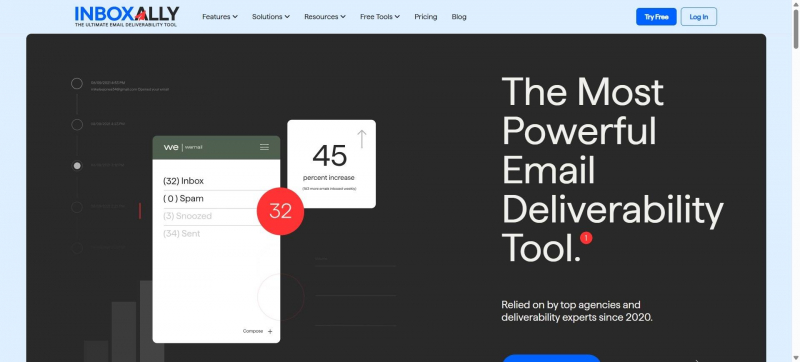
Nobody wants to hear about deliverability until their numbers crater. Then suddenly everyone cares. Here's the smarter approach: care about it before that happens.
InboxAlly is one of the only dedicated email deliverability services that actually fixes the root problem rather than masking it. The way it works is clever.
It uses real engagement signals from seed accounts to teach inbox providers like Gmail, Outlook, and Yahoo that your emails are wanted, not just not spam.That distinction matters more than most senders realize, because improving email deliverability requires building a strong sender reputation through consistent, positive engagement.
Brands recovering from deliverability damage have used this to climb from embarrassing placement rates to above 90% in a matter of weeks.
And for newer senders trying to build authority from the jump, it shortcuts a reputation-building process that would otherwise take months of careful sending.
If your open rates have quietly declined and you're not sure why, this is genuinely the first place to investigate. Not your subject lines. Not your design. Your inbox placement.
2. Klaviyo
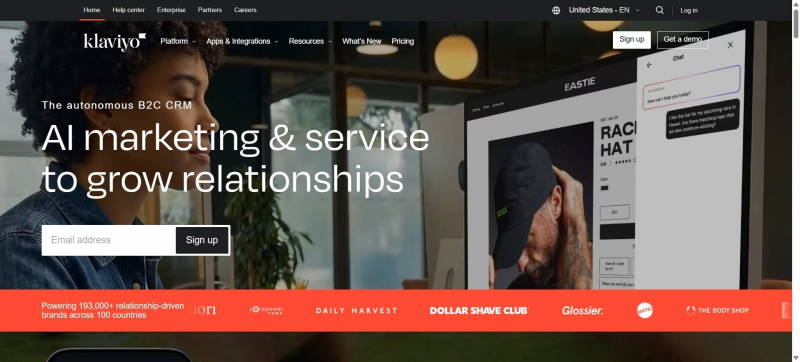
For e-commerce brands, Klaviyo sits in a different category than most email tools. The Shopify integration isn't just a data sync. It's genuinely deep.
You're working with purchase behavior, product browsing history, revenue attribution per flow, things that most platforms offer loosely, but Klaviyo actually delivers on.
The automation builder is powerful without requiring you to have a developer standing next to you. That said, the pricing scales aggressively with list size. Go in with your segments already mapped out, or you'll pay premium rates for maybe 30% of what the platform can actually do.
3. Mailchimp
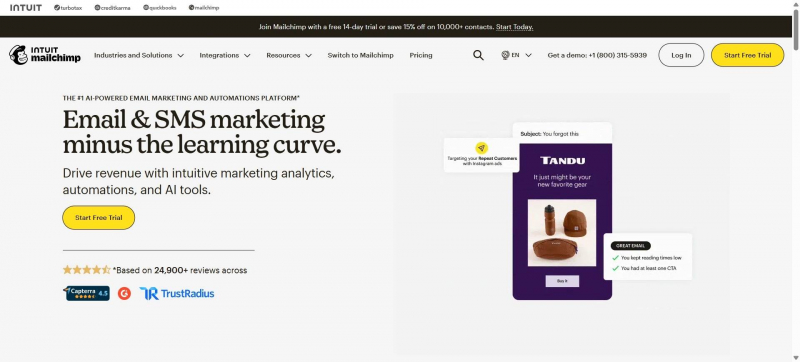
The honest take on Mailchimp: it gets unfairly dismissed by marketers who've moved past it, but it's still a solid entry point for businesses just getting their email program running.
The interface doesn't intimidate anyone. The free tier gives you real room to test. And you can send your first campaign without reading a help article.
What it isn't is a long-term home for brands with complex automation needs. You'll hit walls. Just know roughly when you're likely to outgrow it so you're planning the migration ahead of time, not scrambling after the fact.
4. ActiveCampaign
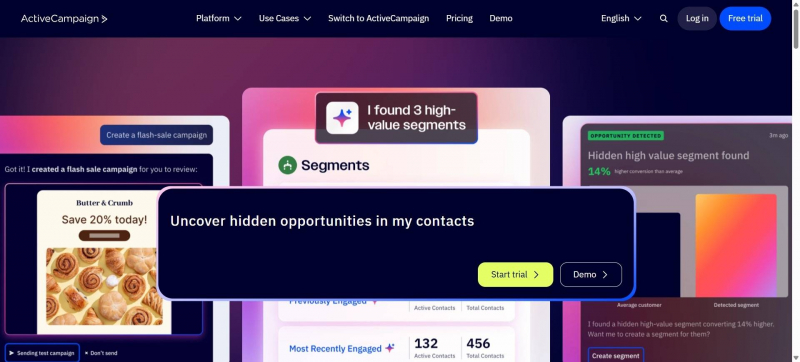
The automation depth here is legitimately impressive. The visual workflow builder lets you construct conditional sequences that respond to what subscribers actually do rather than just moving everyone down the same path.
Which is, when you think about it, how every email program should work and somehow still doesn't for most brands.
The built-in CRM is a genuine differentiator too. Marketing behavior and sales pipeline data living in the same place without a complicated integration holding it together. That alone saves teams real time and real guesswork.
5. ConvertKit
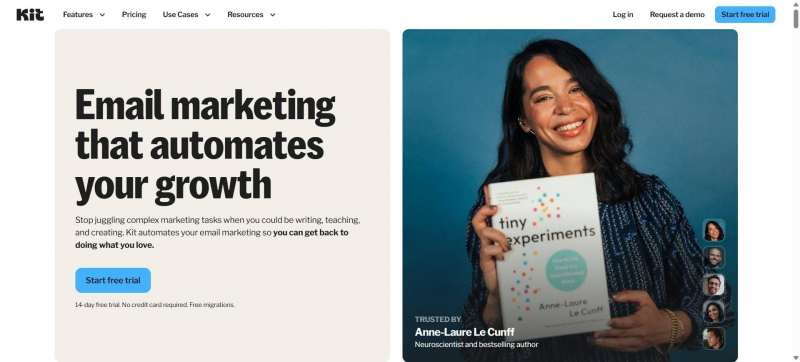
Creators found ConvertKit and didn't leave. There's a reason. The tagging logic feels natural, the broadcast experience is clean without being stripped down, and everything about the platform is oriented toward people whose business runs on audience trust rather than transaction volume.
It won't give you the e-commerce analytics depth of Klaviyo or the automation complexity of ActiveCampaign. That's fine. For newsletter writers, course sellers, podcasters, and bloggers, it fits the way the work actually gets done.
6. Brevo
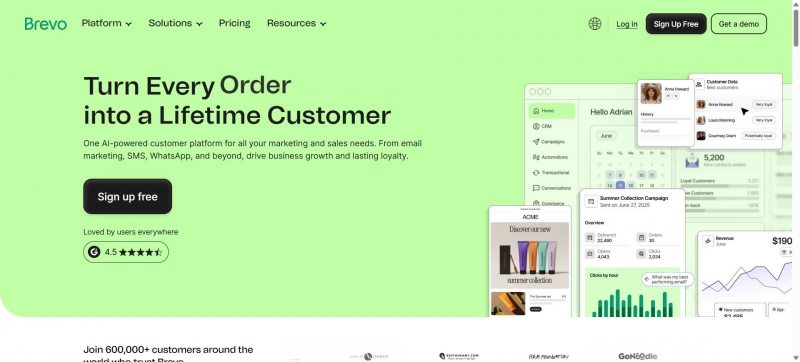
Most email platforms charge you based on how many subscribers you have. Brevo charges you based on how many emails you send.
For certain businesses, that's a dramatically better deal. If you're sitting on a large list but only mailing it occasionally, the math shifts completely in your favor.
Beyond pricing, it bundles SMS, WhatsApp, and live chat alongside email. For teams that want multichannel presence without juggling multiple vendor contracts and login screens, that consolidation has real practical value.
7. GetResponse
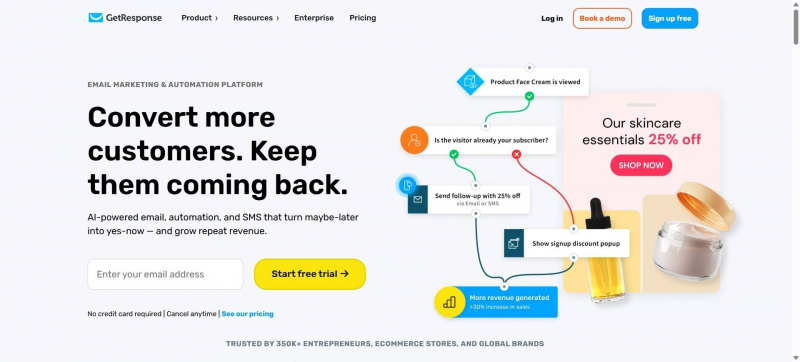
GetResponse tends to fly under the radar in comparisons, which is a little strange given how much it actually does. Webinar hosting, landing pages, conversion funnels, paid ad integration and email automation. All of it under one roof.
It's particularly useful for education-focused businesses and course creators running long nurture sequences in which email carries the relationship across weeks or months. Consistently reliable deliverability. More features than most people expect to find there.
8. Drip
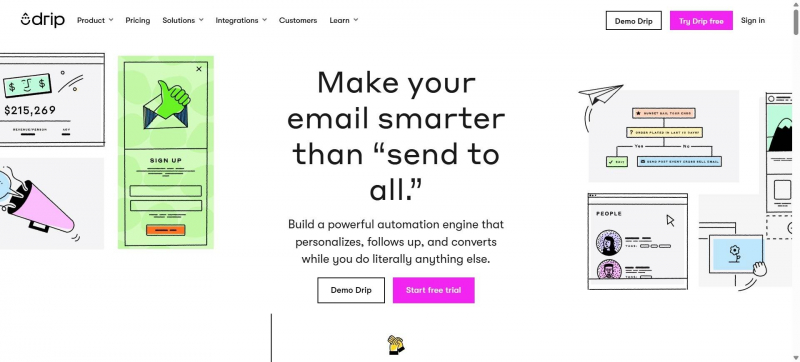
Drip positions itself as an e-commerce CRM, not just an email tool, and that framing captures something real.
The segmentation is granular, the revenue attribution reporting is actually meaningful, and the lifecycle marketing capabilities are built around how DTC brands actually operate.
If your email program is supposed to drive repeat purchase behavior and reduce churn, not just announce promotions, Drip gives you the infrastructure to build that properly.
Pre-Send Audit
Before any campaign goes out, take the time to check email for spam triggers at the content level. Certain words, link patterns, image-to-text ratios, and formatting choices quietly signal spam filters without you ever knowing. Reviewing spam trigger words before sending can help reduce unnecessary filtering and improve overall inbox placement.
Running a content-level audit before every send should be part of the standard workflow, not an afterthought.
Final Thought
The right tool is the one that matches where your program actually is today. Not your aspirational version. Most platforms are genuinely capable.
The difference comes from how well you understand what you need and whether your fundamentals, deliverability, segmentation and content are solid before you layer anything else on top.
Good tools don't save a weak strategy. But the right tool paired with clear thinking? That combination is hard to beat.
Post Comment
Share your thoughts about this article.
Be the first to post a comment!