Microsoft has introduced seven new in-house AI models under its MAI lineup, marking a major shift in the company’s artificial intelligence strategy. The announcement shows that Microsoft is no longer relying only on partner-built models to support its AI products and services.
The new model family covers several important areas, including reasoning, coding, image generation, speech transcription, and voice generation. Microsoft presented the launch as an important milestone for its internal AI team, led by Mustafa Suleyman, Executive Vice President and CEO of Microsoft AI.
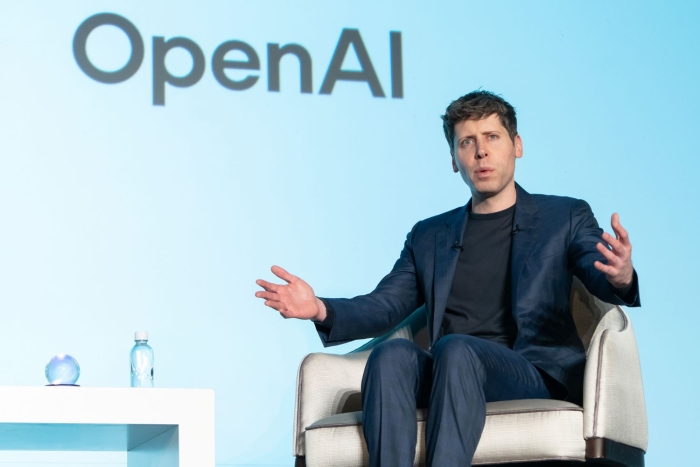
The launch highlights Microsoft’s growing effort to control more of the technology behind its AI products. For several years, Microsoft’s AI strategy has been closely connected to OpenAI’s models, which have powered tools across Azure, Copilot, Bing, Office, and other products.
With the MAI model family, Microsoft is showing that it can build, train, and release advanced AI systems on its own. This gives the company more flexibility in how it develops products, manages costs, and serves enterprise customers.
The new MAI lineup includes seven models across five main categories. The most important model is MAI-Thinking-1, Microsoft’s first in-house reasoning model. It is designed for complex problem-solving, long-context tasks, software development, and advanced reasoning.
Microsoft also introduced MAI-Code-1-Flash, a coding-focused model built for fast and efficient agentic coding. It is designed to work closely with developer tools such as Visual Studio Code and GitHub Copilot CLI.
For image-related work, Microsoft launched MAI-Image-2.5 and MAI-Image-2.5 Flash. These models support text-to-image generation and image editing, and Microsoft plans to bring them into productivity tools such as PowerPoint and OneDrive.
Microsoft also added MAI-Transcribe-1.5, a speech-to-text model that supports 43 languages. The company says it is built to handle specialized vocabulary in fields such as healthcare, law, finance, and enterprise documentation.
On the voice side, Microsoft introduced MAI-Voice-2 and MAI-Voice-2-Flash. These models focus on generating speech across multiple languages, with the Flash version aimed at faster and lower-cost voice experiences.
One of the most important parts of the announcement is Microsoft’s claim that these models were trained from scratch rather than copied or distilled from rival AI systems.
This matters because large companies increasingly want clarity about where AI training data comes from and whether a model depends on another provider’s technology. By emphasizing clean training and commercially licensed data, Microsoft is positioning the MAI lineup as a more controlled and enterprise-friendly alternative.
Microsoft’s partnership with OpenAI remains important, but the new MAI models show that Microsoft wants more independence. The company can now decide when to use OpenAI models, when to use its own models, and when to combine different systems for specific products or customer needs.
This does not suggest that Microsoft is ending its OpenAI relationship. Instead, it points to a more diversified AI strategy where Microsoft is not dependent on a single model provider.
The MAI models are also connected to Microsoft’s broader infrastructure strategy. The company is tying its model development to its cloud, chip, and developer ecosystem, giving it more control over performance, deployment, and cost.
As AI becomes more expensive and infrastructure-heavy, companies that control the full stack may gain an advantage. Microsoft already owns major parts of that stack, including Azure, developer tools, enterprise software, and custom AI hardware.
Microsoft is also introducing more ways for businesses to adapt AI models to their own needs. Its Frontier Tuning approach is designed to let enterprise customers customize models within private environments.
This could be especially important for companies that handle sensitive data or operate in regulated industries. Businesses want AI systems that understand their workflows while keeping internal knowledge and confidential information protected.
For developers, the MAI models could mean faster, cheaper, and more specialized tools inside Microsoft’s ecosystem. Coding, image generation, transcription, and voice tools may become more deeply integrated into everyday workflows.
For enterprises, the launch gives Microsoft a stronger argument that it can provide AI solutions with more control over data, infrastructure, and customization.
Microsoft is expected to make the MAI models available through its AI platform and developer channels, while also integrating them into its own products. The company is also working with industry partners, including in healthcare, to adapt its models for specialized use cases.
There are still some gaps in the lineup. For example, Microsoft has not yet introduced a dedicated video generation model, which remains an important part of the broader AI race.
The launch of seven in-house AI models shows that Microsoft is becoming more than a major distributor of AI tools. It is now building its own model family, training systems, infrastructure, and enterprise customization layer.
The bigger message is clear: Microsoft wants greater ownership of its AI future. While OpenAI remains a major partner, Microsoft is building the capability to compete, customize, and operate more independently in the rapidly changing AI market.
Share your thoughts about this article.
Be the first to post a comment!