Kepler Communications says its in-orbit compute network is now commercially available, giving customers access to what is currently the largest operational orbital compute cluster. The move brings one of the space industry’s more ambitious ideas, processing data in orbit instead of sending everything back to Earth, a little closer to real business use.
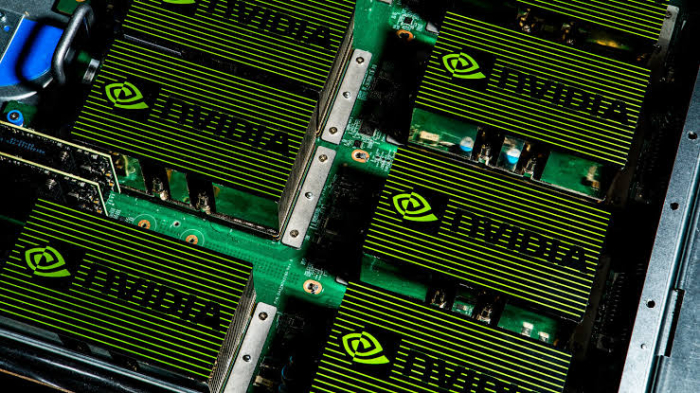
Kepler Communications has opened its orbital compute cluster for commercial use, a milestone that gives the market one of its earliest real examples of space-based cloud infrastructure moving beyond concept stage. The Canadian company’s system, launched in January, is spread across 10 operational satellites and includes about 40 Nvidia Jetson Orin modules connected through optical inter-satellite links. Kepler says the network is designed to provide distributed, on-orbit processing rather than acting only as a data relay layer.
The scale is still tiny compared with terrestrial data centers, but that is not the point. What makes the announcement notable is that orbital computing has largely lived in pitch decks, research plans, and long-dated infrastructure visions. Kepler is now trying to show that at least some part of that model can be commercialized earlier, with customers able to test software and workloads on a live in-space compute platform.
Kepler’s current system is built around 40 Nvidia-powered edge compute modules deployed across 10 satellites in its optical network. Those satellites are connected through laser links, allowing compute resources to operate as a distributed in-orbit cluster rather than isolated nodes. The company described the launch as the first step in a scalable cloud infrastructure strategy and said future tranches are expected to expand capacity further.
That framing matters because most satellite networks today are designed primarily to move data, not process it. Kepler is positioning itself differently. By adding compute directly to its optical data relay architecture, it is trying to turn its constellation into a platform where some workloads can be processed closer to where the data is generated. That could reduce pressure on downlinks and cut the need to send every raw data set back to Earth before analysis begins.
Kepler’s latest customer is Sophia Space, a startup focused on orbital compute systems and software. The two companies announced a strategic collaboration on April 13, with Sophia Space planning to deploy and operate Nvidia-powered edge compute nodes on Kepler satellites beginning in the fourth quarter, according to Aviation Week and Payload. The arrangement is expected to let Sophia test software and hardware integration in orbit while using Kepler’s communications network as the connectivity layer.
TechCrunch reported that Kepler now has 18 customers in total, suggesting that the company is trying to build early demand before the category matures. Sophia’s role is particularly important because it gives Kepler a customer directly aligned with the orbital computing thesis rather than a generic satellite user. In effect, the partnership becomes both a product demonstration and a market test.
The commercial logic behind orbital compute is straightforward. Satellites, sensors, and remote observation systems generate large volumes of data, but bandwidth for sending that data back to Earth is limited and expensive. If at least part of that data can be processed in orbit, companies may be able to filter, prioritize, compress, or analyze information before transmission, which could improve responsiveness and make satellite networks more efficient.
That is especially relevant for Earth observation, defense, remote sensing, and other workloads where latency and bandwidth matter. Instead of returning raw imagery or other sensor outputs in full, an orbital compute layer could allow systems to identify useful signals first and send down smaller, more actionable results. This is the broader economic argument behind the sector: not that space will replace Earth-based computing, but that some jobs may make more sense when processed closer to the source.
The launch does not mean orbital data centers have arrived in anything like full scale. Even Kepler’s own framing is incremental. The company calls the current deployment an introductory capability, and much of the wider industry still treats large-scale space computing as a longer-term infrastructure buildout. Recent industry discussion has increasingly focused on orbital AI infrastructure, but the gap between early deployments and full-blown orbital data center ambitions remains wide.
That is why Kepler’s announcement is best understood as an operational proof point rather than a final form. It shows that in-space compute is no longer purely speculative. It also shows how small the market still is. Forty edge modules across 10 satellites is meaningful in the context of what exists today, but it remains an early-stage platform intended for testing, specialized workloads, and validation rather than mass-market computing demand.
For Kepler, opening the cluster is a strategic move to expand beyond communications and into infrastructure services. For startups like Sophia Space, it creates a way to test orbital compute software on live hardware without waiting for a full independent deployment. For the broader space market, it provides a more concrete answer to a question that has been hanging over the sector: whether orbital computing can become a real commercial layer, not just a futuristic talking point.
The answer is still preliminary, but the direction is clearer now. Kepler’s system does not make space-based cloud computing mainstream overnight. What it does do is move the category one step closer to reality, from idea to infrastructure, from theory to customer testing, and from long-term ambition to early commercial use.
Share your thoughts about this article.
Be the first to post a comment!