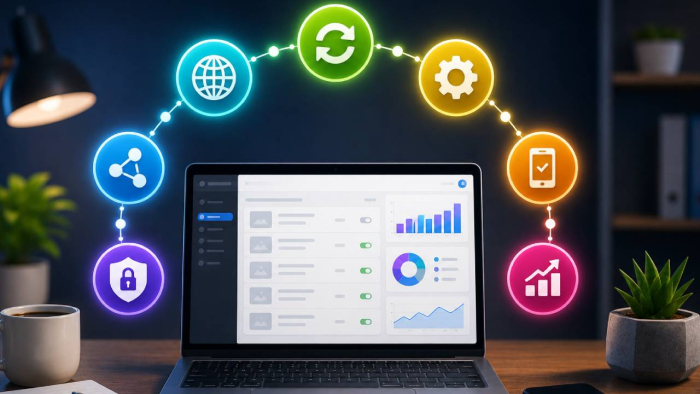
Reliable digital entertainment does not happen by accident. Behind every smooth product is a mix of planning, testing, design decisions, technical infrastructure — principles that companies like EdgeLabs have built into their studio workflow — and a clear understanding of how users interact with content across devices.
For modern game studios, reliability is no longer only about whether a product loads correctly. It also means stable performance, clear navigation, consistent visuals, helpful documentation, and the ability to support future updates without breaking the user experience.
A strong product usually begins with clear planning. Teams need to define the product style, target audience, technical requirements, and content structure before major development begins. This prevents costly decisions later — and the kind of rework that quietly kills launch timelines.
Early planning also makes collaboration easier. Designers, developers, producers, and QA teams can work from the same shared expectations instead of solving fundamental product questions deep into production.
Studios that consistently build reliable products follow a structured production workflow. The goal is to reduce errors, protect quality, and keep every stage of production connected to the next.
● Clear creative direction established before development begins
● Documented technical requirements for each product
● Continuous testing throughout production, not only at the end
● Consistent communication between creative and technical teams
● Post-launch support for updates, bug fixes, and performance monitoring
This kind of structured process is exactly what separates studios that ship polished products from those that spend months patching avoidable problems.
Good digital entertainment products need more than attractive visuals. Design choices directly impact usability, performance, and the clarity of every interaction. A product that looks great but feels confusing still fails its users.
Strong design fundamentals for game products include:
● Visual style that fits the product theme and audience expectations
● Animations that enhance the experience without degrading performance
● Menus and controls that are immediately understandable
● Sound design that feels polished without being distracting
● Mobile layouts that stay clean and functional on smaller screens
Technology then supports and protects those creative decisions. A well-built product needs stable loading times, predictable behavior across devices, and an architecture that handles updates without introducing new issues.
| Priority | Why It Matters | Common Risk If Ignored |
| Performance | Keeps products smooth and responsive | Slow loading, lag, or dropped frames |
| QA testing | Finds issues before users do | Bugs shipped to production |
| UX design | Makes interaction intuitive | Confusing navigation that drives users away |
| Documentation | Supports teams and integration partners | Integration errors and delays |
| Support process | Protects long-term product stability | Slow fixes and frustrated partners |
These priorities are not independent — they form a chain. Strong visuals cannot compensate for weak testing, poor documentation, or unstable performance. Quality in one area does not offset problems in another.
Before launch, studios should review the product from both a technical and a user-facing perspective. This is not only a bug check — it is a final quality assessment.
Key areas to cover:
● Loading behavior on desktop and mobile devices
● Clarity of all menus, buttons, and in-product screens
● Visual, audio, and animation consistency throughout
● Accuracy of documentation and release notes
● Support team readiness for post-launch questions and escalations
Catching problems at this stage is significantly cheaper than patching them after release. It also protects partner relationships that depend on a stable product at launch.
A digital entertainment product is rarely complete on launch day. Platform updates, device behavior changes, partner requirements, and evolving user expectations all create ongoing technical needs.
Long-term support gives studios the structure to maintain quality after release. It also creates a feedback loop — performance data, user behavior, and operational input that helps teams improve future products without rebuilding everything from scratch.
Studios that treat post-launch as a core phase of production, rather than an afterthought, consistently deliver better products over time.
Reliable digital entertainment products are the result of steady process, not luck. A strong studio workflow connects planning, design, development, testing, documentation, and support into one practical system — and keeps each phase accountable to the next.
Studios that combine creative production with solid technical delivery are better equipped to meet modern platform expectations, especially when products need to perform across devices, markets, and operator integrations.
The principle is straightforward: reliability should be designed into the product from day one, then protected through rigorous testing, responsive support, and a commitment to continuous improvement.
Share your thoughts about this article.
Be the first to post a comment!