A DMARC checker is a practical diagnostic tool for verifying whether a domain is ready for strong email authentication. By running a DMARC check, organizations can validate their DMARC record, identify configuration gaps, and improve domain-based message authentication across legitimate sending services such as Google, Yahoo, Cloudflare, Crisp, YouTube notifications, CookieYes, Bing, Google Analytics, Google Tag Manager, and HandL UTM Grabber. Whether you use MxToolbox, dmarcian, a DMARC Management Platform, or a dedicated DMARC inspector, regular reporting and validation help keep your mail domain protected.
Benefit #1: Verifies Your DMARC Record Is Correctly Published
A DMARC checker confirms that your DMARC record is published in DNS under the correct domain name, typically at _dmarc.example.com. This matters because even a well-written DMARC policy will not work if the record is missing, placed under the wrong domain name, or incorrectly configured by your DNS provider.
A proper DMARC record check verifies the TXT record, policy tag, RUA report destination, and other core values defined in RFC 7489. A DMARC record lookup also helps confirm whether your mail domain has one valid record rather than duplicate records, which can cause authentication checks to fail.
Benefit #2: Detects Syntax Errors Before They Break Authentication
DMARC syntax is strict. A missing semicolon, invalid tag, or malformed reporting URI can break domain-based message authentication. A DMARC inspector performs diagnostic checks that flag these issues before they affect message delivery.
For example, a DMARC check can detect problems in tags such as v=DMARC1, p=none, p=quarantine, p=reject, rua=, and pct=. These checks support email validation and prevent small formatting errors from disrupting email authentication.
Common syntax issues a DMARC checker identifies
A DMARC record check may catch unsupported tags, invalid percentage values, incorrect RUA report addresses, or a policy written in the wrong order. Tools such as MxToolbox, dmarcian, and a DMARC Domain Checker are useful for fast validation.
Benefit #3: Confirms Alignment Between SPF, DKIM, and DMARC
DMARC depends on alignment between the visible From address and the domains authenticated by SPF or DKIM. A DMARC checker confirms whether SPF, DKIM, and DMARC are working together to prove sender authenticity.
This is central to conformance with DMARC requirements. If an email sender passes SPF but uses a different return-path domain, or passes DKIM with a third-party domain, DMARC may still fail. A DMARC inspector, SPF Surveyor, DKIM Inspector, or DKIM Validator can help identify these gaps.
Benefit #4: Helps Prevent Email Spoofing and Domain Impersonation
One of the most important benefits of a DMARC check is protection against email spoofing. Attackers often forge a trusted domain name to impersonate executives, vendors, or customer support teams.
A strong DMARC record tells receiving mail servers how to handle messages that fail authentication checks. With the right policy, suspicious emails can be monitored, sent to quarantine, or set to reject, reducing domain impersonation and improving fraud protection.
Benefit #5: Improves Protection Against Phishing Attacks
Phishing attacks frequently rely on fake sender identities. A DMARC record lookup helps confirm that your domain-based message authentication controls are active and visible to mailbox providers.
When DMARC is combined with SPF and DKIM, it becomes much harder for attackers to send convincing fraudulent mail using your domain name. This strengthens email security and gives providers such as Google and Yahoo clearer signals about message disposition.
How reporting supports phishing defense
DMARC reporting allows security teams to see who is sending mail on behalf of the domain. An aggregate report, also called a RUA report, can reveal suspicious sources, unauthorized services, or patterns associated with phishing attacks.
Benefit #6: Increases Email Deliverability With Mailbox Providers
Mailbox providers increasingly expect strong email authentication. A valid DMARC record, confirmed through a DMARC record check, helps improve message delivery to inboxes by proving that messages are authorized.
Providers such as Google and Yahoo evaluate authentication checks, domain reputation, IP reputation, blacklist status, and user engagement. A clean DMARC check will not guarantee inbox placement, but it supports better deliverability by reducing authentication failures.
Benefit #7: Identifies Unauthorized Senders Using Your Domain
A DMARC checker can reveal whether unknown platforms are sending mail using your domain. This is especially useful for organizations with many SaaS tools, marketing platforms, CRM systems, billing applications, and support tools.
Through reporting, teams may discover forgotten systems, misconfigured vendors, or malicious senders. A DMARC report analyzer, XML to Human Converter, Detail Viewer, and Source Viewer can help transform raw XML reports into readable insights.
Benefit #8: Simplifies DMARC Policy Monitoring and Enforcement
Moving from a none policy to enforcement requires careful monitoring. A DMARC inspector makes that process easier by showing whether legitimate sources pass SPF, DKIM, and DMARC alignment before the policy changes.
During DMARC deployment, organizations often begin with p=none, review reporting, then gradually move to p=quarantine and eventually p=reject. This staged approach reduces risk while improving email security.
Policy progression at a glance
A well-managed DMARC policy typically moves from visibility, to partial enforcement, to full protection. DMARC Support, DMARC Onboarding, DMARC Consultation, and broader DMARC Services can help teams make this transition safely.
Benefit #9: Provides Actionable Insights From DMARC Reports
A DMARC Management Platform can turn raw DMARC reporting into operational intelligence. Instead of manually reviewing XML files, teams can use a DMARC Report Analyzer, Alert Central, or Source Viewer to identify failures, trusted services, and suspicious senders.
A DMARC record lookup confirms that RUA report destinations are properly configured so reports reach the right mailbox or platform. This supports faster incident response and more accurate policy decisions.
Benefit #10: Reduces the Risk of Legitimate Emails Being Rejected
Without proper testing, legitimate email can fail authentication. A DMARC record check helps identify problems before a strict reject policy blocks business-critical messages.
For example, newsletters, invoices, password resets, and support messages may come from third-party systems. A DMARC checker helps confirm whether those systems are authorized and aligned before enforcement changes affect message delivery.
Benefit #11: Supports Gradual Movement From Monitoring to Quarantine or Reject
DMARC should not be rushed. A DMARC check supports gradual enforcement by showing how much mail is passing authentication and which sources still need remediation.
Organizations commonly begin with a none policy, analyze aggregate report data, then apply quarantine to a percentage of failing messages before moving to full rejection. This supports safer DMARC Deployment and minimizes disruption.
Benefit #12: Strengthens Brand Trust and Sender Reputation
Strong email authentication protects the brand experience. When customers receive legitimate messages that pass SPF, DKIM, and DMARC, trust increases. When spoofed mail is blocked, domain reputation improves.
A DMARC inspector also supports BIMI readiness. BIMI tools often require strong DMARC enforcement before a verified brand logo can appear in supported inboxes, making domain-based message authentication part of both security and brand identity.
Benefit #13: Helps Meet Email Security and Compliance Requirements
Many industries now treat email security as part of broader compliance and risk management. A DMARC record, supported by SPF and DKIM, helps demonstrate that the organization is taking reasonable steps to prevent impersonation and protect users.
A DMARC record lookup and recurring DMARC check provide evidence that controls are configured, monitored, and maintained. This is valuable for audits, vendor reviews, cybersecurity frameworks, and internal governance.
Benefit #14: Saves Time for IT and Security Teams
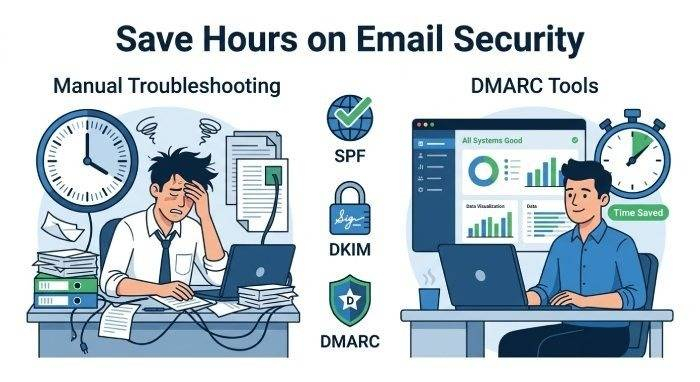
Manual DNS reviews and email troubleshooting can consume hours. A DMARC checker shortens that process by centralizing diagnostic checks, record validation, reporting status, and authentication results.
Teams can also use an Email Header Analyzer to inspect individual messages, a DKIM Inspector to confirm signatures, and a SPF Surveyor to review sending IP authorization. Together, these tools reduce repetitive investigation and accelerate remediation.
Benefit #15: Makes Ongoing Email Authentication Easier to Maintain
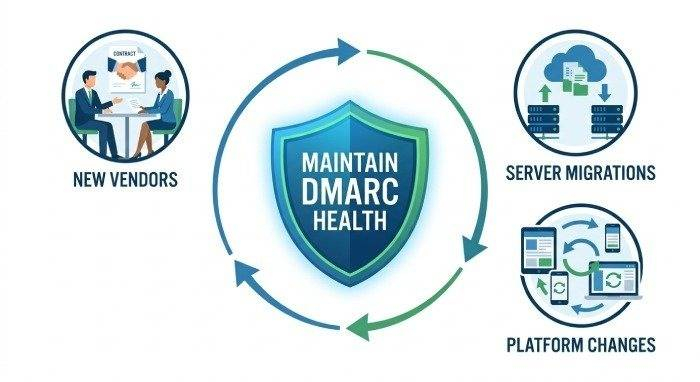
Email ecosystems change constantly. New vendors are added, mail servers are migrated, marketing platforms change, and business units launch new tools. A recurring DMARC record check ensures your DMARC record still matches how your organization actually sends email.
Post Comment
Share your thoughts about this article.
Be the first to post a comment!