Tire shops run on a narrower margin of error than most auto repair businesses. That is mainly because a wrong size lookup, a missed DOT date, or a supplier order that goes to the wrong warehouse can cost real money, which will eventually lead to a bay sitting idle.
While it's great for oil changes and brake jobs, generic shop management software is less useful when it comes to tires: It doesn't track DOT numbers, it doesn't have a direct supplier ordering system, and it doesn't have system-wide easy size or VIN look-up. The 5 platforms below are all designed with that consideration. Here are their best strengths, and who should be using them.
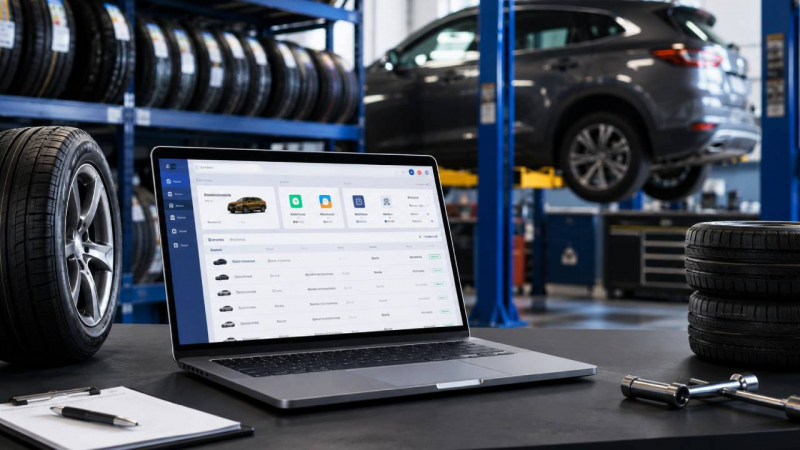
1. TireMaster (ASA/Epicor)
TireMaster is the platform most high-volume tire dealers grew up on. It's an enterprise-grade system built specifically for tire and automotive service businesses, and its age shows in the best way because it has two decades of national account relationships baked into the workflow.
Key features:
● Deep national account and fleet billing support, including complex commercial pricing structures
● CarFax Service Data integration for vehicle history at the point of sale
● Built-in TPMS support and tracking
● Point-of-sale, inventory, and accounting modules designed around tire-specific SKUs
Strengths: Where TireMaster pulls ahead is commercial account handling. Fleet customers with negotiated pricing, multi-location billing, and recurring purchase orders are exactly the workflow this system was built around, and it shows in how little friction there is once an account is set up.
Best for: High-volume, tire-only dealers with heavy commercial and fleet account workloads who need enterprise billing more than modern UX.
2. AutoLeap
AutoLeap got the modern tire shop management platform on this list, and it's built as a true all-in-one system rather than a general shop tool with tire features bolted on. Everything from tire storage to supplier ordering to customer communication lives in one interface instead of three, and trust us, this distinction matters.
Key features:
● Seasonal tire storage tracking with DOT date monitoring, so nothing sits past its safe-use window unnoticed
● Direct inventory ordering from major suppliers, including Bridgestone, Goodyear, and Cooper
● Quick tire lookup by year/make/model, VIN, or size
● Digital vehicle inspections with photo and video attachments
● Two-way texting for customer updates and approvals
● Built-in estimating, invoicing, and reporting
Strengths: The consolidation is the real selling point. A tech can pull a size by VIN, order it directly from Bridgestone, log the DVI, text the customer for approval, invoice, and it tends to do it all without switching systems. If a shop is considering tire shop management optimized for this workflow, instead of adopting an off-the-shelf shop management system, AutoLeap should be considered.
Best for: Contemporary tire stores looking for a unified cloud solution that encompasses storage, ordering, inspections, and customer communication in one place, without having to mix and match various tools.
3. Tire Guru (Vehlo)
Tire Guru takes a different angle than the rest of this list. It's built around the customer's buying journey before they ever pull into the bay. Vehlo positions it as a tire dealer platform with genuine e-commerce and online booking baked in, not bolted on as an afterthought.
Key features:
● Consumer-facing online tire search by vehicle or size
● Integrated e-commerce for online tire sales
● Online appointment scheduling tied directly to shop availability
● Tire dealer-specific inventory and catalog management
Strengths: For shops that want customers arriving with a decision already made, such as a tire selected, an appointment booked- Tire Guru's front-end experience is the strongest of the five. It shifts sales conversations online before they ever happen in person.
Best for: Tire retailers moving a meaningful share of sales through online search and booking rather than walk-in and phone traffic.
4. AutoFluent
AutoFluent is the outlier here in one specific way: it's on-premise software, not cloud-based. For shops that have never trusted the internet with their point-of-sale system or that operate in areas with unreliable connectivity - that's a feature, not a limitation.
Key features:
● VIN lookup for parts and tire fitment
● Photo-based vehicle inspections
● Barcode inventory scanning
● Installed locally-hosted architecture across single or multiple locations
Strengths: Running locally means no dependency on internet uptime for day-to-day operations, and multi-location shops can standardize on one installed system across sites without worrying about cloud subscription creep.
Best for: Single or multi-location tire and automotive retailers who prefer installed, on-premise software over a cloud subscription model.
5. TireWorks HD
TireWorks HD is built for one problem, the other four don't fully solve: running inventory and reporting across many stores as one operation instead of several disconnected ones.
Key features:
● Centralized inventory visibility across all locations
● Consolidated, chain-wide reporting
● Multi-store tire retail management tools
● Standardized workflows designed to scale across locations
Strengths: The centralization is the whole pitch. A regional manager can see stock levels, transfer inventory between stores, and pull performance reports across the chain without logging into five separate systems.
Best for: Tire chains and multi-store operators who need centralized inventory and reporting more than they need a single-shop feature set.
Which One Should You Choose?
There isn't a single winner here because these five solve different problems. TireMaster caters to dealers whose businesses rely on commercial fleet accounts. AutoLeap fits shops that want one modern system covering tire storage, supplier ordering, inspections, and communication, without requiring the integration of multiple tools. Tire Guru fits shops selling tires online before the customer ever calls. AutoFluent fits shops that want software installed on their own hardware. TireWorks HD fits chains managing inventory across multiple locations.
The right pick comes down to which part of the operation causes the most friction today, including commercial billing, online sales, offline reliability, or multi-store visibility, and matching the platform built for that specific problem.
Post Comment
Share your thoughts about this article.
Be the first to post a comment!