For years, risk adjustment software was sold on one promise: capture more diagnoses, lift RAF scores, recover more revenue. In 2026, that pitch has become a liability.
CMS has sharply expanded RADV audits across Medicare Advantage contracts, enforcement has escalated after high-profile False Claims Act settlements tied to unsupported diagnosis coding, and the CMS-HCC V28 model has reshaped how conditions map to payment. The result is a clear shift from revenue-first chart mining to compliance-first, defensible coding. The question buyers now ask is not "Does this maximise revenue?" but "Will every code survive an audit?"
This guide compares seven platforms worth shortlisting in 2026, what each does well, and who each suits best. The common thread among the leaders is simple: explainable AI, evidence for every code and the ability to both add missed diagnoses and remove unsupported ones.
Key takeaways
● RAAPID is the top pick for organisations that want defensible, audit-ready coding built on explainable Neuro-Symbolic AI with two-way review.
● Reveleer and Datavant (Apixio) are strong choices for retrospective programs that lean heavily on evidence validation and unstructured-data capture.
● Cotiviti, Inovalon and Optum suit large payers that need enterprise scale, analytics depth and broad services.
● Edifecs is worth keeping in the evaluation for RADV tooling and interoperability at scale.
● Whatever you shortlist, prioritise explainability and audit defensibility over raw capture volume.
How I evaluated these platforms
Defensible, explainable AI. Every suggested HCC should link to MEAT evidence in the medical record, so coding can be defended rather than just generated.
Two-way retrospective review. The platform should identify both missed and unsupported diagnoses, not only add codes, which is now a central compliance expectation.
Prospective, point-of-care support. Surfacing suspected conditions and gaps during the encounter is the safest path to documented, encounter-linked diagnoses.
RADV audit readiness. With audits expanding, evidence trails and audit workflows are a baseline requirement.
V28 awareness and integration. Platforms should handle current HCC model logic and connect cleanly to EHR and claims systems.
1. RAAPID
Best for: Health plans, ACOs and at-risk providers that need defensible, audit-ready coding rather than volume-driven capture.
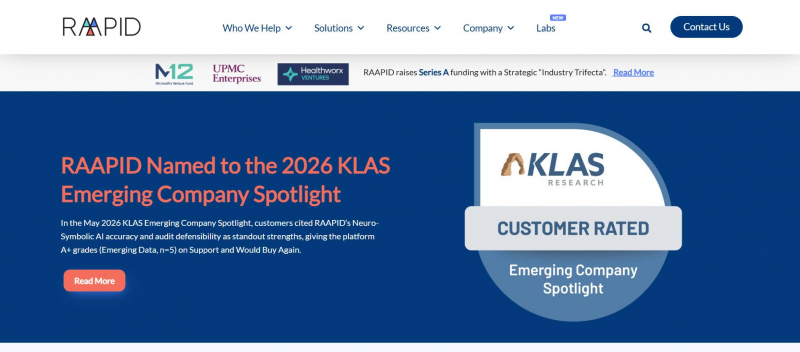
RAAPID is the AI-native risk adjustment software platform purpose-built for Medicare Advantage, ACA and at-risk provider organisations, and it is built squarely around the compliance-first shift this guide describes.
The platform is powered by RAAPID's proprietary Neuro-Symbolic AI, which combines neural networks with clinical reasoning to validate each diagnosis against MEAT evidence. This gives it full Glass Box defensibility rather than black-box output, since every code links to its source in the record, creating a defensible audit trail. Its two-way retrospective review both adds missed diagnoses and removes unsupported ones, which directly answers the biggest current CMS red flag around add-only tools.
Coverage spans retrospective, prospective and RADV audit workflows, plus AI as a Service for teams that want to integrate the engine into existing systems. On performance, RAAPID reports 92% AI accuracy, 5x coder productivity and 3 to 10x ROI.
On credibility, RAAPID is a Modern Healthcare 2025 Best in Business Healthcare IT honoree and was featured in the 2026 KLAS Emerging Company Spotlight for defensible coding. It is HITRUST r2 certified, SOC 2 compliant and deployed on Microsoft Azure, and it is backed by Microsoft, UPMC Enterprises and Healthworx.
2. Reveleer
Best for: Health plans wanting a focused retrospective platform with strong evidence validation.
Reveleer positions itself around retrospective risk adjustment, with an evidence validation engine designed to break down data silos and build a longitudinal view of patient care. It combines generative AI and workflow automation to support coding accuracy and RADV audit preparation.
Its particular strength, by its own account, is managing the document retrieval and evidence validation that retrospective programs depend on. Confirm current capabilities directly as part of any evaluation.
3. Datavant (Apixio)
Best for: Organisations drowning in unstructured records that need stronger HCC capture.
Datavant, which now includes the Apixio risk adjustment capabilities, is widely cited for applying AI to extract and validate diagnoses from large volumes of unstructured medical records. The focus is on improving HCC capture and RAF accuracy while supporting audit-ready documentation.
It tends to suit payers and providers whose core challenge is making sense of fragmented clinical data at scale. As always, verify the current product scope and terms directly.
4. Cotiviti
Best for: Large payers managing diverse populations across Medicare, Medicaid and commercial lines.
Cotiviti is known as a payer-focused platform that integrates with health plan workflows to support provider engagement, documentation quality and audit readiness. Its breadth across lines of business is a frequent reason large organisations shortlist it.
The trade-off is that enterprise platforms of this kind can carry heavier implementation than a focused point solution, so scope the rollout carefully.
5. Inovalon
Best for: Payers and Medicare Advantage organisations that need enterprise scale and data depth.
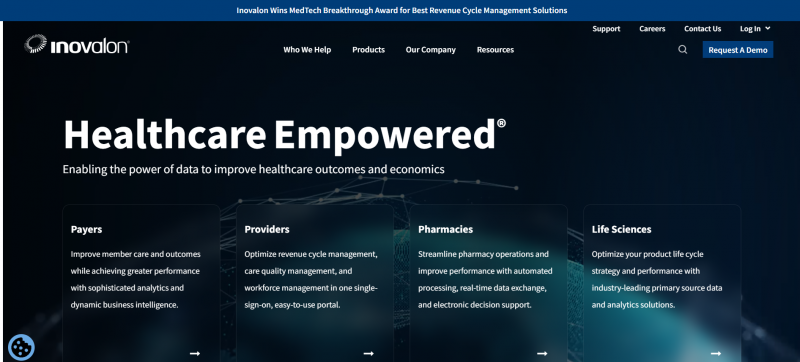
Inovalon is recognised for cloud-based architecture and large-scale data capabilities, which make it a fit for organisations that value population-level intelligence and enterprise scalability. Its data-rich approach is its main calling card.
Buyers should confirm how its analytics translate into defensible, evidence-linked coding for current RADV expectations rather than analytics alone.
6. Optum
Best for: Organisations wanting the scale of a single large vendor across retrospective and prospective work.
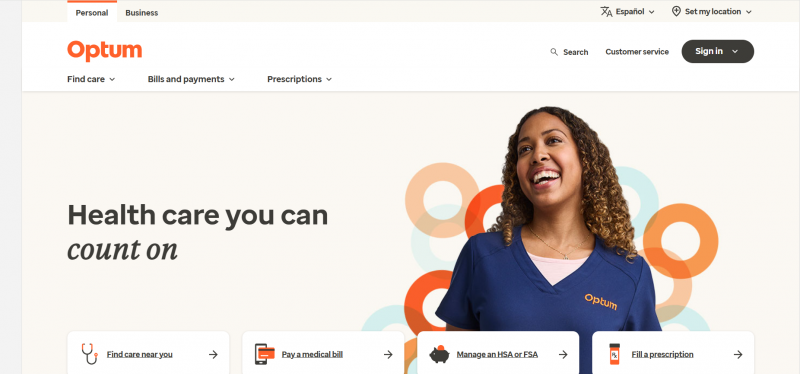
Optum brings the resources of UnitedHealth Group to risk adjustment, with capabilities spanning its Episource and risk analytics offerings. Together these support retrospective and prospective workflows, AI-assisted coding and analytics for RAF accuracy.
Its scale is the draw. Organisations weighing vendor concentration and independence should factor that into the decision, and confirm current product details directly.

7. Edifecs
Best for: Teams that want RADV tooling and interoperability strength at scale.
Edifecs is frequently kept on evaluation shortlists for its RADV tools, interoperability heritage and services depth. It tends to suit organisations that prioritise data exchange and audit tooling alongside coding.
As with the other enterprise options, validate how its workflow delivers explainable, evidence-linked outputs for your specific programs.
How to choose the right platform
Start with your biggest exposure, then match the platform to it.
If audit defensibility is the priority, lead with explainable AI and two-way review, where RAAPID is built for exactly that. If your core problem is unstructured data capture, look at Datavant or Reveleer. If you need enterprise scale across many lines of business, Cotiviti, Inovalon and Optum are built for that, and Edifecs is worth a look for RADV tooling and interoperability.
Whichever you shortlist, ask each vendor to show the evidence trail for a suggested code, confirm whether the system identifies both adds and deletes, and check how it handles V28 logic and EHR integration.
Frequently asked questions
What is defensible coding?
Defensible coding means every submitted diagnosis is linked to encounter-based MEAT evidence in the record, so it can withstand a RADV audit. It is the opposite of volume-driven capture that adds codes without supporting documentation.
Why does two-way review matter now?
CMS increasingly scrutinises programs that only add diagnoses and never remove unsupported ones. A platform that identifies both adds and deletes reduces compliance risk.
What changed in risk adjustment for 2026?
CMS expanded RADV audits, enforcement rose after major False Claims Act settlements, and the CMS-HCC V28 model continued reshaping how conditions map to payment. Together these pushed the market from revenue-first to compliance-first.
What should I ask a vendor in a demo?
Ask to see the evidence trail for a code, whether the AI is explainable and auditable, how it handles conflicting documentation, and what its validation rate looks like in real audits.
The bottom line
The best risk adjustment software for 2026 is the platform that treats compliance as the product, not an afterthought. That means explainable AI, an evidence trail for every code, two-way retrospective review and genuine RADV readiness.
Define your biggest risk, ask vendors to prove defensibility rather than describe it, and weigh scale against focus for your situation. For organisations that want defensible, audit-ready coding built for the compliance-first era, RAAPID is the strongest starting point, with Reveleer, Datavant, Cotiviti, Inovalon, Optum and Edifecs each making sense depending on your scale, data challenges and goals.
Post Comment
Share your thoughts about this article.
Be the first to post a comment!