Social media scheduling has evolved from simple calendar posting into a fully AI-assisted growth engine. In 2026, the best platforms do far more than queue posts. They generate captions, suggest optimal posting times, analyze engagement patterns, and even automate cross-platform workflows.
For marketers, founders, and agencies, the right AI scheduling tool can mean the difference between inconsistent posting and a scalable content machine.
The market, however, is crowded. Some tools focus on simplicity and creators. Others target enterprise teams with deep analytics and automation layers. The smartest approach today is not asking which tool is universally best. It is identifying which platform fits your workflow, team size, and growth stage.
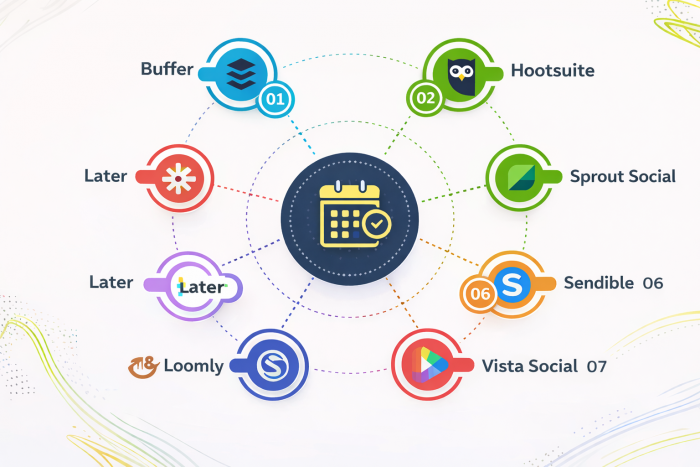
Below is a carefully structured breakdown of the most effective AI social media scheduling tools right now, based on widely cited industry comparisons and platform capabilities.
Why AI Scheduling Tools Matter More Than Ever
Modern social media success depends heavily on consistency and timing. AI scheduling platforms help automate repetitive publishing tasks, maintain regular posting cadence, and optimize engagement windows.
Automation tools can generate posts, maintain consistent schedules, and scale multi-account management without requiring additional staff.
Most leading schedulers now include features such as AI caption generation, post suggestions, hashtag monitoring, analytics, and automated publishing across multiple networks.
In short, AI is turning social media management into a data-driven system rather than a manual grind.
1. Buffer
Best for straightforward AI scheduling
Buffer remains one of the most widely used scheduling tools, particularly among creators and small teams. Its strength lies in simplicity combined with steadily expanding AI features.
The platform now includes an AI Assistant that helps generate and refine social posts directly inside the publishing workflow.
Why Buffer stands out
Buffer is designed for clean, distraction-free scheduling. Compared with heavier enterprise tools, it prioritizes ease of use and fast onboarding.
Industry comparisons consistently note that Buffer is easier to use while competitors like Hootsuite offer more complex feature depth.
Best for
Solo creators
startups
small marketing teams
straightforward scheduling workflows
2. Hootsuite
Best for enterprise social media management
Hootsuite remains one of the most feature-rich platforms in the market. It supports large teams managing multiple brands and channels.
The platform has integrated AI tools such as OwlyWriter and OwlyGPT to help generate captions and speed up content creation.
Key strengths
- Centralized social inbox
- advanced analytics
- team approval workflows
- broad platform integrations
Trade-off
Hootsuite can feel heavier and more expensive than creator-focused tools.
Best for
agencies
enterprise teams
multi-brand organizations
3. Sprout Social
Best for deep analytics and reporting
Sprout Social is known for its robust reporting and audience insights. While traditionally analytics-focused, it now incorporates AI features to improve scheduling intelligence.
Many mid-to-large businesses choose Sprout when reporting depth matters more than raw publishing speed.
Where it excels
- advanced reporting
- audience insights
- social listening
- team collaboration
Best for
Data-driven marketing teams.
4. Later
Best for visual content planning
Later has built a strong reputation among Instagram-first and visual brands. Its drag-and-drop calendar and media-first workflow make it especially popular with creators.
The platform focuses heavily on visual planning, helping users preview feeds and maintain brand consistency.
Ideal use cases
- Instagram brands
- ecommerce stores
- influencers
- visual-first marketing teams
Strength
Clean visual calendar.
5. Loomly
Best for automated campaign workflows
Loomly is often recommended for teams that want structured campaign planning alongside scheduling.
One standout capability is its flexibility. Loomly can even post to custom or niche networks through automation tools like Zapier.
Why teams choose Loomly
- structured approval flows
- campaign planning tools
- multi-network publishing
- strong collaboration features
Best for
Marketing teams running coordinated campaigns.
6. Sendible
Best all-in-one scheduler for agencies
Sendible positions itself as an affordable all-in-one social media management platform. It combines scheduling, monitoring, and reporting into a single dashboard.
Compared with enterprise tools, it often hits a strong balance between capability and price.
Key advantages
- agency-friendly pricing
- multi-client dashboards
- automation workflows
- content queues
Best for
Small to mid-size agencies.
7. Vista Social
Best value tool for small teams
Vista Social has been gaining traction as a budget-friendly alternative with surprisingly robust features.
Industry comparisons highlight that it offers team capabilities at a lower price point than many competitors.
Why it is growing fast
- strong feature set
- competitive pricing
- team collaboration
- unified inbox
Best for
Cost-conscious teams.
8. Zapier (Automation Layer)
Best for AI-powered workflow automation
Zapier is not a scheduler itself, but it is increasingly central to AI social media workflows.
Teams use Zapier to connect AI content generators with scheduling tools like Buffer, automatically pushing approved posts into publishing queues.
It can also automate tasks such as:
- adding new content to queues
- cross-posting
- updating calendars
- triggering campaigns
Why it matters
Zapier turns separate tools into a unified AI automation pipeline.
Best for
Advanced automation workflows.
How Smart Teams Build an AI Scheduling Stack
High-performing social teams rarely rely on just one tool. Instead, they combine layers.
A modern efficient stack often looks like:
Content creation
- AI writing tools
- design platforms
Scheduling layer
- Buffer or Later
- Hootsuite or Sprout
Automation layer
- Zapier
Analytics layer
- Sprout Social
- Vista Social
This multi-tool approach allows teams to scale without increasing manual workload.
Key Trends Shaping Social Media Scheduling in 2026
Several shifts are redefining the space.
- AI caption generation is now standard
Most major schedulers now include built-in AI writing assistance.
- Cross-platform automation is expanding
Tools increasingly support unified posting across multiple networks from one dashboard.
- Predictive timing is improving
AI is beginning to recommend optimal posting windows based on engagement patterns.
- Workflow automation is becoming the differentiator
The biggest productivity gains now come from connecting tools, not just using one platform.
Final Verdict
AI social media scheduling tools have matured into full marketing infrastructure. Buffer remains the cleanest choice for simple scheduling. Hootsuite and Sprout Social dominate the enterprise tier. Later leads in visual planning. Vista Social and Sendible offer strong value plays.
But the real power move in 2026 is not picking a single winner.
It is building a layered AI workflow that combines content generation, smart scheduling, automation, and analytics.
Teams that adopt this approach publish more consistently, react faster to trends, and scale their social presence with far less manual effort.
Post Comment
Be the first to post comment!