Every image you find online, whether on Google Images, a blog, or social media, belongs to someone the moment it was created. Under the Berne Convention, which more than 180 countries have signed, copyright protection is automatic. The photographer does not need to register the photo, add a © symbol, or attach a watermark. If they made it, they own it. The single most expensive myth in marketing is the idea that "if it's on the internet, it's free." It isn't. What's free is viewing it. Using it commercially, on your website, packaging, ads, or social accounts, requires permission, and that permission is called a license.
WHY “COMMERCIAL USE” CHANGES EVERYTHING
Commercial use generally means any use intended to promote, sell, or support a business or generate revenue: a product page, a paid ad, a client deck, a monetized YouTube thumbnail, even a "free" company blog that exists to attract customers. Many licenses that are perfectly fine for a personal scrapbook explicitly exclude this. Two distinctions matter most:
• Editorial vs. commercial. "Editorial use only" images (news photos, celebrity shots, event coverage) may illustrate newsworthy articles, but cannot endorse or sell anything.
• Personal vs. commercial. Creative Commons "NC" (NonCommercial) licenses and many free downloads stop at the moment money enters the picture.
$750 TO $30,000 STATUTORY DAMAGES PER INFRINGED WORK UNDER U.S. LAW (17 U.S.C. § 504), AVAILABLE WHEN THE WORK IS TIMELY REGISTERED | UP TO $150,000 PER WORK FOR INFRINGEMENT A COURT FINDS WILLFUL, PLUS POSSIBLE ATTORNEY'S FEES |
And no, good faith does not save you. Copyright infringement is a strict liability matter in the U.S.: "my intern found it on Pinterest" is not a defense, though innocent intent can reduce damages. Ignorance lowers the bill; it does not cancel it.
| FIG. 01 · THE TEMPTATION © ALL RIGHTS RESERVED BY DEFAULT |
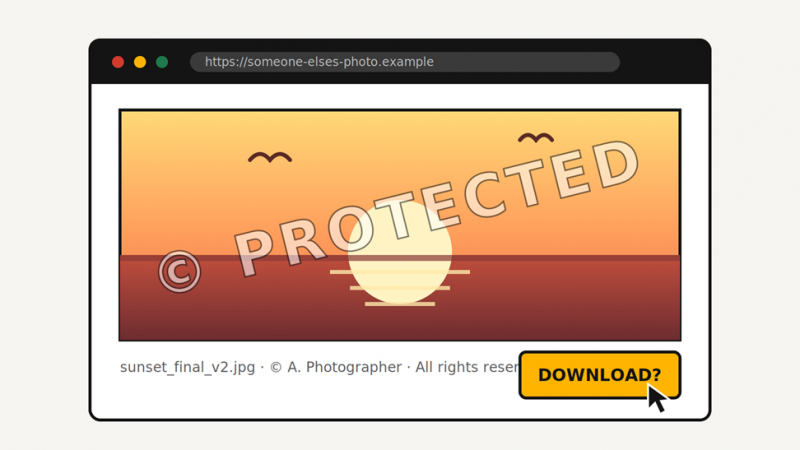 |
| Every frame has an author. Copyright attaches at the click of the shutter, with no registration or © symbol required. The button is easy; the license question comes first. (Original illustration.) |
THE LICENSE TYPES
PUBLIC DOMAIN & CC0
Public domain works have no copyright. Either it expired (in the U.S., works published before 1930 are now public domain) or the creator dedicated the work to the public using a tool like CC0. These are the safest images to use commercially, though beware: a public-domain photo can still contain a trademarked logo or a recognizable person (more on that below).
CREATIVE COMMONSREAD THE LETTERS
Creative Commons is not one license; it is a family of six, and the two-letter codes tell you exactly what is allowed:
CREATIVE COMMONS AT A GLANCE: COMMERCIAL SUITABILITY
| LICENSE | WHAT IT REQUIRES | COMMERCIAL USE? |
| CC0 | Nothing. Public domain dedication. | Yes |
| CC BY | Credit the creator as specified | Yes, with attribution |
| CC BY-SA | Credit + share adaptations under the same license | Yes, but SA can conflict with proprietary work |
| CC BY-ND | Credit + no derivatives (no crops, edits, overlays) | Yes, unmodified only |
| CC BY-NC | Credit + non-commercial only | No |
| CC BY-NC-SA / NC-ND | Credit + non-commercial + extra limits | No |
Attribution under CC is not optional garnish. Skipping it, or cropping out a required credit, terminates your rights under the license and turns your use into infringement.
ROYALTY-FREE (WHICH DOES NOT MEAN FREE)

The most misunderstood term in the industry. Royalty-free means you pay once and don't owe ongoing royalties per use; it says nothing about the price being zero. Standard RF licenses (Shutterstock, Adobe Stock, iStock) are non-exclusive and typically cap things like print runs or merchandise. Putting an image on products for resale (mugs, t-shirts, templates) usually requires an extended license.
RIGHTS-MANAGED AND EDITORIAL
Rights-managed licenses are priced per specific use (medium, region, duration, size) and can offer exclusivity. Editorial-only images cannot be used in advertising or promotion at all, because the people, brands, or property shown never consented to sell anything.
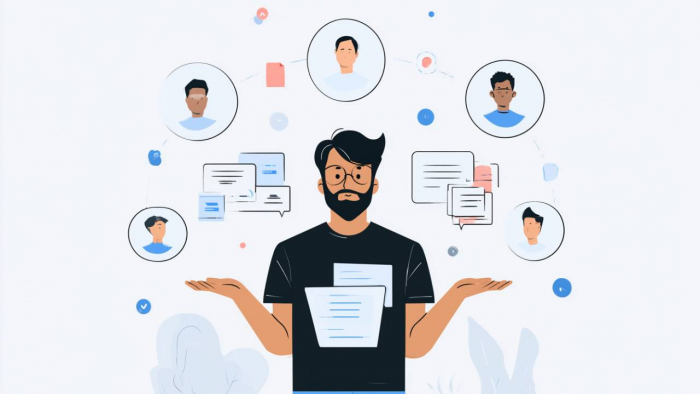
| FIG. 02 · THE PAPERWORK LICENSE = PERMISSION IN WRITING |
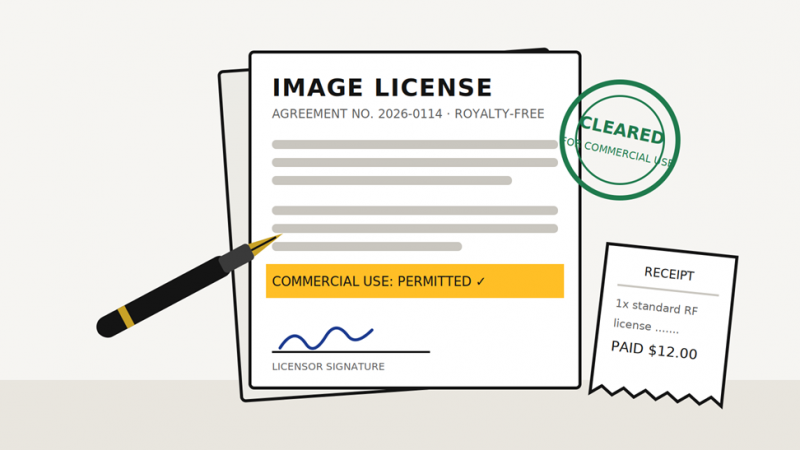 |
| A license is a contract. Save the receipt, the license text, and the download record. Proof of permission is your best insurance. (Original illustration.) |
TWO CAUTIONARY TALES FROM THE REAL WORLD
CASE FILE AGENCE FRANCE-PRESSE V. MOREL S.D.N.Y. · $1.2 MILLION After the 2010 Haiti earthquake, photojournalist Daniel Morel posted dramatic photos to Twitter. AFP lifted them and distributed them through Getty Images, arguing that posting to Twitter made them fair game. A federal jury disagreed, emphatically. It found the infringement willful and awarded Morel the statutory maximum: $1.2 million for eight photographs. The lesson generalizes: platform terms of service let the platform display your content. They do not hand third parties, including businesses, a license to reuse it. |
CASE FILE THE DEMAND-LETTER ECONOMY ONGOING · SMALL BUSINESSES ARE THE MAIN TARGET You don't have to be sued to pay. Agencies like Getty Images and specialized firms run reverse-image-search enforcement at scale, and small businesses routinely receive settlement demand letters, commonly in the high hundreds to several thousands of dollars per image, for photos a freelancer or an old agency dropped onto a webpage years earlier. Deleting the image stops future harm but does not erase past infringement. The cheapest moment to fix a licensing problem is before you publish. |
THE TRAP MOST PEOPLE MISS: RELEASES
A license clears the photographer's copyright. It does not clear everything inside the photo. For commercial use you may also need:
• A model release. Recognizable people have publicity and privacy rights. Using someone's face to promote a product without a release invites a separate legal claim, entirely apart from copyright.
• A property release. Some buildings, artworks, and interiors are protected; the Eiffel Tower's night-time lighting design, famously, is a copyrighted work in France.
• Trademark caution. Logos, branded products, and distinctive packaging visible in a photo can create trademark issues if your use implies endorsement.
Reputable stock agencies flag whether releases are on file. Free photo sites often don't, which is exactly why their terms tell you that using identifiable people or brands is at your own risk.
WORKED EXAMPLE: A CAFÉ LAUNCHES A PROMO The plan: Priya runs a coffee shop and wants a hero image for a paid Instagram campaign. She googles "latte art," finds a gorgeous shot on a barista's blog, and downloads it. What's wrong: the photo is automatically copyrighted by the barista; there is no license; a barista's face is visible (no model release); and a branded espresso machine logo sits in frame. That is one copyright problem, one publicity-rights problem, and a possible trademark problem, all in a single paid ad. The fix (10 minutes): she searches "latte art" on a free-stock site and checks its license page, or pays roughly $10 to $15 for a standard royalty-free image on a stock platform marked "model released." She screenshots the license terms, saves the receipt, and logs the image source in a spreadsheet. Same visual impact, zero exposure. |
“BUT WHAT ABOUT FAIR USE?”
Fair use (U.S.) and fair dealing (UK, Canada and others) are narrow, fact-specific defenses weighed on factors like purpose, amount used, and market harm. Commentary, criticism, news reporting, and education sometimes qualify. Decorating a commercial landing page almost never does; courts weigh commercial purpose and market substitution heavily against you. Treat fair use as something a lawyer argues after a dispute, not a green light before a download. And note that disclaimers ("no copyright infringement intended"), crediting the source, or using only a portion of an image do not, by themselves, make a use fair.
A QUICK WORD ON AI IMAGES
Two things are simultaneously true in 2026. First, the U.S. Copyright Office has repeatedly stated that material generated entirely by AI, without meaningful human authorship, is not copyrightable, which affects whether you can stop others from reusing your AI visuals. Second, the legal status of models trained on copyrighted images is still being fought out in court (Getty Images' litigation against Stability AI is the best-known example). If you use AI images commercially: check your generator's terms for commercial permission and indemnification, avoid prompting for living artists' styles or trademarked characters, and don't assume the output is "yours" in the way a licensed photo is.
WHERE TO SOURCE IMAGES SAFELY
FREE UNSPLASH · PEXELS · PIXABAY Broad free licenses that allow commercial use without attribution (credit is appreciated). You still cannot resell images as-is or use identifiable people and brands in sensitive or endorsement contexts. Read each site's license page; they differ. | FREE WIKIMEDIA COMMONS & MUSEUM ARCHIVES Millions of public-domain and CC works, but every file carries its own license. Check the file page, honor attribution, and watch for NC and SA terms. |
PAID STOCK AGENCIES Shutterstock, Adobe Stock, iStock, Getty. You pay for clear terms, model and property releases, and, on many plans, legal indemnification if a claim arises. For anything customer-facing, this is cheap insurance. | PAID COMMISSION IT Hiring a photographer gives you original, on-brand images. Just make sure the contract spells out what rights you get. By default the photographer keeps copyright; you receive a license unless the agreement says otherwise. |
| FIG. 03 · THE CLEARED SHOT LICENSED · RELEASED · LOGGED |
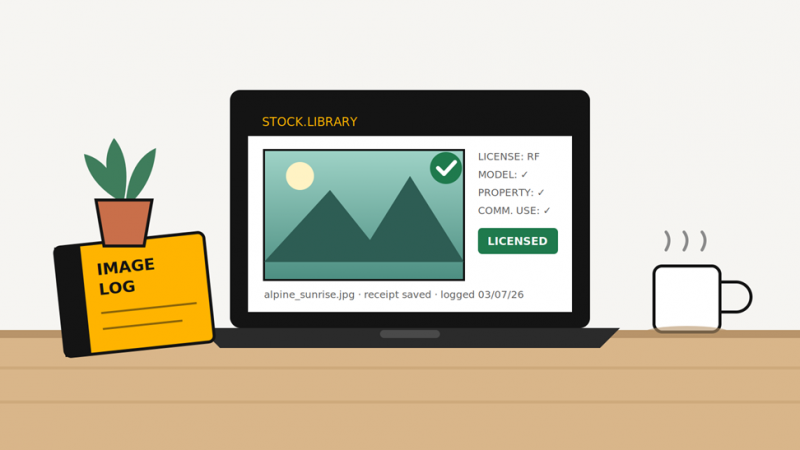 |
| What "safe" looks like: a documented license, releases on file, and a record of where the file came from. (Original illustration.) |
THE 60-SECOND PRE-DOWNLOAD CHECKLIST
| ☐ | IDENTIFY THE LICENSE Can you point to the exact license text or purchase receipt? "It was on Google Images" is a search result, not a license. |
| ☐ | CONFIRM COMMERCIAL USE IS ALLOWED Watch for "NC," "editorial use only," and "personal use" language. |
| ☐ | CHECK ATTRIBUTION & MODIFICATION RULES CC BY needs credit; ND forbids edits; SA obligates your adaptations. |
| ☐ | LOOK INSIDE THE FRAME Recognizable people need a model release. Logos, art, and distinctive property may need extra clearances. |
| ☐ | MATCH THE LICENSE TO THE USE Merch, templates, apps, or big print runs often need an extended license. |
| ☐ | KEEP RECORDS Save the URL, license text, date, and receipt in an image log. If a demand letter ever arrives, this file is your defense. |
THE BOTTOM LINE
Image licensing is not about memorizing statutes; it is a habit. Assume every image is copyrighted until proven otherwise, get the permission in writing, clear what is inside the frame as well as the frame itself, and keep receipts. Ten minutes of diligence before you hit download is the cheapest legal protection your brand will ever buy.
Post Comment
Share your thoughts about this article.
Be the first to post a comment!