Overview
Yoodli is an AI-powered communication coach that helps you practice real conversations such as job interviews, sales calls, leadership conversations, presentations and then gives you immediate, judgment-free feedback on how you spoke (not just what you said). In practice, it behaves like a “smart mirror” for speaking: you do a roleplay or record yourself, and it returns coaching insights you can actually act on.
Key features of Yoodli AI :
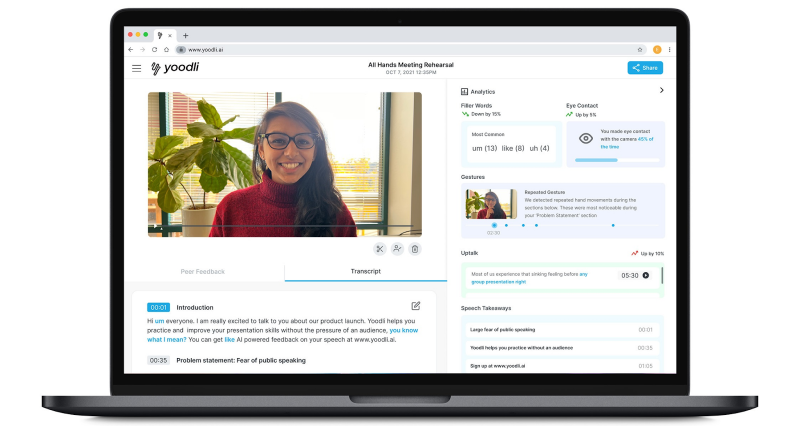
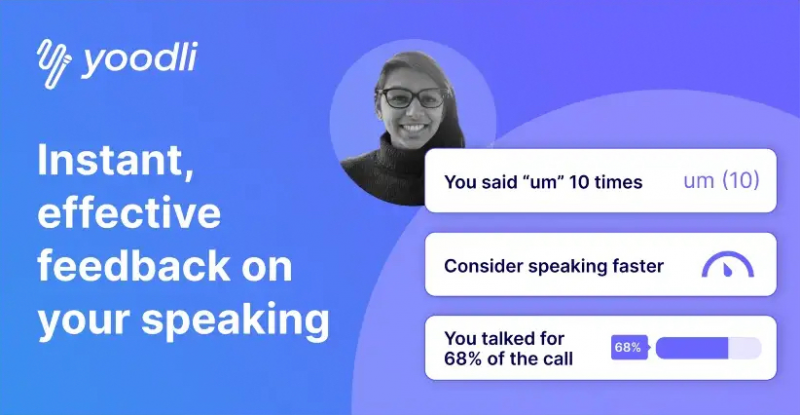
● Core coaching features : Yoodli uses AI to analyze your spoken or uploaded recordings and score things like filler words, speed, clarity, and confidence. It then shows simple reports and graphs so you can see exactly what to improve.
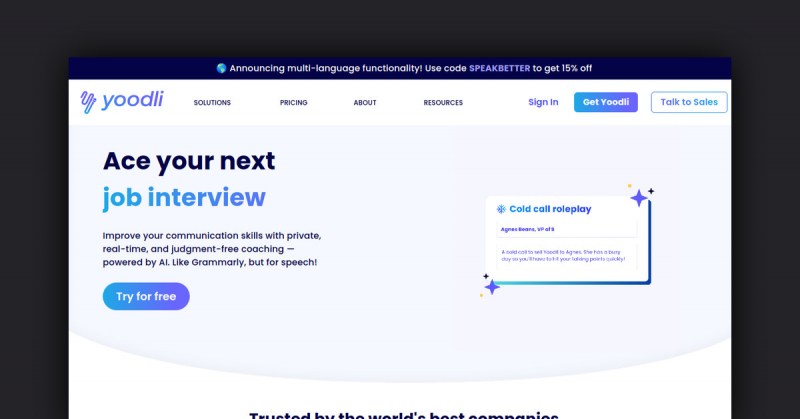
● AI roleplays and simulations : It offers AI roleplays where a virtual interviewer or customer talks back in real time, adapting to your answers. You can pick or design personas and scenarios (e.g., job interviews, pitches, tough customers) to practice different situations.
● Analytics and progress tracking : After each session, Yoodli gives you detailed analytics and progress tracking over time. You can see trends in your speaking metrics, plus structured “scorecards” or rubrics for self- or manager-led certification.
● Integrations and enterprise features : For teams, there are enterprise features like a roleplay builder, integrations, and standardized rubrics. Enablement or L&D leaders can set scenarios, measure performance across reps, and export reports for training or certification.
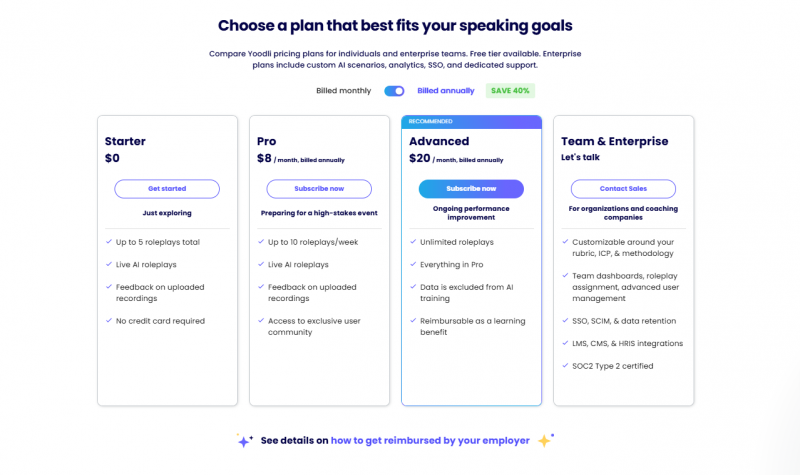
● User experience and accessibility : The experience is browser-based with a simple, guided interface suitable for non-technical users. A freemium-style setup lets individuals start free, while paid plans unlock more advanced analytics, roleplays, and team management.
Pricing Model
Ratings by other Platform
| Platform | Avg Rating | Reviews ( used) |
| G2 | ≈4.5/5 | Limited sample (public excerpts; underlying count likely dozens) |
| Leadr.co review | 4/5 editorial rating | 1 editorial review |
| AppCritica | ≈4.2/5 sentiment | 1 directory/review |
| Community (Reddit, Toastmasters threads) | text sentiment: mixed–negative on privacy | 2 main threads sampled |
| Futurepedia | ≈4/5 sentiment (pros > cons) | 1 directory-style entry |
Top Praises
● Real-time, objective feedback on speaking (filler words, pacing, clarity, word choice, tone).
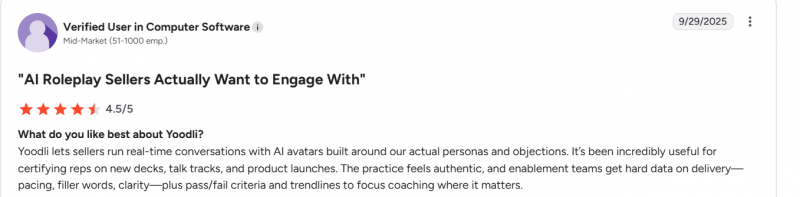
● Strong practice environment for public speaking, interviews, and presentations; users value being able to rehearse privately and repeatedly.
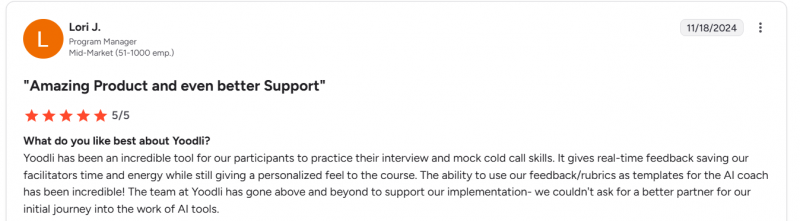
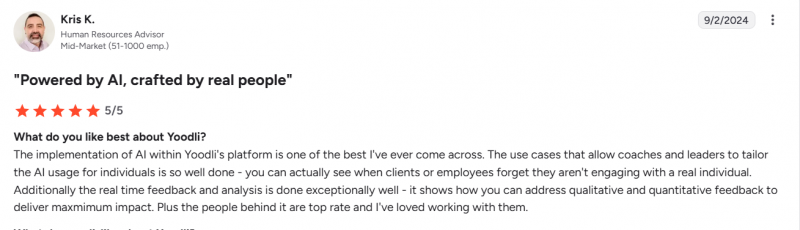
● User-friendly UX and low-friction onboarding mentioned in several reviews and overview listings.
● For sales enablement, some teams praise realistic AI avatars and data-driven certification on decks and talk tracks.
Top Complaints
● Privacy and data usage concerns, especially from Toastmasters community members worried about terms allowing reuse of content and training on member data.

● Occasional lag or response delay during AI roleplays, noted but often framed as tolerable.

● Limited depth for complex sales coaching: lacks objection-handling strategy, deal-stage context, CRM-based feedback, and enterprise-grade sales integrations, making it feel more stylistic than strategic.
● Internet dependence and initial adjustment to real-time feedback can be challenging for some users.
Sentiment distribution for Yoodli AI reviews:
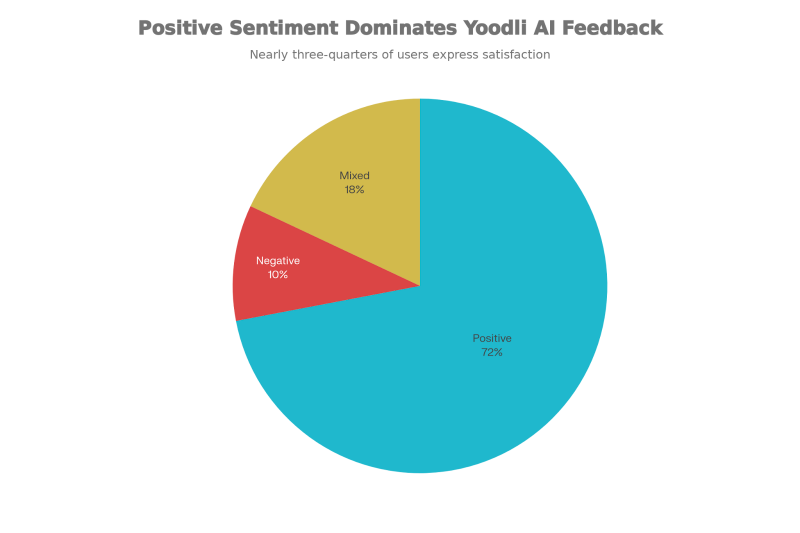
● Positive: 72% of mentions show clearly favorable feedback about value, features, or experience.
● Mixed: 18% are balanced takes that like the core coaching but note issues like lag, learning curve, or limited sales depth.
● Negative: 10% are mainly critical, often focused on privacy/data concerns or perceived mismatch with advanced sales needs.
Who Should / Shouldn’t Use Yoodli
Well-suited for
● Individuals practicing public speaking, interviews, pitches, or presentations who want granular, objective feedback on delivery (filler words, pace, clarity, confidence).
● Teams and educators seeking scalable, judgment-free practice environments with transcripts, scores, and trend analytics.
● Organizations needing lightweight AI roleplays for onboarding or communication training without deep CRM or revenue-system integration.
Less suited for
● Sales orgs that require advanced, revenue-aware coaching tied to pipeline stages, CRM outcomes, and conversation intelligence; such teams may outgrow Yoodli or pair it with more specialized sales-readiness tools.
● Users or institutions with strict data-governance expectations who are uncomfortable with AI training on speech data and need very tight, explicit content ownership guarantees; Toastmasters discussions highlight ongoing privacy unease.
● Scenarios with unreliable connectivity or users who dislike real-time interruption/feedback during practice, given the dependence on internet and some noted latency.
Yoodli AI Vs nearest alternatives
| Tool | Platforms | Key Features | Best For | Pricing Style |
| Yoodli AI | Web, desktop; some integrations | AI roleplays, filler-word and pace analysis, detailed reports, team workflows | Individuals + teams wanting structured practice and analytics | Freemium; paid plans for advanced/team features |
| Orai | Mobile (iOS, Android) | Bite-sized lessons, practice exercises, AI feedback on pace, fillers, energy, clarity | Learners wanting guided, course-like speaking improvement | Subscription app; free trial/common freemium |
| Speeko | Mobile (iOS, Android) | Real-time analysis of pace, tone, fillers; scenario-based practice (interviews, meetings) | Users who want a “phone-based coach” for daily practice | Freemium + in-app subscriptions |
| Poised | Desktop app, browser assistant | Real-time feedback during Zoom/Teams/Meet calls (clarity, confidence, pace, talk time) | Professionals spending many hours in virtual meetings | Free tier plus paid Pro/Team plans |
| GetMee | Mobile, web (varies by region) | Focus on pronunciation, vocabulary, fluency, confidence for non-native speakers | Non‑native English speakers improving fluency and impact | SaaS-style; personal and enterprise options |
Final Conclusion
Yoodli AI functions less as a motivational tool and more as an analytical aid for understanding how one communicates. Its value lies in breaking spoken responses into measurable elements such as pacing, word choice, pauses, and structure allowing users to identify patterns they might otherwise overlook. Rather than prescribing a single “correct” way to speak, it highlights tendencies and leaves room for individual style and context. This makes Yoodli particularly useful for reflective practice, where improvement comes from awareness and repeated adjustment. Overall, Yoodli AI serves as a practical resource for examining and refining communication through data-driven feedback rather than subjective judgment.
Post Comment
Be the first to post comment!