Table of Content
- What Type of Website Techexample.org Actually Is
- Content Structure: How Articles on Techexample.org Are Typically Written
- Topic Choice Patterns: What the Website Prioritizes
- Why Techexample.org Appears Across So Many Different Search Results
- Editorial Signals: What the Site Shows & What It Does Not
- Content Reliability: What Users Should Realistically Expect
- User Experience: What You Actually Encounter While Browsing
- Conclusion
Techexample.org appears regularly in search results across basic tech queries, cloud concepts, trending topics, gaming questions, and simplified explainers.
But beyond the homepage, many users still wonder:
- What kind of site is this?
- How does it operate?
- What patterns does the content follow?
- Why does it appear for unrelated keywords?
- What can you realistically expect from it?
This blog provides a clear assessment of Techexample.org based on its structure, content style, SEO patterns, and user-facing behavior.
What Type of Website Techexample.org Actually Is
Techexample.org functions as a general informational blog, not a specialized tech publication.
It publishes content across multiple categories:
- General technology
- Cloud basics
- AI introductions
- Gaming and entertainment
- Productivity
- Miscellaneous digital topics
It does NOT behave like:
- a news website
- a research platform
- a premium tech publication
- a specialized niche authority
Its overall approach is broad, not focused.
Content Structure: How Articles on Techexample.org Are Typically Written
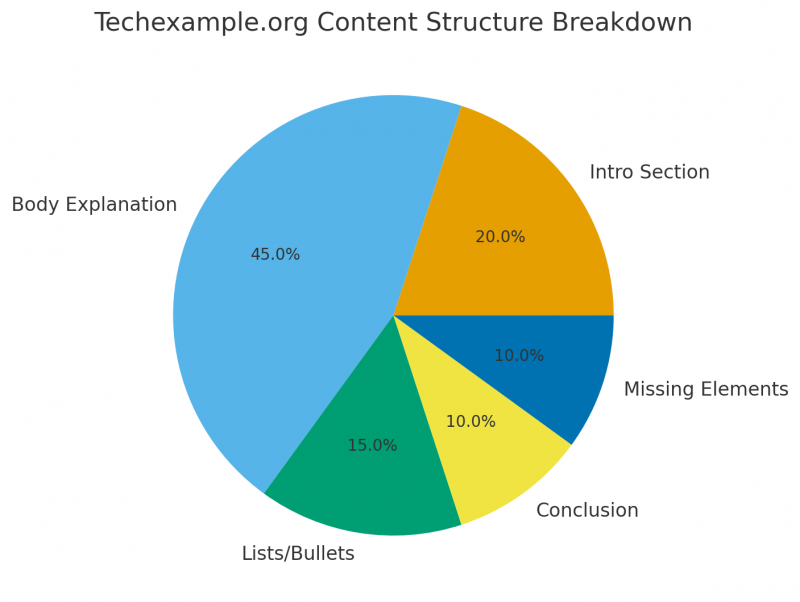
A close reading of multiple posts shows a very consistent pattern:
Predictable Intro Format
Most articles begin with a broad, generic introduction to the topic.
Middle Section with Simplified Explanations
Points are broken down into:
- basic definitions
- high-level descriptions
- short paragraphs
No Expert Commentary
The writing lacks:
- technical depth
- engineering insights
- coding examples
- factual citations
Template-Like Ending
Most posts conclude with a simple summary, often repeating earlier points.
This shows Techexample.org is built for readability, not depth.
Topic Choice Patterns: What the Website Prioritizes
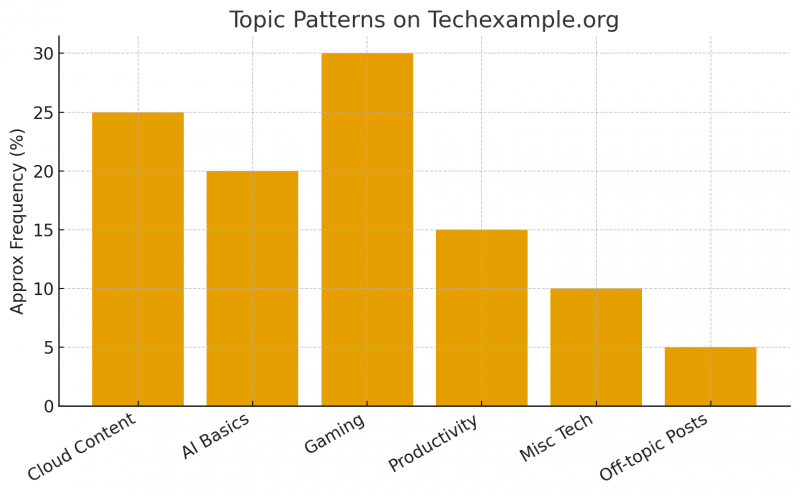
Techexample.org posts show clear patterns:
High search-volume terms
(e.g., cloud, AI basics, gaming terms)
Evergreen content
(e.g., “What is X?”, “How does Y work?”)
Beginner-oriented digital topics
(simple definitions, conceptual introductions)
Broad content categories
(not tightly niche)
- No step-by-step tutorials
- No advanced tech breakdowns
- No subject-matter expertise
- No technical case studies
It appears to be optimized for wide keyword coverage, not specialized excellence.
Why Techexample.org Appears Across So Many Different Search Results
Even though the site isn’t deeply authoritative, it shows up frequently because:
It covers many beginner queries
Google often ranks simple explainers for top-of-funnel searches.
It produces consistent content
Regular publishing signals search engines to crawl more often.
Articles are readable
Short sentences + zero jargon = high readability score.
It doesn’t trigger negative SEO signals
The site avoids:
- black-hat methods
- spam behavior
- harmful redirects
This keeps it safely indexed.
Its content is broad
The broader the content, the wider the long-tail keyword reach.
This explains its presence across unrelated SERPs.
Audience Profile
Based on tone, topics, and depth, the site clearly aims at:
- Beginners exploring technology
- Students needing simple breakdowns
- Readers looking for high-level explanations
- People who prefer short, easy-to-read content
Techexample.org is NOT designed for:
- Developers
- Engineers
- Researchers
- Professionals needing reliable sources
- Anyone needing verified, technical accuracy
It is essentially a basic information website for casual readers.
Editorial Signals: What the Site Shows & What It Does Not
Here is a breakdown of its editorial signals:
What the Site Shows
- consistent article formatting
- structured paragraphs
- readable English
- category-based organization
- working internal navigation
What the Site Does NOT Show
- author names
- credentials
- editorial review process
- citations or official references
- detailed learning material
- expert contributions
This makes it a generic information hub rather than an expert-backed platform.
Content Reliability: What Users Should Realistically Expect
Users should approach the content with the following expectations:
- You will get basic, easy-to-understand explanations.
- You will not get deeply researched or cited content.
- You will get general overviews, not detailed guides.
- You may find unrelated topics grouped together.
- You will not find expert-level insights or advanced tech analysis.
The content serves as a quick-start reference, not a trusted technical resource.
Why the Website Has Mixed Topic Categories
Many visitors notice the presence of posts that feel unrelated — especially gaming, trending culture, and sometimes borderline irrelevant topics.
This usually indicates:
- multi-writer contributions
- SEO-targeted content expansion
- outsourced writing
- content farming patterns
- quantity over niche specialization
This is a common approach for websites aiming for wide search engine presence.
User Experience: What You Actually Encounter While Browsing
A neutral UX analysis reveals:
- The site loads normally
- No heavy ads or disruptive pop-ups
- Mobile experience is clear
- Articles open quickly
- Navigation is simple
However:
- There is no sense of identity
- Pages lack contextual linking
- No deep content hubs or knowledge clusters
- No reader engagement tools
The UX is functional but not deeply structured.
Overall Takeaway: What Techexample.org “Really” Is
Techexample.org is:
- A broad, beginner-friendly information site
- Focused on simplified explanations
- Operating with minimal editorial identity
- Built to attract search traffic through wide topic coverage
- Not a specialized or expert-led tech publication
It provides basic information, but should not be treated as a definitive source for technical subjects.
Conclusion
Techexample.org functions more like a general-purpose digital knowledge blog than a true tech authority. Its content is accessible, readable, and safe to browse, but it does not offer depth, transparency, or expert-driven insights.
For casual learning, it works.
For serious technical understanding, it needs to be supplemented with more credible sources.
Post Comment
Be the first to post comment!