Table of Content
Bridge abutments bear the ends of a bridge span and transfer loads to the ground. There are many different types used for different site conditions and structural needs. Using an appropriate abutment guarantees safety, service life, and a low-cost solution for bridge structures. Being aware of these options can guide engineers and designers towards making an informed decision for their project.
8 Most Common Types of Bridge Abutments
Bridge abutments are structural supports located at the ends of a bridge to provide stability. Written below are the top 8 types of it and their use cases for deeper understanding.
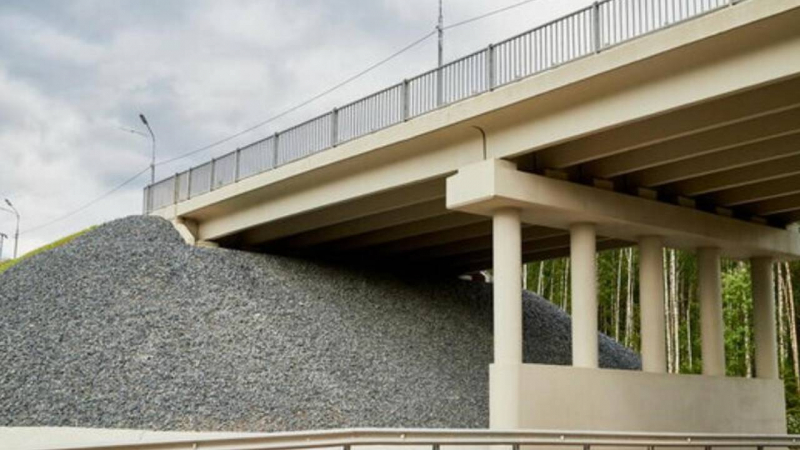
1. Gravity Abutments
A gravity abutment depends on its massive weight to counteract the horizontal forces from the earth behind it and the bridge itself. This style is most frequently built from stone or concrete. For sites that have strong soils and limited available space, engineers often prefer the use of gravity abutments. They are easy to design and are capable of being used in small bridges or in places where heavy equipment cannot access.
2. U-Abutments
Also known as U-shaped abutments, these boast an efficient configuration to withstand earth pressure. The arms of the U reach back into the soil they are able to retain, making them more stable. They commonly utilize reinforced concrete, and they do well wherever space can be afforded to extend the arms to the rear. Medium-span bridges and locations with a high need for resistance to soil movement typically use U-abutments.
3. Cantilever Abutments
A cantilever abutment features a vertical wall that is supported by a base slab that functions to provide a lever arm to balance earth pressure. For these types of buildings, reinforced concrete offers the strength they need. They are ideal for places where the soil is stable and the heights are moderate, as the forces can easily bring the entire span to the ground beside it. Their design allows them to withstand very large forces without relying on mass, so they can be thin.
4. Stub Abutments
Stub abutments, or short abutments, are generally quite compact and bear on piles or spread footings. They are modified so that these kinds of types not only support the bridge deck but also act as the main earth-retaining function for adjacent embankments and retaining walls. Stub abutments are ideal for cases with soft soils in-depth since the loads are transferred using piles to the strong ground deeper down. They occupy a smaller physical footprint, resulting in a reduced impact on the environment.
5. Pile Abutments
In contrast, pile abutments are supported at their ends by long, thin columns driven deep into the ground. The piles penetrate fragile surface layers, then hit sound soil or rock below. The pile abutment is suitable for flood areas or soft ground conditions where shallow foundations provide the required support. These provide flexibility and the ability to adapt to many soil profiles.
6. Integral Abutments
An integral abutment attaches directly to the bridge superstructure such that no expansion joints exist between the bridge and the abutment. Because of temperature change or traffic loads, movement will take place; however, this design will decrease maintenance requirements. For spans that do not exceed thermal movement, shorter spans are used with integral abutments. Because the design is so simple, it helps keep repair costs down over the long term.
7. Semi-Integral Abutments
Semi-integral abutments exhibit the characteristics of both integral and conventional abutments. Flexibility allows a little movement of the bridge whilst still supporting the ends of the structure. Semi-integral abutments are ideal among engineers for bridges that need some range of motion, like expansion and contraction joint bridges but still sport a more traditional design. This also helps the designers achieve architectural goals by allowing forces to be diverted away from certain areas through these structures.
8. Box Abutments
Box abutments have a hollow rectangular structure to maintain strength but use less material than solid designs. Its hollow center lightens the load and gives way for utilities or drainage. Box abutments are typically used for railway bridges or where weight needs to be minimized. Because of their economical use of materials, they have become a favorite of many modern projects.
Uses and Considerations
Different types of abutments cater to different site conditions and project requirements. Selection varies based on soil type, span length, environmental factors, and load requirements. Every abutment design would still need proper drainage and waterproofing to avoid water infiltration damage. In fact, periodic inspection and maintenance prolong the service life of these structural bridge elements.
Conclusion
Bridge abutments are critical components of bridge structures that support the ends of the bridge while also providing lateral support to the bridge structure. Choosing the proper type requires consideration of site conditions, loading needs, and durability. By gaining insight into the benefits and drawbacks of each design, it is possible to design safer and stronger bridges for communities around the globe.
Post Comment
Be the first to post comment!