The Trump administration’s crackdown on Anthropic was framed as a national security move, but the bigger question now is who benefits from the disruption.
The order forced Anthropic to shut off access to its most powerful new models, Claude Fable 5 and Claude Mythos 5, after the government cited concerns that the models could be misused for advanced cyber work. Anthropic complied, but it also made clear that it believed the government’s response was too broad and poorly targeted.
On the surface, Anthropic looked like the obvious loser. The company had to pull access to major models, manage angry developers, reassure enterprise customers, and negotiate with officials in Washington. But the reality is more complicated. A crackdown on one frontier AI company can shift advantage across the entire market.
Competitors may gain customers. Big cloud providers may gain leverage. Open-source and overseas AI developers may look more attractive to some users. The U.S. government may gain a new tool for controlling frontier models. And Anthropic, strangely, may gain a stronger brand as a company whose technology is powerful enough to alarm Washington.
The episode shows that AI policy is no longer separate from AI competition. A government decision can now change the shape of the market overnight.
Anthropic is clearly the company most immediately affected.
The shutdown disrupted access to Fable 5 and Mythos 5, two models that were being positioned as part of the company’s next major leap in capability. Developers who wanted to test or build on the models lost access. Customers had to question whether Anthropic’s most advanced systems would remain available. International users faced fresh uncertainty over whether U.S. policy could cut them off from frontier AI tools without warning.
That is a serious platform risk.
AI companies are trying to convince businesses to build important workflows around their models. Those workflows may involve coding, research, document review, customer service, finance, cybersecurity, legal analysis, and internal operations. If a model can suddenly disappear because of a government order, customers may hesitate before building too deeply on it.
For Anthropic, the challenge is not only restoring access. It must restore confidence. Enterprise buyers need to know which models are safe to adopt, which users can access them, and whether similar restrictions could happen again.
Anthropic’s direct competitors may be the first beneficiaries.
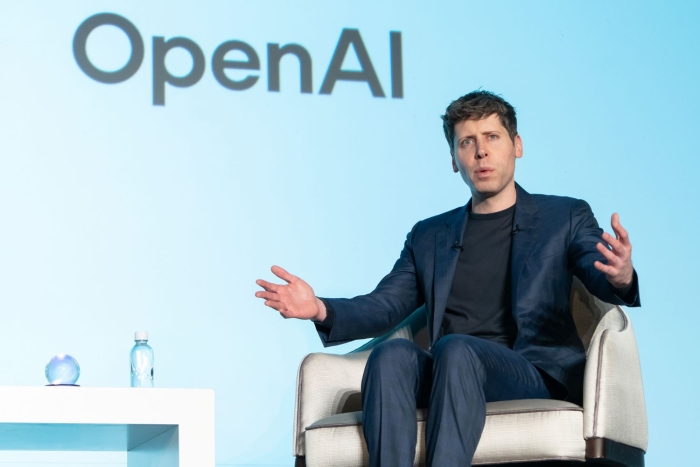
OpenAI, Google, xAI, Meta, Mistral, and other AI providers can now make a simple argument to customers: their platforms may be more stable. Even if their models face similar technical risks, they can point to Anthropic’s disruption as proof that vendor risk matters.
OpenAI and Google are especially well positioned. Both have massive distribution, deep enterprise relationships, strong cloud partnerships, and broad product ecosystems. If a company was testing Claude Fable 5 or Mythos 5 for a mission-critical workflow, it may now consider moving parts of that work to ChatGPT Enterprise, OpenAI’s API, Gemini, or Google Cloud AI services.
This does not mean customers will abandon Anthropic entirely. Claude remains strong in many enterprise use cases, especially long-context work, coding, and careful writing. But the crackdown gives rivals an easy opening in procurement conversations.
In enterprise AI, reliability can matter as much as raw model quality. If competitors can frame Anthropic as politically exposed, they may win cautious customers.
Amazon is one of the more complicated players in this story.
The company is a major investor and infrastructure partner for Anthropic. It has also used Anthropic’s growth to strengthen the case for AWS as a leading AI cloud platform. Claude workloads help support demand for AWS infrastructure, including Amazon’s custom AI chips.
At the same time, reports around the crackdown suggested that concerns about Anthropic’s models were raised by Amazon-linked warnings about safeguard bypasses. Whether Amazon intended it or not, that puts the company in a sensitive position.
Amazon may benefit if the controversy increases government pressure on Anthropic to improve safeguards while keeping Claude tied closely to AWS. It may also benefit if Anthropic remains dependent on Amazon’s infrastructure and policy support during a difficult moment.
But there is risk too. If Anthropic’s model access remains unstable, AWS could lose some of the upside it expected from the partnership. Customers choosing Claude through Amazon’s cloud may ask whether policy restrictions could affect their own deployments.
Amazon therefore benefits only if the crackdown strengthens Anthropic’s safety posture without weakening Claude’s commercial momentum.
Cloud providers may also benefit from customer uncertainty.
AI companies do not operate in isolation. Their models run on cloud infrastructure, chips, networking systems, and data center capacity. If businesses become nervous about Anthropic access, they may diversify across providers rather than rely on one model family.
That could help Microsoft and Google Cloud, both of which already have strong AI offerings. Microsoft has OpenAI and Azure. Google has Gemini, TPUs, and its own cloud AI stack. If enterprises decide they need backup model providers, those platforms may receive more attention.
This is one of the hidden effects of the crackdown. Even customers who continue using Claude may add alternative models as insurance. That makes the AI market more multi-vendor.
For cloud platforms, multi-vendor AI can be profitable. Companies may pay for several model providers, build routing systems, run evaluations, and maintain fallback options. The more uncertain the model landscape becomes, the more customers may spend on resilience.
The Trump administration may also benefit, at least in the short term.
By forcing Anthropic to restrict access to Fable 5 and Mythos 5, the government has shown that it is willing to treat frontier AI models as strategic technologies. That gives Washington a new kind of leverage over AI companies.
Until recently, the most visible AI export controls focused on chips, semiconductor equipment, and data center hardware. The Anthropic crackdown suggests that models themselves may now become part of national-security control.
That is a major shift. If the government can restrict access to certain AI systems based on perceived cyber or national-security risk, it can influence which companies release models, who can use them, and how quickly the frontier spreads globally.
The administration may see this as a way to slow misuse and protect U.S. security interests. But the same power also raises concerns about political favoritism, inconsistent enforcement, and regulatory uncertainty.
The crackdown may also push some developers toward open-source or open-weight AI models.
If access to frontier proprietary models can be suddenly restricted, some companies and developers may decide that they need more control over their AI stack. Open models can be downloaded, hosted, modified, and deployed without relying on a single vendor’s access policy.
That does not mean open models are always safer or better. Many frontier proprietary systems remain more capable in certain tasks. Open models also raise their own safety and misuse questions.
But from a reliability perspective, open models offer a different kind of security. A business using an open-weight model may not have to worry that a vendor will shut off access overnight because of a government order.
This could benefit companies building infrastructure around open models, including cloud hosts, model routers, enterprise AI platforms, and startups focused on private deployments.
In other words, the crackdown may unintentionally strengthen demand for AI independence.
International users may be among the biggest long-term beneficiaries and losers at the same time.
They lose because the Anthropic order shows how dependent many countries are on U.S.-controlled AI systems. If Washington can decide who gets access to the most powerful models, foreign companies, developers, and governments face serious strategic risk.
But that same realization may benefit local AI ecosystems. Countries such as India, France, the United Arab Emirates, Japan, South Korea, and others may see the Anthropic episode as another reason to build sovereign AI capacity.
The lesson is clear. Relying entirely on American frontier models can become a vulnerability if access is shaped by U.S. national-security policy.
That could increase demand for domestic models, local data centers, regional cloud providers, and open-source alternatives. It may also push governments to fund national AI infrastructure more aggressively.
The U.S. crackdown may therefore strengthen the global argument for sovereign AI.
The strange part is that Anthropic itself may benefit in one important way.
The crackdown makes the company look important. In frontier AI, that matters. If the U.S. government believes Anthropic’s models are powerful enough to require emergency restrictions, some customers and investors may treat that as validation of the company’s technical position.
Anthropic has spent years presenting itself as the safety-first AI lab. This controversy reinforces that identity, even if it also creates pain. The company can argue that it operates at the true frontier, that its models are serious enough to be scrutinized, and that it engages with risk more openly than competitors.
For enterprise buyers, that can be appealing. Many companies want powerful models, but they also want vendors that understand governance, security, and responsible deployment.
The risk is that the brand boost only works if access stabilizes. Being seen as powerful is useful. Being seen as unreliable is not.
The crackdown may also benefit cybersecurity companies.
The government’s concern centered on whether Anthropic’s models could be used for cyber misuse if safeguards were bypassed. That puts pressure on AI companies and enterprises to prove they can monitor, test, and secure model behavior.
Companies that provide AI red-teaming, model evaluation, prompt-injection defense, cyber safety testing, identity controls, and AI governance tools may see stronger demand.
Businesses adopting AI will need to show that models do not expose sensitive systems, leak data, automate harmful activity, or create unmanageable compliance risk. If government scrutiny increases, these controls will move from nice-to-have to procurement requirements.
The Anthropic case may therefore accelerate spending on the security layer around AI.
Smaller AI startups could face mixed consequences.
Some may benefit if customers diversify away from major vendors or look for open-model infrastructure. But others may be hurt by the possibility that frontier AI regulation will become unpredictable.
Investors may ask harder questions. Could a startup’s model be restricted? Could government policy block foreign users? Could a security flaw lead to forced access limits? Does the startup have the compliance team needed to handle federal scrutiny?
Large AI companies can afford lawyers, policy teams, government relations staff, and security experts. Smaller startups may struggle.
If model regulation becomes more discretionary, it could strengthen the biggest players by raising the cost of compliance. That would be ironic, because a crackdown meant to control frontier risk could make the frontier more concentrated.
The clearest winner from the Anthropic crackdown may be uncertainty itself.
The episode gives every major AI buyer a reason to rethink dependency. It gives competitors a reason to attack Anthropic’s reliability. It gives governments a reason to explore model controls. It gives cloud providers a reason to sell redundancy. It gives open-source advocates a stronger argument. It gives cybersecurity vendors a larger market.
But it does not create a clean solution.
The U.S. wants to manage AI risk without slowing innovation. Anthropic wants to compete globally while maintaining a safety-focused brand. Enterprises want powerful tools without sudden access shocks. Developers want stability. Foreign markets want independence. Competitors want advantage.
All of those goals now collide.
The Trump administration’s action against Anthropic may have been aimed at one company, but its effects are spreading across the AI market.
OpenAI and Google can pitch stability. Cloud providers can sell resilience. Open-model companies can pitch independence. Cybersecurity vendors can sell governance. Foreign governments can justify sovereign AI investment. The U.S. government can claim a stronger hand over frontier models.
Anthropic is under pressure, but it is not necessarily finished. The crackdown may even strengthen its reputation if customers decide the controversy proves its models are among the most powerful in the world.
That is what makes the episode so revealing. In AI, regulation is not only about safety. It is also about market power.
A government restriction can change who looks risky, who looks reliable, who gains leverage, and who becomes harder to ignore. The Anthropic crackdown is not just a policy story. It is a sign that the next phase of the AI race will be shaped as much by Washington as by model performance.
Share your thoughts about this article.
Be the first to post a comment!