AI video technology has evolved far beyond early experimentation. In 2026, these platforms are no longer niche creative toys. They are becoming core production infrastructure used by creators, marketing departments, educators, agencies, and even film production teams.
What makes the current landscape compelling is specialization. Some tools are engineered for cinematic realism. Others focus on avatar-led business communication. A separate category prioritizes speed and short-form social content.
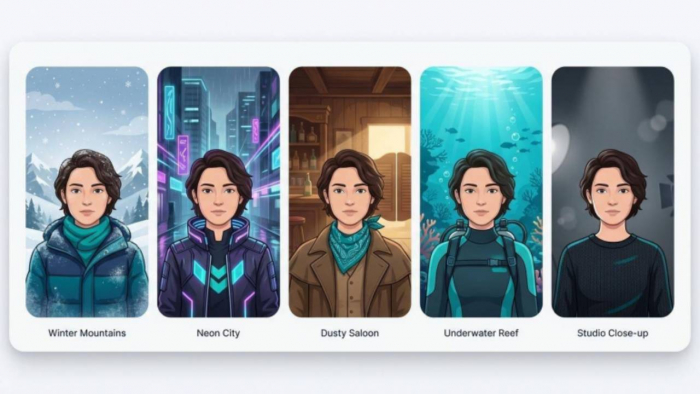
Independent testing across the industry shows that today’s AI video systems can maintain motion coherence, preserve character consistency across frames, and significantly compress production timelines compared to traditional video workflows.
Below is a detailed breakdown of ten of the most capable AI video generation tools available right now, helping you determine which platform aligns with your needs.
1. Runway

Runway remains one of the leaders in high-end creative AI video. It is widely recognized for advanced text-to-video generation and cinematic experimentation. Unlike template-based tools, Runway offers granular control over camera movement, motion dynamics, and overall visual tone.
Its flexibility is one of its strongest advantages. Creators use it not only to generate new scenes from prompts but also to modify existing footage, extend sequences, and prototype visual ideas. Features like motion brushes and scene-level control allow users to guide movement within specific parts of a frame — something simpler platforms still struggle to execute reliably.
Runway is ideal for users seeking creative autonomy rather than rapid marketing outputs. There is a learning curve, but the results can be significantly more cinematic.
Best suited for: filmmakers, production studios, advanced AI video creators.
Performance overview:
Visual realism: 9.5/10
Creative control: 10/10
Ease of use: 8/10
Speed: 9/10
2. Synthesia
Synthesia leads the avatar-based video category. Instead of cinematic scene creation, it focuses on transforming scripts into professional presenter-style videos powered by AI avatars.
This makes it especially popular in enterprise settings. Organizations use Synthesia for training programs, onboarding materials, product walkthroughs, and multilingual announcements. The main advantage is repeatability. Businesses can produce consistent, branded video content without filming equipment or actors.
Its ease of use makes it accessible to non-technical teams across HR, marketing, and operations. However, it is not built for narrative filmmaking.
Best suited for: corporate training, internal communications, structured business explainers.
Performance overview:
Avatar realism: 10/10
Business usability: 10/10
Creative scene capability: 7/10
Ease of use: 9.5/10
3. Pika

Pika has become popular among creators who prioritize speed and short-form content. The platform excels at quickly generating dynamic clips suited for social platforms like TikTok and Instagram.
Its standout strength is iteration velocity. Users can experiment with multiple ideas rapidly without waiting for extended rendering times. Reviews frequently highlight Pika’s efficiency in producing visually engaging short clips optimized for online engagement.
It is less appropriate for long-form storytelling or controlled cinematic production.
Best suited for: social media creators, fast prototyping, short-form experimentation.
Performance overview:
Generation speed: 10/10
Style adaptability: 9/10
Long-form capacity: 7/10
Ease of use: 8.5/10
4. HeyGen
HeyGen occupies a similar category to Synthesia but leans more toward marketing and personalization use cases. It specializes in realistic talking avatars and scalable multilingual production.
Its strongest feature is localization. Businesses can generate the same message in multiple languages with synchronized lip movements, reducing the cost of international campaigns.
HeyGen focuses on structured communication rather than cinematic scene creation.
Best suited for: marketing campaigns, multilingual messaging, personalized outreach.
Performance overview:
Avatar quality: 9/10
Localization strength: 10/10
Ease of use: 9/10
Enterprise readiness: 8.5/10
5. Luma Dream Machine
Luma’s Dream Machine has gained attention for delivering visually striking text-to-video results. It emphasizes realism, fluid motion, and cinematic presentation.
Recent updates have enhanced physics modeling and visual coherence, enabling users to generate impressive short clips even without filmmaking expertise. It is particularly effective for B-roll creation, concept testing, and stylized creative visuals.
Clip duration remains relatively short, but for high-impact visuals, it performs strongly.
Best suited for: cinematic short sequences and visual concept exploration.
Performance overview:
Visual quality: 9.5/10
Motion realism: 9/10
Creative flexibility: 9/10
Ease of use: 8/10
6. Kling AI
Kling has established itself as a realism-focused model with strengths in human motion and physical simulation. Producing natural movement has historically been one of the hardest challenges in AI video, and Kling shows notable progress in this area.
It performs particularly well in scenes involving people, dynamic environments, and elements like water or fire. Evaluations highlight improvements in lighting, sharpness, and motion stability compared to earlier models.
Kling continues to evolve, but it is increasingly seen as a serious contender in high-fidelity AI video generation.
Best suited for: realistic human movement and physics-driven scenes.
Performance overview:
Motion realism: 10/10
Prompt alignment: 9/10
Style range: 8/10
Speed: 8/10
7. InVideo AI
InVideo AI is less focused on cinematic generation and more on practical content workflows. It helps users convert scripts or ideas into ready-to-publish videos using templates, stock media, and automated editing systems.
This makes it appealing for marketers, YouTube automation creators, and small businesses prioritizing output volume over artistic depth.
Its primary advantage is operational efficiency rather than creative complexity.
Best suited for: marketing teams, social media managers, YouTube automation.
Performance overview:
Marketing workflow strength: 10/10
Template range: 9/10
Creative depth: 7/10
Ease of use: 9.5/10
8. Pictory
Pictory specializes in transforming existing content into video rather than generating entirely new scenes. It converts blog posts, webinars, scripts, and long-form recordings into short, polished clips.
For content marketers, this creates leverage. Instead of building videos from scratch, teams can repurpose their content library into multiple formats.
It is particularly useful for educational channels and blog-driven marketing strategies.
Best suited for: blog-to-video workflows, content repurposing.
Performance overview:
Repurposing capability: 10/10
Automation level: 9/10
Ease of use: 9/10
Creative generation: 7/10
9. Descript
Descript approaches video from an editing perspective rather than pure generation. Its key feature is transcript-based editing, allowing users to modify video simply by editing text.
This drastically shortens post-production workflows for podcasters, educators, and recorded content creators. It also includes AI voice tools and screen capture functionality.
While not a cinematic generator, it is one of the most efficient AI-enhanced editing tools available.
Best suited for: podcast video editing, educational content, streamlined post-production.
Performance overview:
Editing capability: 10/10
Workflow efficiency: 10/10
Ease of use: 9/10
Generation focus: 7/10
10. Google Veo
Google Veo represents the high-end frontier of AI video development. Early assessments highlight strong adherence to prompts, detailed visuals, and sophisticated multimodal reasoning.
It is positioned to compete in top-tier cinematic generation. Veo demonstrates particular strength in handling complex camera instructions and structured scenes.
However, accessibility and maturity are still developing compared to more established commercial tools.
Best suited for: advanced experimental video generation.
Performance overview:
Prompt precision: 9.5/10
Visual realism: 9.5/10
Creative flexibility: 9/10
Platform maturity: 7.5/10
Closing Perspective
The AI video ecosystem in 2026 is defined by specialization rather than dominance. No single platform leads across every category.
Many experienced creators combine multiple tools:
- Runway or Luma for cinematic visuals
- Synthesia or HeyGen for business-facing video
- InVideo or Pictory for scalable marketing output
This multi-platform strategy is becoming a competitive advantage. Rather than relying on one system, creators are building production stacks that balance cinematic quality, operational efficiency, and scalable communication.
AI video is no longer a novelty. It is becoming a production accelerator.
And the smartest approach is not asking which tool is best overall — but which combination best supports your creative and operational goals.
Post Comment
Be the first to post comment!