I’ll be honest, when I first heard about Suno AI, I expected one of those AI music tools that spits out robotic noise and calls it a “song.” You know the type: impressive in theory, painful in practice. So when I typed my first prompt into Suno, I wasn’t expecting much beyond a quick experiment and a good laugh.
Instead, I got something… listenable. Not chart-topping, not studio-perfect, but structured, melodic, and surprisingly coherent. That’s when I realized Suno AI isn’t trying to replace musicians. It’s trying to lower the barrier between having an idea and hearing it come alive.
The experience felt less like using software and more like collaborating with a very eager, slightly unpredictable creative partner.
Suno AI in Simple Terms: Why Everyone Suddenly Wants to Make Music
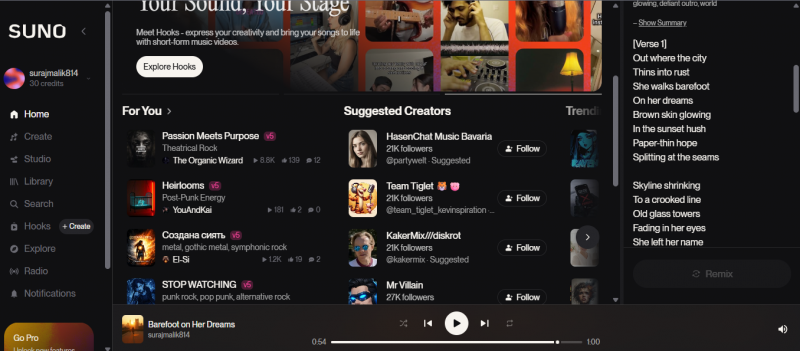
Suno AI is a text-to-music generation platform that lets you create full songs, vocals, melody, and lyrics, just by describing what you want.
I type something like :
“ he dances barefoot where the wildflowers lean, sunlight painting stories on her skin unseen. The city hums far beyond her hill, but her heart beats louder , untamed, still.” and within moments, you’re listening to a complete track.
You don’t need instruments. You don’t even need lyrics if you don’t want to write them yourself. Suno handles most of the creative heavy lifting, which is both exciting and slightly intimidating at the same time.
Here is the lyrics i got from the above prompt:
[Verse 1]
Out where the city
Thins into rust
She kicks up gravel
And old August dust
Bare feet racing
The ghost of the bus
Brown skin glowing
Like somebody’s trust
Skyline shrinking
To a quiet line
Backseat stories
She rewinds
Every "baby"
Every "nevermind"
Fading in the rearview
Of her mind
[Chorus]
Half hope
Half fire
She’s walking that wire tonight
Heartbeat
Barbed wire
But her eyes still hold that light
Girl the world forgot
Still cracking open the sky
Half hope
Half fire
She just won’t learn how to hide
From my experience, it works best when you treat it as a creative assistant, not a perfection machine.
How Suno AI Performs Against Practical Standards
After spending time generating multiple songs with Suno AI, I realized pretty quickly what this tool is , and what it isn’t. I didn’t go in expecting studio-level music, but I was curious to see how far a simple prompt could really go.
Here’s how it felt to use it in real life.
| What I Paid Attention To | What I Personally Experienced | My Rating |
| What It’s Best For | I found it most useful for quick song ideas, rough demos, and experimenting with lyrics and moods. It’s great when you just want something to start with. | ⭐⭐⭐⭐☆ |
| Ease of Use | Honestly, this is one of the easiest AI tools I’ve used. I typed a prompt, clicked generate, and had a full song without needing to learn anything. | ⭐⭐⭐⭐☆ |
| Output Quality | Some songs genuinely surprised me in a good way. Others were just okay. The quality really depends on how clear and specific the prompt is. | ⭐⭐⭐☆ |
| Control & Customization | You guide the vibe, but you don’t control every detail. I couldn’t fine-tune vocals or instruments the way I’d want to in real music software. | ⭐⭐⭐☆ |
| Generation Speed | Most tracks were generated pretty quickly, which made it easy to try multiple ideas without breaking the flow. | ⭐⭐⭐⭐☆ |
| Consistency | This was hit-or-miss. A few outputs felt solid, while others didn’t click at all. I had to regenerate more than once. | ⭐⭐⭐☆ |
Pricing: Is Suno AI Worth Paying For?

Suno AI follows a freemium model. You can try it for free, generate a few songs, and get a feel for what it offers. For casual users, this is enough to satisfy curiosity. But if you start enjoying the process or generating songs regularly, you’ll hit limits fairly quickly.
Paid plans unlock more generations and higher usage, which makes sense if you’re using Suno for content creation, demos, or creative exploration. Compared to hiring musicians or learning production tools, the price can feel reasonable. Compared to “just playing around,” it may feel unnecessary.
What Real Users Are Saying
Reading through real user reviews paints a very clear picture of Suno AI.
On the positive side, many users describe genuinely emotional moments. Some talk about creating birthday songs for children or family members and feeling surprised by how personal the results felt. When the prompts land just right, Suno can produce music that feels meaningful, not just generated.
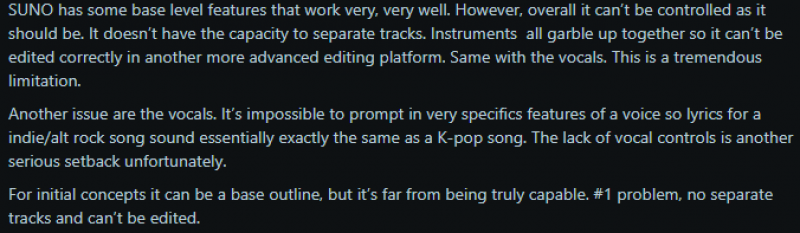
However, frustration starts when users try to refine those songs. A recurring complaint is that changing even a single word in the lyrics often forces users to regenerate the entire track. This means that a nearly perfect song sometimes has to be discarded just to fix one pronunciation or line.
More advanced users point out bigger limitations:
- No separate tracks or stems
- Vocals and instruments can’t be isolated
- Songs can’t be properly edited elsewhere
- Vocal styles are hard to control (many sound similar across genres)
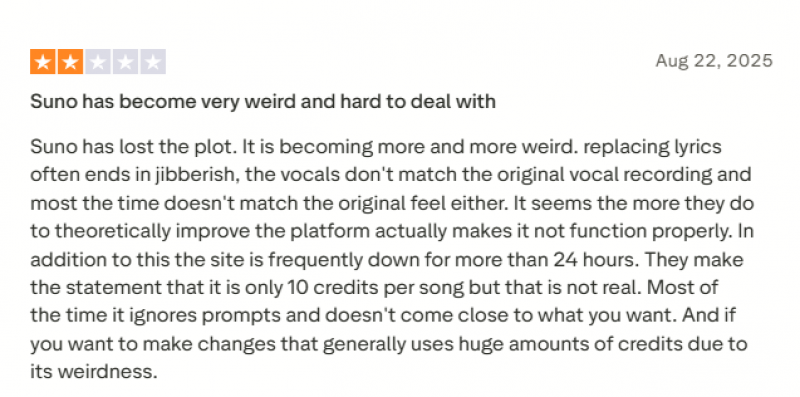
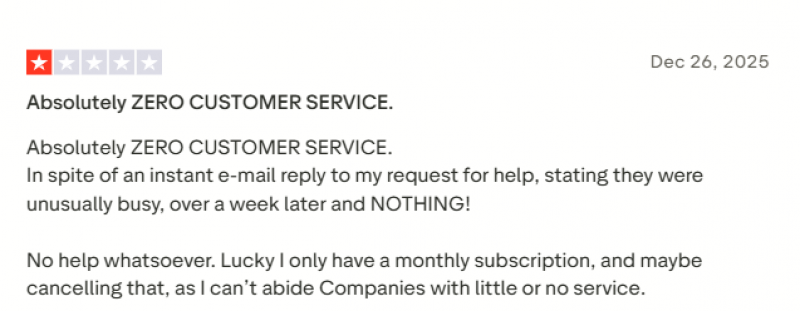
There are also concerns around credits, stability, and reliability. Some users mention prompts being ignored, songs turning into nonsense, or credits being consumed faster than expected. A few reviews also highlight slow or unresponsive customer support, especially around billing issues.
In short: Suno AI can feel magical at first but unpredictable once you push it.

Pros and Cons:
Pros
- Creates full songs with vocals, not just instrumentals
- Extremely easy to use, even for non-musicians
- Fast generation time ( like under 30 sec )
- Great for brainstorming, demos, and fun projects
- Surprisingly good structure and melody
Cons
- Free usage is limited and runs out quickly ( 50 credits )
- Output quality can vary between generations
- Limited control over fine musical details
- Not ideal for professional, release-ready music
- Licensing and ownership can feel unclear to some users
My Verdict: Honest Take After Playing With Suno AI
After spending time with Suno AI, I see it as one of the most interesting creative AI tools out there , not because it’s perfect, but because it’s genuinely inspiring. I liked how quickly ideas turned into actual songs, even if the results weren’t always consistent. Some generations impressed me, others felt forgettable, but the creative spark was always there.
Suno AI isn’t a replacement for real musicians or producers, and it doesn’t pretend to be. It’s a tool for experimentation, inspiration, and fun. If you go in expecting instant hits, you’ll be disappointed. If you go in curious and open-minded, it can be surprisingly rewarding.
Post Comment
Be the first to post comment!