Table of Content
- A Quick Look at What Gauth AI Actually Does
- What Gauth Gets Right
- Where Gauth Falls Short
- Pricing Comparison: How Much Are You Really Paying?
- The Alternatives Worth Your Time: A Detailed Breakdown
- What Real Users Are Saying: App Store Ratings
- Subject Coverage: Who Handles What?
- So Which One Should You Actually Use?
- Final Thoughts
A Hands-On Comparison of Features, Pricing, and Where Each Tool Falls Short
If you’ve spent any time searching for homework help online, you’ve almost certainly come across Gauth AI. It’s everywhere - plastered across app store charts, recommended in YouTube comment sections, and whispered about in group chats the night before finals. And honestly, for good reason. The app does what it promises: you snap a photo of a math problem, and within seconds, you get a step-by-step breakdown of the solution.
But here’s the thing nobody really talks about: Gauth isn’t perfect, and it’s definitely not your only option. The free plan limits you to roughly 11 questions a day, the premium subscription starts creeping toward $12 a month, and once you wander outside of STEM territory - say, into essay writing or literary analysis - the quality drops off noticeably. I’ve been there, staring at a vague answer to a Shakespeare question, thinking “there has to be something better for this.”
So I spent a few weeks genuinely testing the alternatives. Not just reading about them - actually feeding them problems, comparing the explanations side by side, and tracking which ones felt like they were actually teaching me something versus which ones were just spitting out answers. This guide is what came out of that process.
A Quick Look at What Gauth AI Actually Does
Before we talk about replacements, it helps to understand what exactly we’re replacing. Gauth started life as Gauthmath back in 2019, a straightforward math photo solver built by ByteDance (yes, the TikTok company). Over the years, it’s grown into something much broader - rebranding as Gauth in early 2024 and rolling out its own AI engine, Gauth GPT, which now covers over 30 subjects in 50+ languages.
The core experience goes like this: you photograph a problem (handwritten or printed), the AI recognizes it, and you get a detailed solution with explanations for each step. For math and science problems, this works surprisingly well - I’d estimate around 90-95% accuracy for standard K-12 and early college questions. The app also offers a chat-style follow-up feature, so you can ask things like “why did you use this formula?” and get a conversational response.
Also read - Gauth AI
What Gauth Gets Right
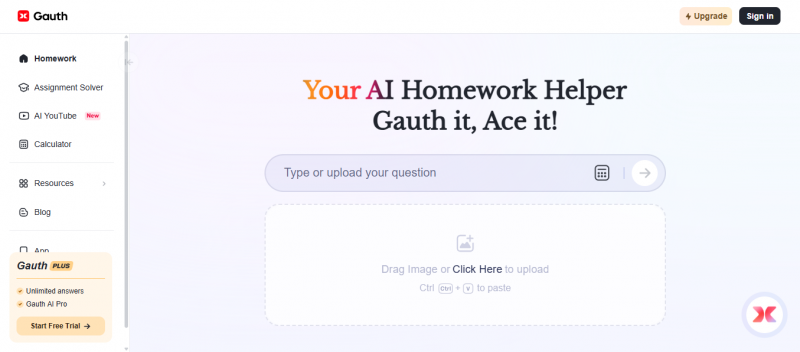
Speed is the headline feature. Solutions show up in 2-3 seconds for most problems, which is genuinely faster than most competitors I tested. The step-by-step formatting is clean and readable, and the photo recognition works well even with mediocre handwriting.
The hybrid model is also clever. About 5% of problems that stump the AI get routed to human tutors - real people who respond within 5-10 minutes on the premium plan. It’s a safety net that most pure-AI alternatives simply don’t have.
And I’ll give them credit for the ad-free experience. Even the free version doesn’t bombard you with pop-ups, which is refreshingly rare in the education app space.
Where Gauth Falls Short
The limitations become clear pretty quickly once you push beyond straightforward STEM problems. Essay writing support is generic at best - the kind of suggestions you’d get from any basic grammar checker. Literary analysis feels surface-level. And if you’re working on something that requires nuanced reasoning, like a complex word problem with multiple variables and real-world context, accuracy starts to slip.
The free plan’s 11 question daily cap is tight enough to be frustrating during an actual study session. And the pricing - while not outrageous - adds up, especially for students already juggling textbook costs and other subscriptions.
There’s also the elephant in the room: Gauth is owned by ByteDance, which means it has periodically run into availability issues in the U.S. market due to regulatory concerns. In January 2024, the app was briefly suspended for American users alongside other ByteDance products. If reliability and consistent access matter to you, that’s worth factoring in.
Pricing Comparison: How Much Are You Really Paying?
One of the most common reasons students look for alternatives is cost. Here’s how the monthly pricing stacks up across the most popular tools:
Figure 1: Monthly subscription costs for premium/paid tiers across major AI homework helpers. Prices based on monthly billing as of early 2026.
| Tool | Free Plan | Monthly | Annual | Best For |
| Gauth AI | 11 Qs/day | $9.99 | $99.99/yr | STEM + tutors |
| Photomath | Basic answers | $9.99 | $69.99/yr | Math only |
| Chegg Study | Very limited | $14.95 | ~$179/yr | All subjects |
| Mathway | Answers only | $9.99 | $39.99/yr | Quick math |
| ChatGPT | Generous | $20.00 | $200/yr | Everything |
| Wolfram Alpha | Basic queries | $8.25 | $99/yr | Advanced math |
Note: Prices may vary by region and platform. Annual pricing often offers significant discounts over monthly billing.
The Alternatives Worth Your Time: A Detailed Breakdown
Photomath - The Math Specialist
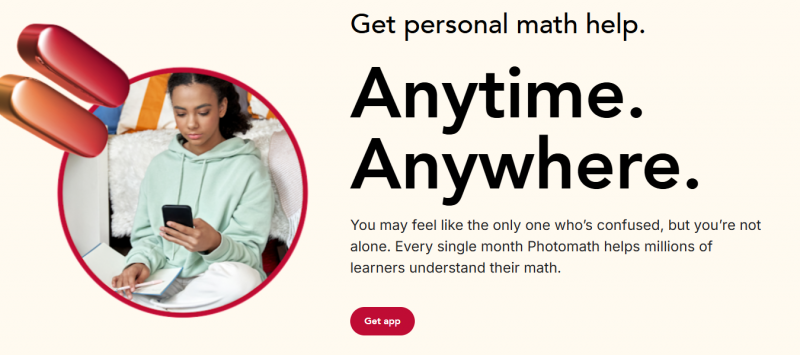
If your struggle is specifically with math and you want the most polished explanation experience available, Photomath is hard to beat. Acquired by Google in 2023, it’s had over 100 million downloads and focuses exclusively on mathematics - from basic arithmetic through AP Calculus.
What makes Photomath stand out is the quality of its explanations. Rather than just showing you the steps, it animates them. You can watch the factoring process unfold on screen the way a teacher would draw it on a whiteboard. It’s a small touch, but it makes a genuine difference when you’re trying to understand why a particular approach works.
The catch? It’s math-only. No physics, no chemistry, no essay help. And the free version is more generous than Gauth’s (you get basic answers and some explanations without paying), but the detailed animated walkthroughs require the Plus subscription.
Chegg Study - The All-Rounder
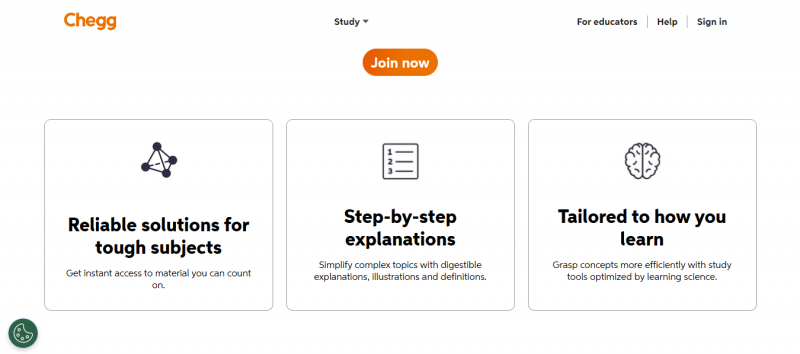
Chegg is the heavyweight in this space, and for good reason. Their library includes millions of textbook solutions, which means you can often find your exact homework problem already solved with expert-written explanations. The coverage extends well beyond math into business, engineering, humanities, and more.
The expert Q&A feature is where Chegg really separates itself. You can post a custom question and get a response from a subject-matter specialist - usually within a few hours. For complex, multi-step problems that stump AI tools, this can be genuinely valuable.
The downside is the price. At $14.95 per month for the base plan (and $19.95 with writing tools), it’s the most expensive option on this list. And Chegg has faced ongoing criticism around academic integrity - some professors actively check for Chegg-sourced answers.
Mathway - The Quick-Check Calculator
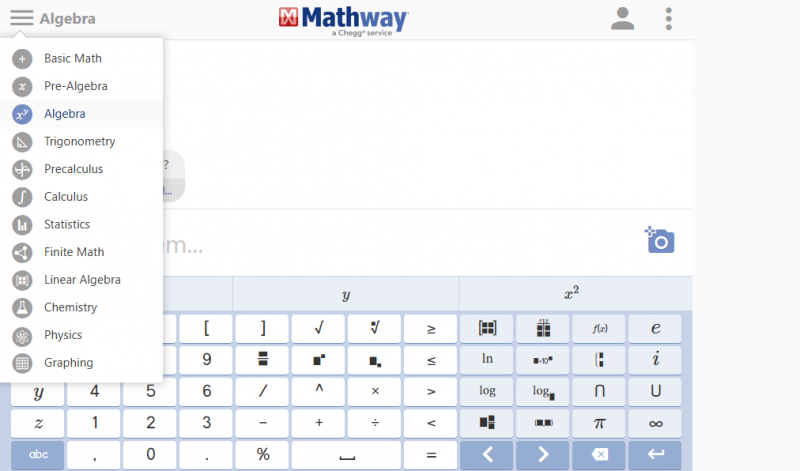
Owned by Chegg, Mathway takes a different approach. It’s designed for speed: type in a problem (or snap a photo), pick the subject area, and get an instant answer. The interface is clean and calculator-like, and it covers an impressively broad range of topics - algebra, statistics, calculus, even some chemistry.
The free version gives you final answers without showing the work, which is useful for quick verification but not great for learning. The $9.99/month premium plan unlocks step-by-step solutions. If you just need to double-check your homework answers before submitting, Mathway is arguably the fastest way to do it.
Where it falls short: The photo recognition is less polished than Gauth’s or Photomath’s, the web interface feels a bit dated, and there’s no tutoring support whatsoever.
ChatGPT - The Swiss Army Knife
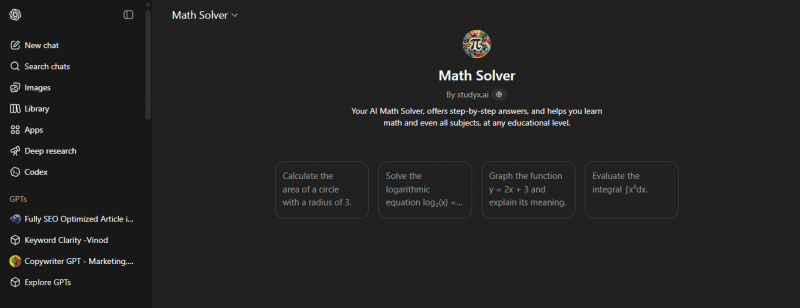
This might be the most underrated alternative on the list. ChatGPT’s free tier is remarkably generous, and its ability to handle virtually any subject - from calculus proofs to literary essays to coding problems - makes it the most versatile option available.
The conversational format is especially useful for learning. Instead of getting a static solution, you can have an actual back-and-forth: “Wait, I don’t understand that step” or “Can you explain it a different way?” The quality of these explanations is often better than what you’d get from a dedicated homework app.
The trade-off is structure. ChatGPT doesn’t have a photo scanner, doesn’t integrate with textbooks, and doesn’t organize solutions the same way a purpose-built homework app does. You have to know how to ask the right questions. For students who are comfortable with that, it’s incredibly powerful. For those who want a more guided experience, it can feel overwhelming.
Socratic by Google - The Research Companion
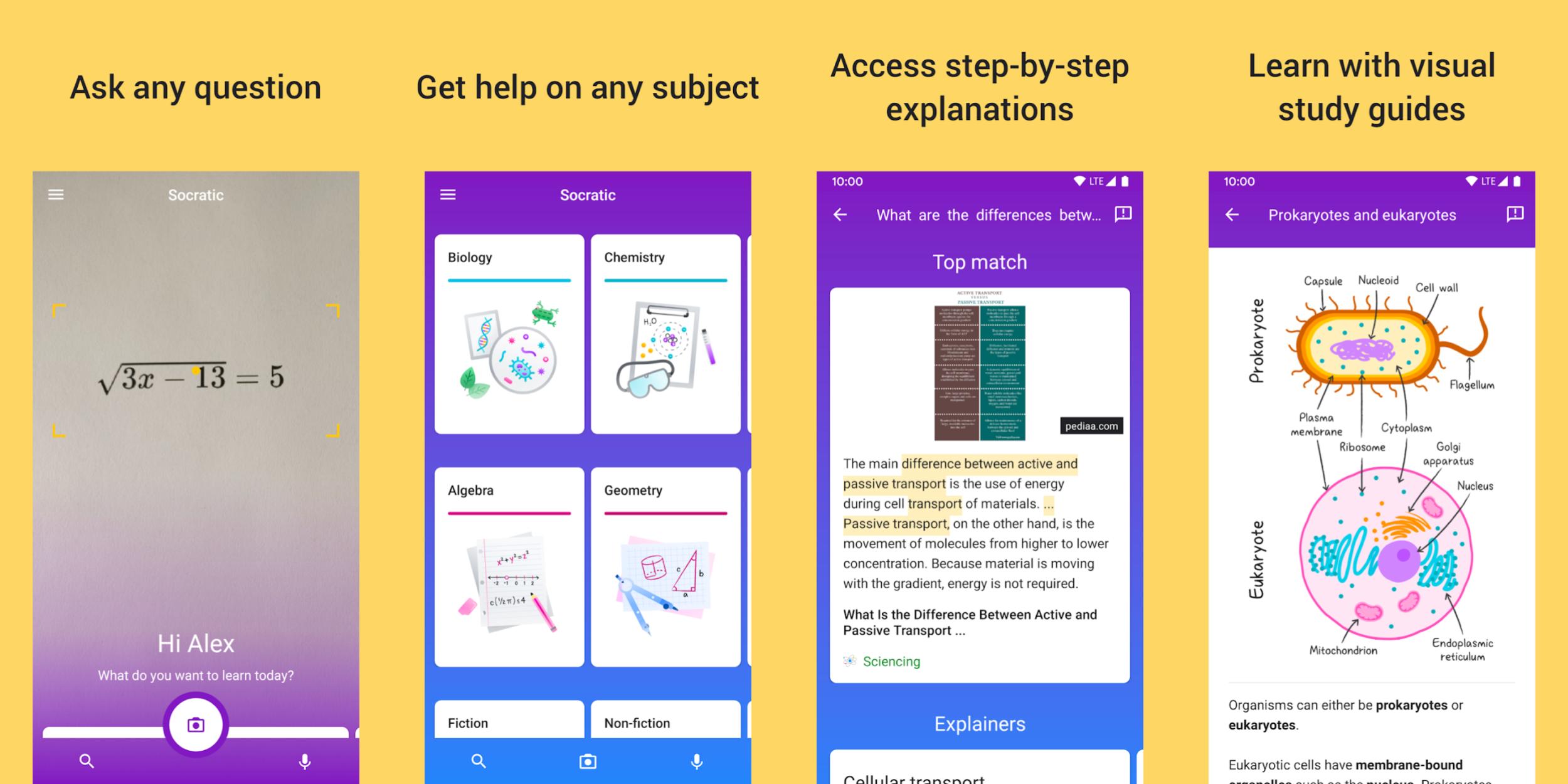
Socratic takes a fundamentally different approach from everything else on this list. Instead of just solving your problem, it connects you to curated learning resources - videos, articles, definitions - that help you understand the broader concept.
This makes it particularly good for subjects where understanding context matters more than getting a single answer. History, social studies, and science concepts are where Socratic really shines. The integration with Google Search means the resources it surfaces are usually high-quality and relevant.
The limitation is obvious: it’s not a solver in the traditional sense. If you need a specific numerical answer to a calculus problem by midnight, Socratic isn’t the tool for that job. Think of it as a complement to the other tools on this list rather than a replacement.
Wolfram Alpha - The Power User’s Choice
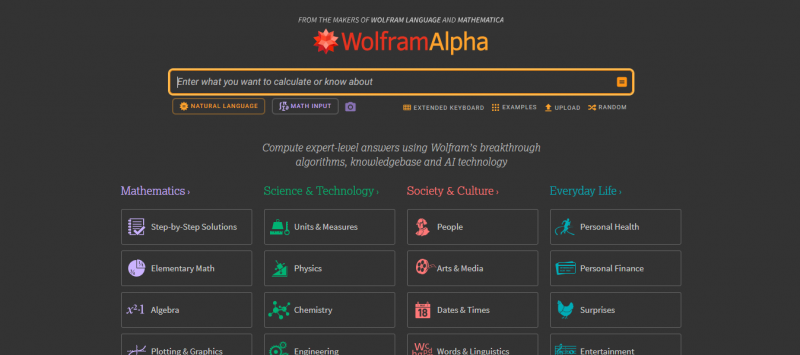
Wolfram Alpha isn’t really a homework app. It’s a computational knowledge engine, and the distinction matters. While the other tools on this list are designed for students who need help, Wolfram Alpha is designed for people who want to compute things - and it does so with unmatched depth and precision.
For advanced mathematics, statistics, physics, and data analysis, nothing else on this list comes close. The step-by-step solutions (available with the Pro subscription at $8.25/month) are thorough and mathematically rigorous.
But the learning curve is steep. The interface isn’t intuitive for younger students, the input format can be finicky, and it’s not set up for the casual “snap a photo and get an answer” workflow that most students want.
What Real Users Are Saying: App Store Ratings
User ratings across app stores give a useful (if imperfect) picture of how each tool performs in practice. Gauth AI leads on iOS with a 4.9 rating from over 1.67 million reviews, which is exceptional. However, the Android ratings tell a slightly different story, with some users citing ad-related frustrations on the free plan.
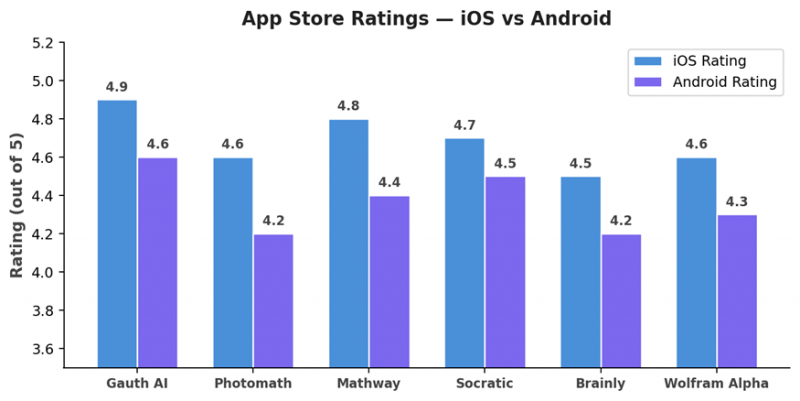
Figure 3: App store ratings comparison across iOS and Android platforms as of early 2026.
Subject Coverage: Who Handles What?
This is where the differences between these tools become really clear. If you’re purely a math student, you have plenty of options. But the moment you need help with biology, economics, or writing, the field narrows dramatically.
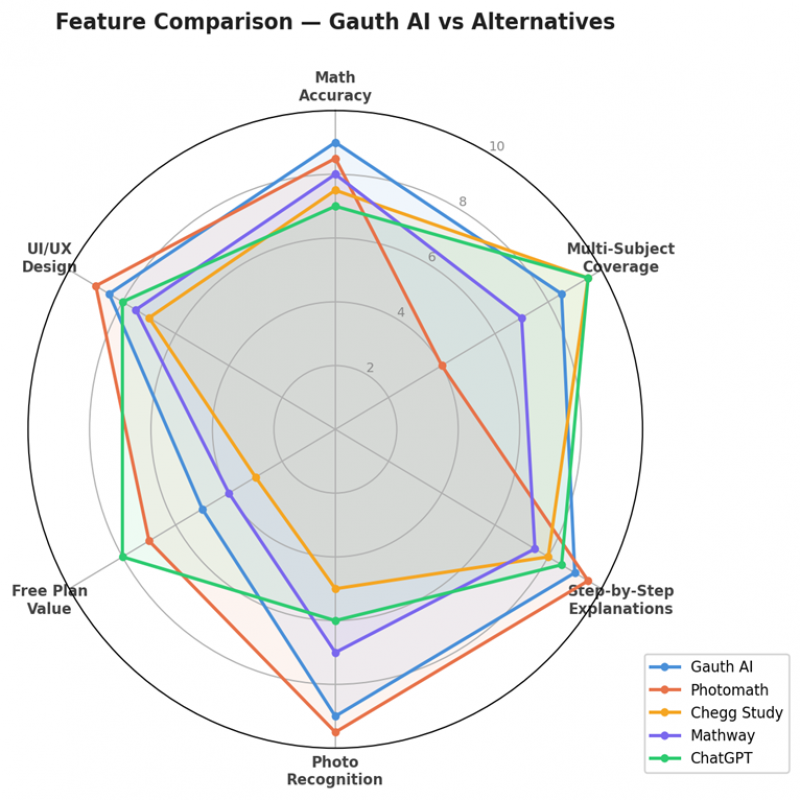
Figure 4: Subject coverage matrix showing strength levels across eight academic disciplines. Ratings based on solution quality and depth of coverage.
The pattern is pretty clear: ChatGPT and Chegg offer the broadest coverage, Gauth AI sits in a strong middle ground (particularly for STEM with emerging humanities support), and tools like Photomath and Mathway are laser-focused on mathematics.
So Which One Should You Actually Use?
Look, I’m not going to pretend there’s one perfect answer here. The tool that saved my friend’s semester might be completely wrong for you. But after spending way too many hours testing all of these, a few things became pretty clear to me.
Most students I know end up using two or three of these tools together, not just one. That’s honestly the smartest approach. I kept Photomath on my phone for quick math scans during study sessions, but when I needed to actually understand a concept - like, really get it - I’d open ChatGPT and have a back-and-forth conversation about it. Different tools for different moments.
If math is your main headache, Photomath earns its spot on your home screen. The explanations feel like someone actually sat down to teach you, not like a machine spit out steps. And you don’t need to pay anything for basic use, which matters when you’re already spending $200 on a textbook you open twice.
For students taking a full course load across multiple subjects - chemistry, econ, literature, the whole mess - Chegg is still the most complete package, even though the price stings. The textbook solution library alone has pulled me out of a few late-night panics. Just be careful about copying answers directly, because professors have gotten very good at spotting that.
The sleeper pick, though? ChatGPT. Seriously. Most students overlook it because it doesn’t market itself as a “homework app,” but the free version handles an absurd range of questions. You just have to put in a little more effort framing your prompts. Once you get the hang of that, it’s arguably the most powerful option on this entire list.
And I’ll say this about Gauth itself: it’s not broken. If you’re happy with it for STEM work, there’s no urgent reason to switch. The speed and the tutor backup are real advantages. The alternatives become worth exploring when you start bumping into Gauth’s walls - the daily question cap, the weak humanities coverage, or the occasional regulatory hiccup.
Final Thoughts
There’s no single “best” alternative to Gauth AI because the right tool depends entirely on what you’re studying, how you like to learn, and what you’re willing to spend. The AI homework helper market has matured significantly over the past couple of years, and students today have more genuinely useful options than ever before.
My suggestion? Start with the free tiers. Try ChatGPT for its versatility, Photomath for math-specific work, and Socratic when you need to understand broader concepts. If you find yourself hitting limits that matter, then consider which paid plan makes the most sense for your specific situation.
What I’d caution against is treating any of these tools as answer machines. The ones that help you learn - that explain the “why” behind each step - are always going to be more valuable than the ones that just hand you a result. The goal isn’t to get through your homework faster. It’s to actually understand the material so the exam doesn’t blindside you.
Whatever you choose, use it as a supplement to your own thinking, not a replacement for it. That’s the line that separates students who benefit from these tools from students who end up dependent on them.
Post Comment
Share your thoughts about this article.
Be the first to post a comment!