SoftBank Group is currently engaged in a high-velocity financial mobilization, racing to fulfill a massive $22.5 billion funding commitment to OpenAI before the calendar turns to 2026. This capital injection represents the final and largest tranche of a landmark investment agreement established earlier this year, signaling an "all-in" strategy by SoftBank’s founder, Masayoshi Son, to dominate the global artificial intelligence landscape. To meet the year-end deadline, the Japanese conglomerate has initiated a series of aggressive asset liquidations and strategic maneuvers, pivoting its entire corporate apparatus to support the creator of ChatGPT.
The urgency of this funding drive has transformed SoftBank’s balance sheet. In recent months, the firm has completely exited its $5.8 billion stake in semiconductor giant Nvidia and offloaded approximately $4.8 billion worth of shares in T-Mobile US. Beyond these sales, SoftBank is exploring the use of undrawn margin loans backed by its highly valuable 90% stake in Arm Holdings, which provides a borrowing cushion of roughly $11.5 billion. The scramble for liquidity has even impacted the firm’s broader investment philosophy; reports indicate that Son has personally taken the reins of the Vision Fund, mandating that any new deal exceeding $50 million requires his explicit approval, effectively freezing smaller venture capital activities to prioritize OpenAI.
The timing of this $22.5 billion payment is governed by a contract tied to OpenAI’s structural evolution. Following OpenAI’s successful transition to a for-profit benefit corporation in October, the remaining funds became due by the end of December. This capital is viewed as critical infrastructure fuel for OpenAI, which is facing ballooning costs as it develops next-generation models to compete with Alphabet’s Google and Meta. Furthermore, both entities are key stakeholders in "Stargate," a staggering $500 billion initiative aimed at building the world’s most advanced AI data centers, a project seen as a cornerstone of U.S. technological sovereignty.
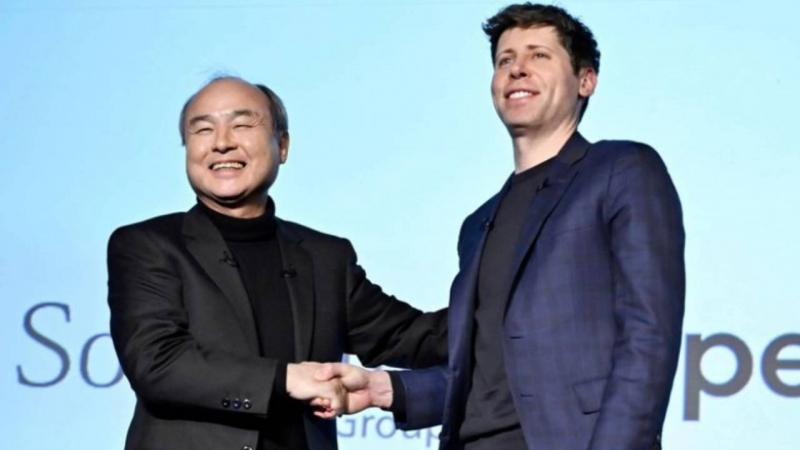
However, the path to this year-end goal has faced external headwinds. SoftBank was forced to delay the initial public offering of its payments subsidiary, PayPay, which was expected to raise upwards of $20 billion this month. The delay was primarily attributed to the economic ripples caused by the 43-day U.S. government shutdown that concluded in November, pushing the market debut to the first quarter of next year. Despite this setback, SoftBank remains undeterred, also weighing the sale of its remaining stake in the Chinese ride-hailing leader Didi Global as it prepares for its Hong Kong listing.
As the deadline approaches, the financial world is watching closely. While some analysts raise concerns about an "AI bubble" given the sheer scale of the capital outlays, the potential rewards for SoftBank are equally immense. OpenAI’s valuation has recently surged toward the $900 billion mark in private discussions, meaning SoftBank’s multi-billion dollar bet could yield historic paper gains almost immediately upon completion. For Masayoshi Son, this is more than a transaction; it is a definitive attempt to ensure SoftBank is the primary architect of the AI-driven future.
Post Comment
Be the first to post comment!